
A Community Catalyst Facing Challenges
Dawn Dublin, the founder of Black Butterfly, talks to FERDUSARA ALI
Since 2020, the local community programme Black Butterfly has emerged as a cultural hub, promoting fresh produce through its sister initiative, Joyful Roots. Founder, Dawn Dublin describes the ongoing challenges faced by the programme, particularly the persistent issue of inadequate funding and the barriers encountered by Black and ethnic minority communities.
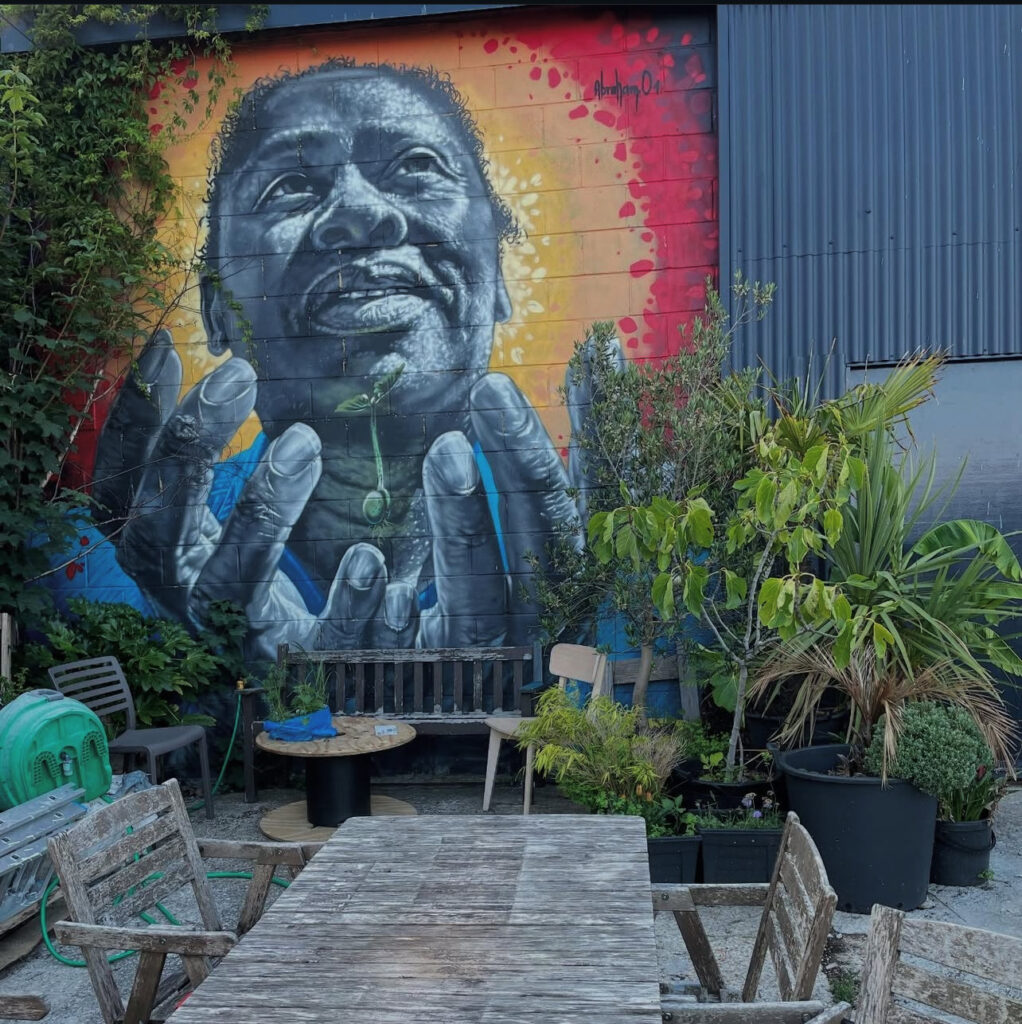
Hattons Yard
THE ROOT OF THE STRUGGLE
Dawn is passionate about grassroots involvement, emphasising that true community development hinges on nurturing relationships. She points out that many minority communities have to fight to establish their own spaces while grappling with systemic obstacles. “Exclusion is the problem right now in this county, especially in this town.”
She feels there is a sense within Black Butterfly that the perspectives of the main players in community work often overshadow those of the actual beneficiaries, and that Black Butterfly needs to work against a ‘white-centric perspective’ that can sometimes divert attention from those in dire need. The organisation has been actively connecting with local creatives and other organisations to ensure that the voices of those directly impacted by their work are being heard.
PROJECTS IN ACTION
Joyful Roots is just one of a range of projects initiated by Black Butterfly. This initiative focuses on promoting urban agriculture and collaborates with local farmers to foster sustainability within the community. Its key idea of establishing community sustainability is the “reimagining of food systems”, so they have sought out “redundant, neglected, or undervalued” areas to develop. She feels, particularly as a Black woman, that the existing systems do not adequately support diverse communities.
One notable effort was the Sky Farm project. This food garden situated on the rooftop parking area behind ESK in Hastings opened in 2020. During the proposal and development phases, local farmers and colleagues expressed support for this innovative approach to food sustainability; the aim was to reduce reliance on food banks and corporate suppliers by sourcing organic produce with cultural significance.

According to Dawn, local funding and enthusiasm was “disappointingly sparse”. Despite aligning with council plans for climate resilience, she often found her ideas overlooked or dismissed. By 2023, the project had stalled after two consecutive years of drought and frequent theft of the produce.
After the closure of Sky Park, Black Butterfly relocated to Hatton’s Yard, close to St Leonards Warrior Square station. This new location aims to produce organic fruit and vegetables and to serve as a multifaceted cultural venue for celebrations and training events. It is also a hub for Dark Matters, a mental health program by Black Butterfly designed to link therapists with individuals from Sub-Saharan and other ethnic communities.
THE IMPORTANCE OF REPRESENTATION
Dawn explains their mission as empowering and uplifting communities. “We aim to create environments where we can connect communities with valuable resources to assist those with lived experiences [of marginalised groups] whose lives have been influenced by social, economic, and political factors.”
Feedback from those who use the space is overwhelmingly positive: “I remember one man started to cry because of the help we provided,” Dawn remembers.
On this journey, they have confronted numerous challenges, particularly in securing sufficient funding from local authorities. Dawn expresses frustration with decision-makers who often seem disconnected from the communities they are intended to serve.
Currently, she is actively engaged in the government’s £20m 10-year Plan for Neighbourhoods initiative and has established relationships with local officials. She has noticed a narrow representation in previous schemes: no community members, grassroots organisations, or neighbourhood representatives were involved, only authority figures. She believes this creates a disconnect between the decision-makers and the projects intended to benefit the town.
Black Butterfly exemplifies the struggle for marginalised communities in their quest for autonomy and sustainability. The good news is that Dawn insists on continuing as a voice that helps shape the lives of local people, particularly those from marginalised and underrepresented backgrounds.
We hope you have enjoyed reading this article. The future of our volunteer led, non-profit publication would be far more secure with the aid of a small donation. You can also support local journalism by becoming a friend of HIP. It only takes a minute and we would be very grateful.

Leave a Reply