
Dutch toTake the VOC Amsterdam Home?
DAVID EP DENNIS
An ever-present reminder of the power of storm and tide for the last 277 years, something sits at St Leonards. At the lowest tides of the year, when the sea retreats from the Sussex coast at Bulverhythe, an extraordinary hulk appears. Dark, ancient timbers, the ribs of a ship long lost, emerge briefly from the sands before the Channel closes over them once more.
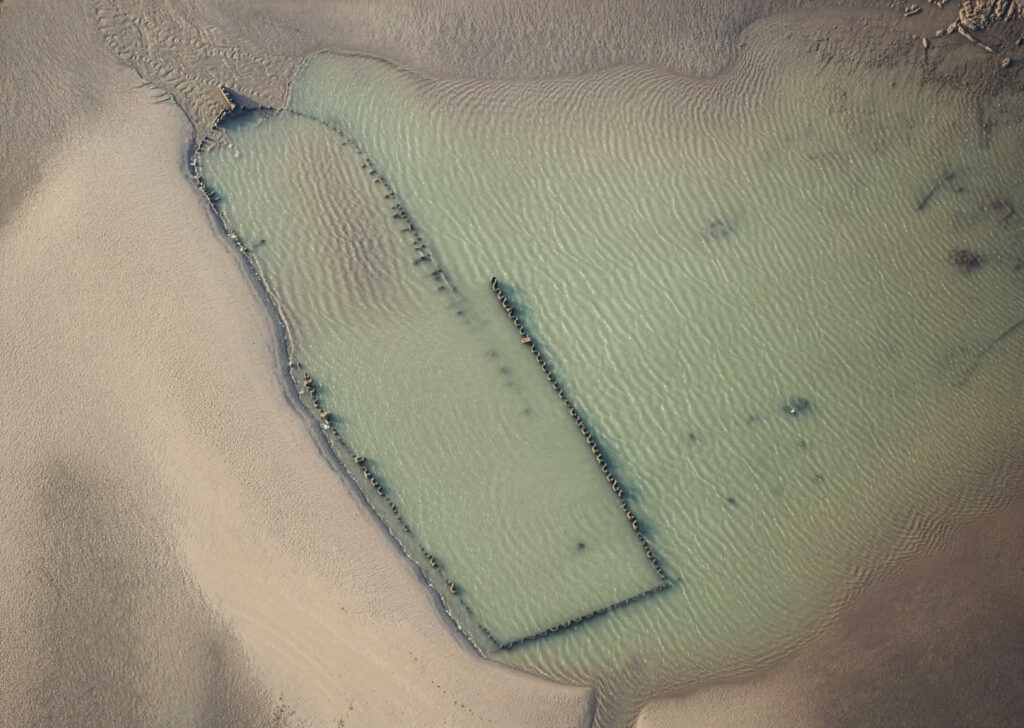
This is the wreck of the Amsterdam, a Dutch East India Company ship driven ashore in January 1749. For many in Hastings and St Leonards, it is both a local landmark and a source of fascination. People wonder about what lies beneath – does it still have treasure aboard? In recent years, a persistent rumour has circulated: that the Dutch intend to recover the wreck and take it back to Amsterdam. It is a story that captures the imagination. But how close is it to reality?
A REMARKABLE SURVIVAL
The Amsterdam is no ordinary wreck. Unlike ships lost in deep water, she lies close to shore, embedded in anaerobic fine clay sand and quicksand that has preserved much of her structure for more than 270 years. At exceptionally low tides, sections of her hull can still be seen.
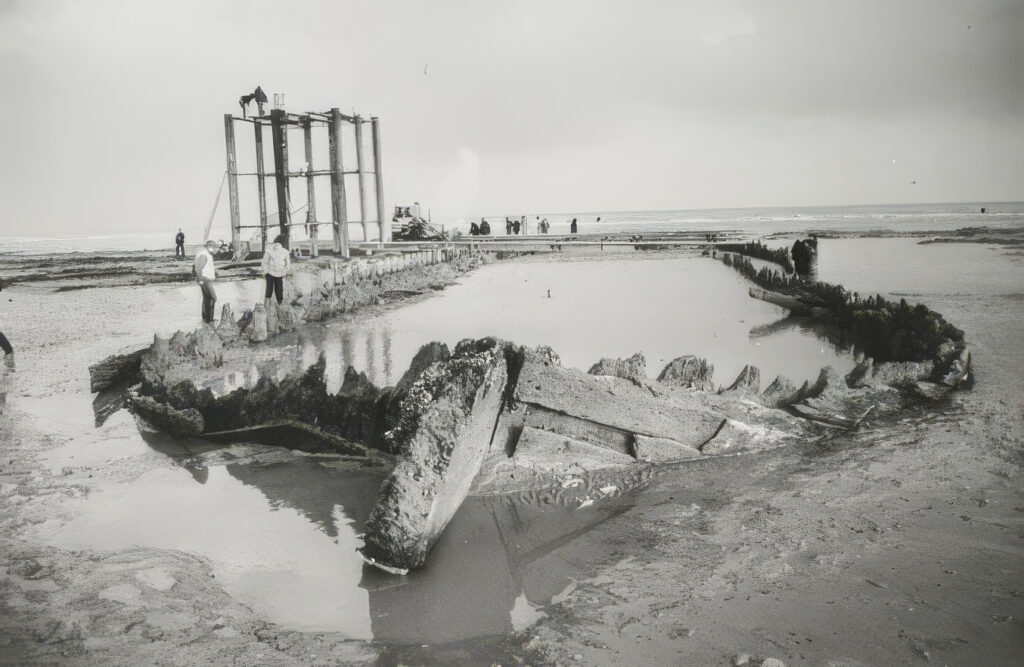
“It’s one of the most accessible historic wrecks in the country,” says a local coastal observer who has monitored the site for years. “But it’s also incredibly fragile. What you see is only a small part of what’s still buried.”
The wreck is legally protected under UK law. Yet its visibility and vulnerability have made it a focus of both public interest and archaeological concern.

KNOWN CARGO DISPUTED OWNERSHIP
On its outward voyage, the Amsterdam was carrying silver bullion (approx. 2–2.5 tonnes), textiles, wine, tools, weapons, and domestic goods. The silver alone would be worth millions today, but much of it was recovered or looted in 1749. Immediately after grounding, local people and authorities recovered much of the bullion. Some was looted by smugglers, which authorities attempted to reclaim. Archaeologists believe a very large quantity of material remains sealed inside, including personal belongings of crew and soldiers, tools, weapons, plus ship equipment and cargo items (textiles, trade goods, wine, ceramics).
The ship was built for the Dutch Verenigde Oostindische Compagnie (VOC), the powerful trading company that dominated global commerce in the seventeenth and eighteenth centuries. The Amsterdam is considered part of the Netherlands’ national heritage. At the same time, the wreck lies within British waters and has been protected since 1974 as a designated site. This unusual dual status, Dutch ownership but British legal protection, lies at the heart of the debate about its future.
THE RECOVERY DREAM
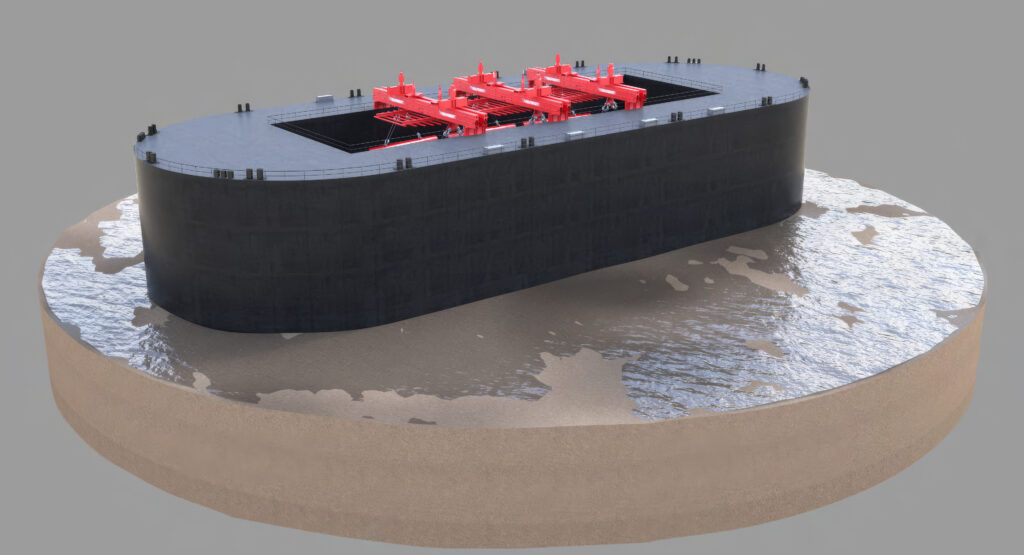
The idea of recovering the wreck is not new. Dutch archaeologists and heritage organisations have studied the Amsterdam since the late twentieth century, and at various points have explored the possibility of raising it. More recently, proposals have emerged, largely from Dutch academic and design circles, for an ambitious solution. Rather than dismantling the wreck, the plan would involve enclosing it within a massive steel structure, lifting it intact, and transporting it, still submerged, to Amsterdam.
Once there, it could be housed in a purpose-built museum, allowing visitors to view the ship while archaeologists continued to study it by installing it in a glass-enclosed tank museum in Amsterdam. The idea was to create something comparable to the Vasa Museum (Stockholm) or the Mary Rose (Portsmouth), but with a crucial difference – the ship would remain underwater, and archaeology would continue in public view.
“It’s a brilliant idea in theory,” says a local historian familiar with the proposals. “You’d essentially create a living excavation in a museum setting. But the scale of it is enormous.”
RUMOUR VERSUS REALITY
Despite the persistence of local rumours, there is no evidence that such a project is currently underway. No funding has been publicly confirmed. No excavation licence has been granted, and certainly, no engineering work has begun. What does exist is a series of feasibility discussions and conceptual designs that are serious, but still at an early stage.
One of the main reasons for caution is the condition of the wreck itself. The Amsterdam has survived because it is buried in oxygen-free clay sand. This environment has protected the wood from decay. Remove that protection, and the situation changes rapidly. The danger is that once those timbers are exposed to air, the clock starts ticking.
The experience of other famous ship recoveries offers a warning. The Mary Rose, raised in 1982, required decades of conservation work and continues to be treated today. Sweden’s Vasa, lifted in 1961, remains an ongoing scientific project. The Amsterdam presents additional complications. The seabed at Bulverhythe is unstable, subject to tidal scouring and shifting sediments. Parts of the wreck are deeply buried; others are already exposed and eroding. There’s a real risk that if you try to move it, you could lose more than you save.
A QUESTION OF PRINCIPLE
Modern archaeology has increasingly moved towards a principle of preservation in situ; leaving sites undisturbed unless there is a compelling reason to excavate. In the case of the Amsterdam, many specialists believe that the wreck is safest where it is. This view is not universal. Some argue that controlled recovery could secure the ship for future generations and make it accessible to a wider public. But the balance of opinion remains cautious and moving the ship will cost a lot of money.
Even if the archaeological concerns could be addressed, significant legal and political obstacles remain. Any excavation would require approval from UK authorities, as well as cooperation with the Dutch government. Questions of ownership, transport, conservation, and display would all need to be resolved.
SO WHAT NOW?
For the moment, not very much. The wreck remains in place, monitored and protected. Research continues, both in Britain and the Netherlands, and interest in the Amsterdam remains high. In the Netherlands, artefacts recovered in earlier excavations are studied and displayed. In Hastings, the wreck continues to draw attention whenever it appears on the foreshore.
“It’s part of our coastline,” says a local resident. “People come down to see it when the tides are right – as individual viewers or on guided tours. There’s a real sense of connection.”
The Amsterdam occupies a unique position, physically in England, culturally in the Netherlands, and historically in both. For now, the grand vision of lifting it and returning it to Amsterdam remains just that: a vision. It would take a huge amount of money, political will, and technical confidence. None of those are in place yet.
As things stand, the Amsterdam is not going anywhere. There is no active recovery project, no agreed timetable, and no immediate prospect of excavation. The risks, archaeological, financial, and legal, remain considerable.
For the people of Hastings and St Leonards, that may come as a relief. “It belongs here as much as anywhere,” says a local voice. “It’s part of the story of this coast.” And so, for now, the Amsterdam remains where it has lain since 1749 – hidden in the sands, revealed by the tides, and watched over by those who know where to look.
“Docking the Amsterdam”
The proposal – by Dutch architects ZJA – is unusual in that the wreck wouldn’t leave the water at all. Waterlogged wood deteriorates rapidly in air, so the idea would be to keep it in seawater throughout the 250-mile trip in a semi-submerged salvage dock that holds the wreck while being towed across the sea.
On the coast near Amsterdam, the Amsterdam’s whole 131-foot-long remains would be encased in a steel-and-glass capsule that visitors could visit.
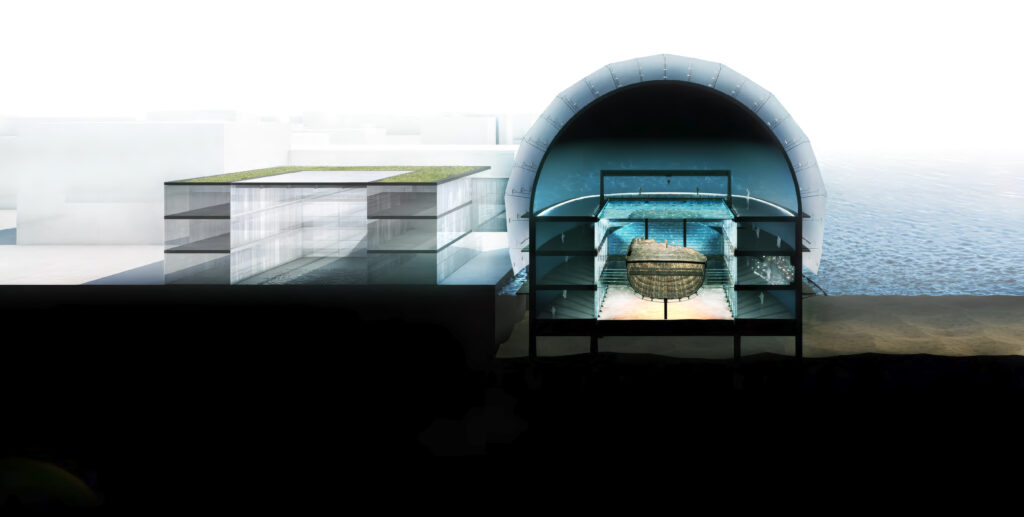
The plan has been commissioned by a foundation, helpfully named Docking the Amsterdam Foundation led by Amsterdam city archaeologist Jerzy Gawronski. As well as ZJA, Deloitte is involved for funding and grant raising, Mammoet for heavy lifting, Amsterdam Shipyards, and the City of Amsterdam’s Chief Technology Office advising.
There are no published costs for either the preparation work so far, and they don’t include an estimate for how much the plan would cost to implement. There’s a suggestion that the medium and big firms involved are doing this pro bono as part of their community commitment, rather than a commercial project.
In addition, rather than put this plan into action, the Foundation has now implemented a feasibility phase of 2027-2030, which suggests that the plans set out here may not be as worked through as they claim. It looks like the VOC Amsterdam will be with us for a while.
We hope you have enjoyed reading this article. The future of our volunteer led, non-profit publication would be far more secure with the aid of a small donation. You can also support local journalism by becoming a friend of HIP. It only takes a minute and we would be very grateful.

Leave a Reply