
Volunteers Praised in Plastic Pollution Cleanup
KENT BARKER and JAMES PRENTICE
The scores of volunteers who helped tackle ‘catastrophic’ pollution at Camber Sands have been praised by a government minister. The clean-up operation got underway after millions of plastic bio-beads washed ashore following their release from Southern Water’s Eastbourne treatment plant.
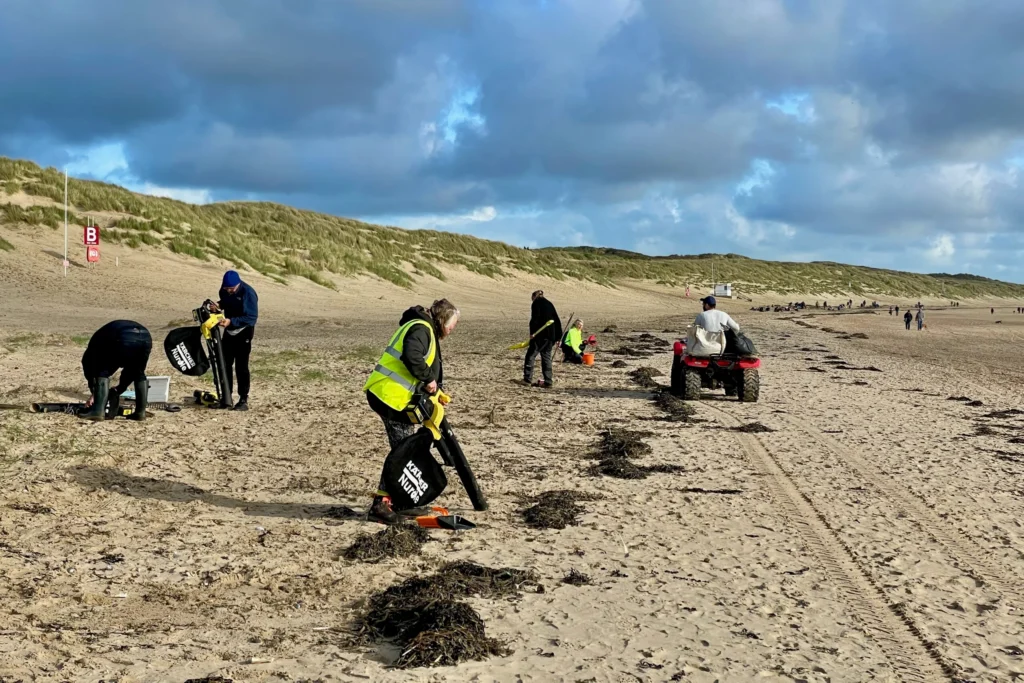
Emma Hardy MP, Minister for Water and Flooding, visited the beach near Rye and said: “The volunteers have been amazing. Just incredible. I’ve been hearing how people have spent many hours brushing up the beads, literally using dust pans and sieves.”
But despite the huge effort, a public meeting in Rye was told it could take years for the small plastic pellets to be cleared as many are now stuck in seaweed or buried under sand.
In a castigating letter to Lawrence Gosden, Southern Water’s Chief Executive, Hastings MP Helena Dollimore said: “It beggars belief that Southern Water failed to detect the loss of millions of bio-beads for an entire fortnight, leaving them free to wash up on our East Sussex coastline and cause an environmental catastrophe.”
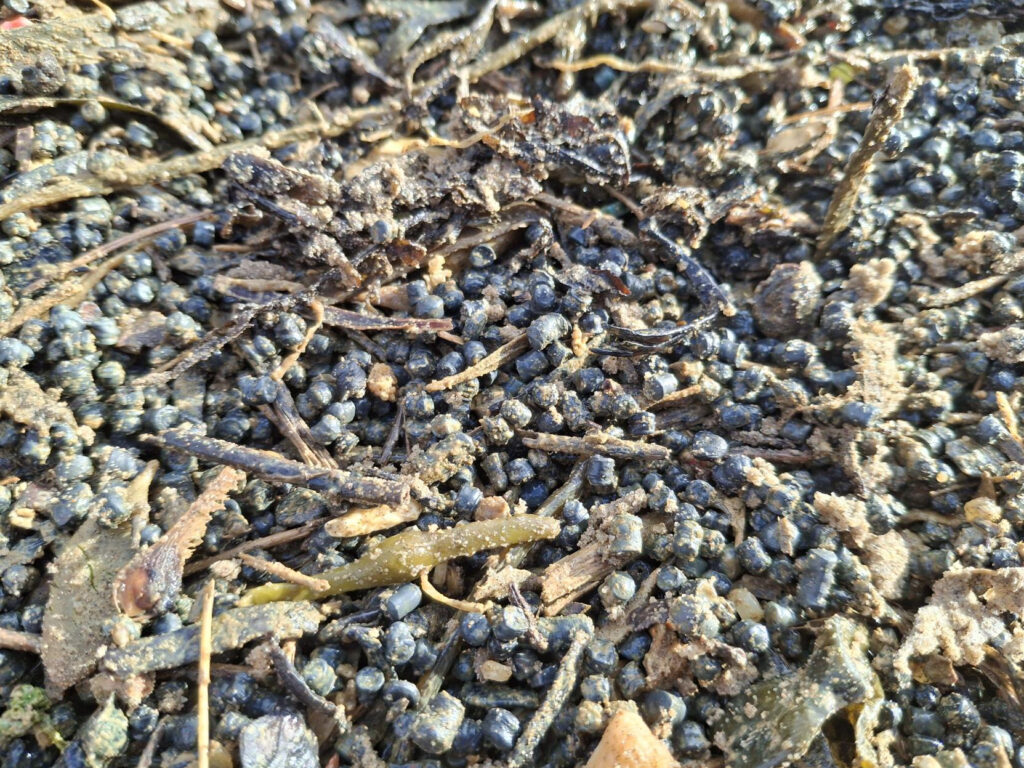
More than a hundred volunteers turned out to help in the operation to clean up the Sands, but the environmental group Strandliners who first found the pollution say it will be impossible to recover them all: “This is the worst plastic pellet pollution incident we have ever seen here. They are buried in the sand, covered by seaweed, and many are undoubtedly still in the sea. The clean-up operation has been co-ordinated by Rother District Council, with much of the removal undertaken by [microplastic cleanup company] Nurdle, using specialist equipment. Community volunteers have been helping by removing them manually, using household equipment.”

The beads have also been found at the Rye Harbour Nature Reserve and at various locations along the coast between Camber and Pevensey.
Southern Water apologised at the public meeting organised by Helena Dollimore, saying there had been an unacceptable “total failure” with an estimated 1% of the 1,000 tons of beads used at Eastbourne being washed into the sea following exceptionally heavy rain.
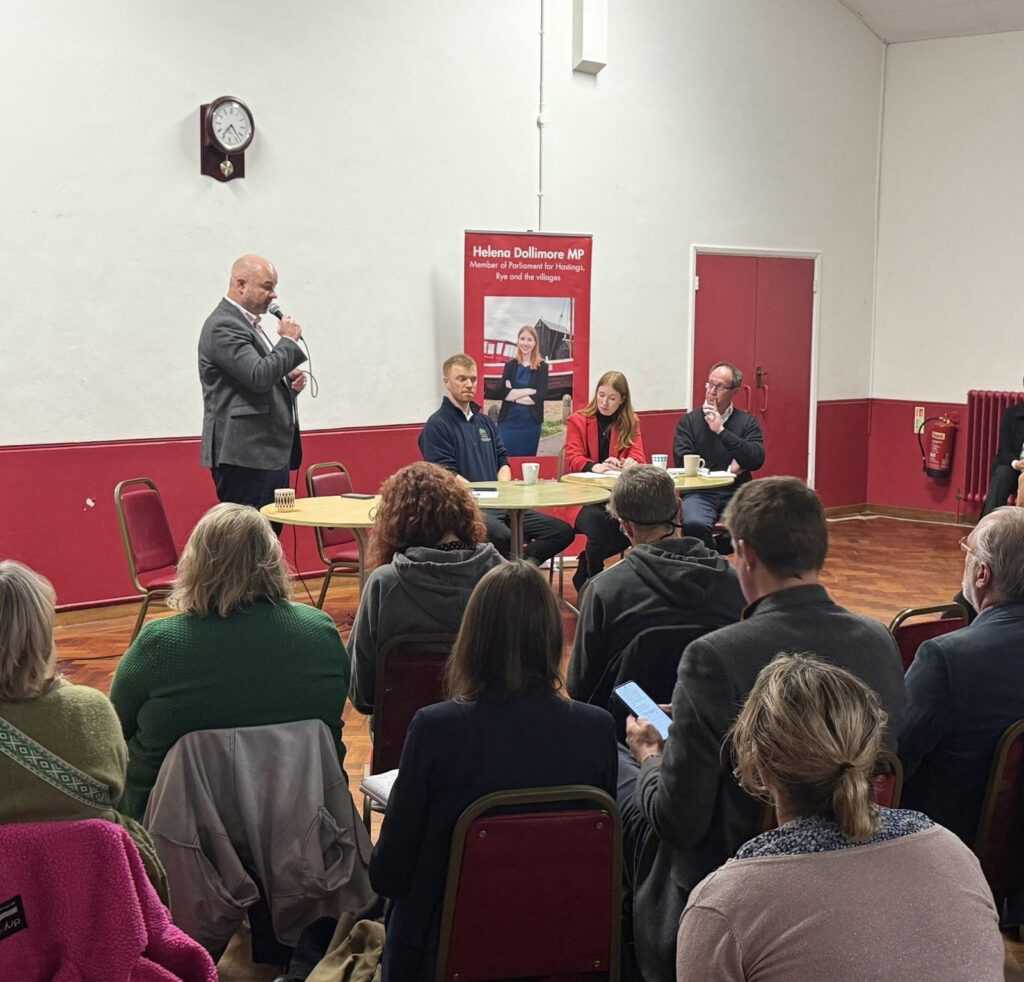
The meeting was told there is no threat to human life from the plastic pollution, and that danger to animals is being assessed. There is, however, particular concern about marine life swallowing the pellets. Dog owners have been warned to supervise their pets if walking on the beach.
Hastings Borough Council also issued a strongly worded statement about the spillage: “We are shocked by the admission from Southern Water that the bio-beads being washed up on our beaches have been caused by yet another failure of their systems and have raised the following issues in a letter to their Chief Executive: “Why are bio-beads continuing to be used despite two earlier spills from the Eastbourne plant? What quantity has been released? What are they doing to ensure a clean-up operation to stop their further distribution in our waters? What monitoring will they be undertaking to assess the effect on our local wildlife?”
Ms Dollimore praised the many volunteers who had come out to help clean up the beach as being ‘a testament to the community spirit in our area’. She said: “I have asked government officials to undertake a full veterinary analysis of the potential harm to our local wildlife. Southern Water has made a commitment to fund a programme of nature restoration in our beautiful area, and I will hold them to that promise.” The Minister Emma Hardy said: “Southern Water will face the toughest water sanction regime ever. What’s happened here is just devastating. It makes you feel quite angry that this has been allowed to happen.”
WHAT ARE BIO-BEADS?
Bio-beads are small plastic pellets used in wastewater treatment. They are a type of biological aerated flooded filter (BAFF). Usually dark grey or black, they are ridged or crinkled to give a high surface area for bacteria to adhere to.
BAFF plants were set up here in the early 1990s in response to new EU regulations on discharge. These were generally small-scale plants where there was not enough land for a traditional sludge system. BAFF media also work in saline conditions.
Before 2006, bio-beads were often made from post-consumer electronic waste, such as TVs and computers, and were possibly contaminated with heavy metals.
Southern Water, the company treating the wastewater in this region, has five sites that use bio-beads: Eastbourne, Broomfield Bank, Beckley, Peacehaven and Sandown). Source: Strandliners
Southern Water’s Pollution Record in Hastings
- 2022, raw sewage released via storm overflows approximately 150 times in the Hastings local authority area, discharging for around 1,258 hours.
- 2024, across the entire Hastings and Rye constituency, there were 851 sewage dumps lasting a total of 6,837 hours.
- 2025 (to November 9), there have been 2,892 hours of sewage overflows.
- Between 2021 and October 2023, five separate wastewater main bursts occurred in the Bulverhythe area of Hastings.
- Figures refer to both “leaks” – pipe bursts/failures – and “storm overflow” events -permitted releases during heavy rain to prevent sewage backing up into homes.
Sources: Hastings Borough Council and Southern Water
We hope you have enjoyed reading this article. The future of our volunteer led, non-profit publication would be far more secure with the aid of a small donation. You can also support local journalism by becoming a friend of HIP. It only takes a minute and we would be very grateful.

Leave a Reply