
“Huge Holes” in Benefits Safety Net
PAUL MCLAUGHLIN
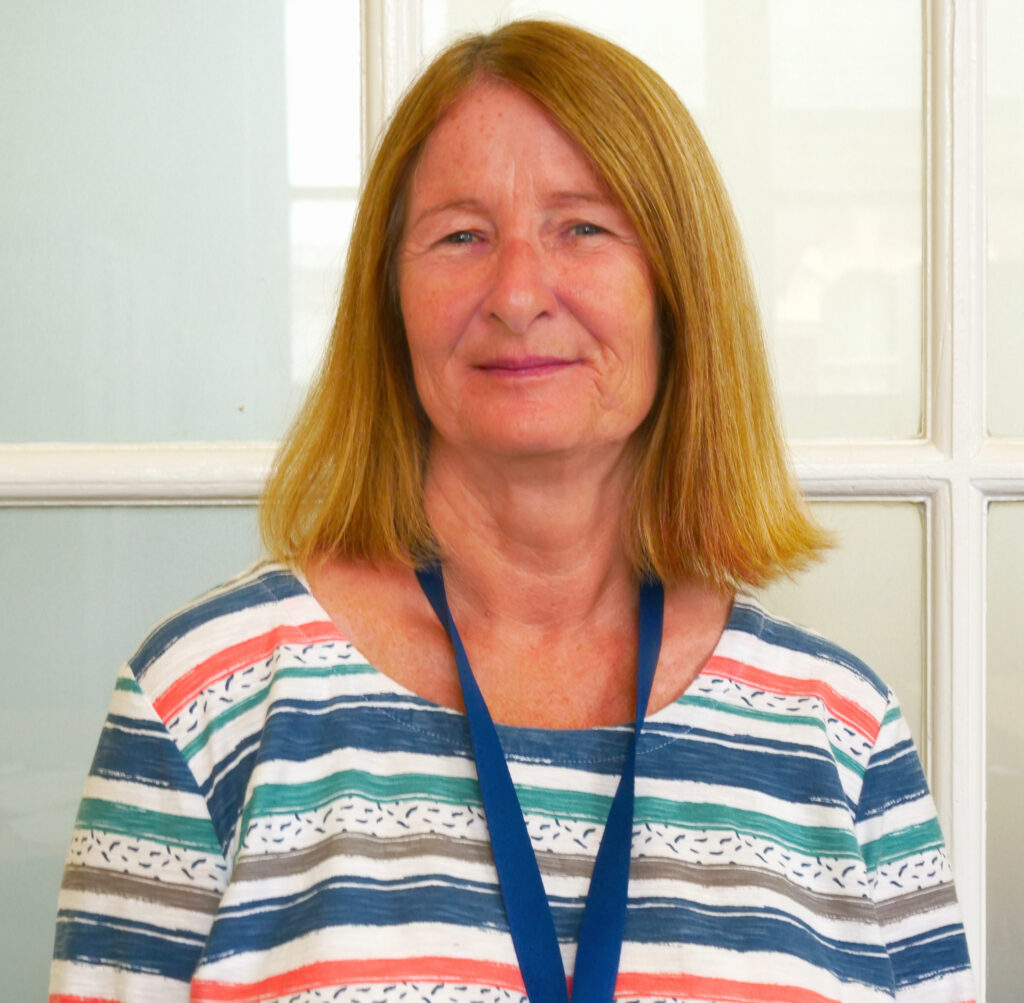
HARC Chief Executive Jacky Everard
HARC, the Hastings Advice and Representation Centre, has published its 2023 Client Survey. In her forward to the findings, Chief Executive Jacky Everard said that, in the 38 years she has been involved with the charity, she had “never known its clients and staff to be under more pressure than they are right now.”
She reported that “more than half of people can no longer stretch their income across the month or afford to feed themselves and their families a balanced diet…Nearly two thirds of people were struggling to pay fuel bills”.
The charity CEO, whose team are trained to help people claim benefits, said that the safety net that the welfare system is supposed to offer “has huge holes in it and is in urgent need of repair.” The benefits system, originally designed to catch people when they most need it, “has become unbearable to navigate for people already in crisis”, and has resulted in the levels of mental stress being reported by clients being “higher today than they were during Covid”. The inability of very unwell people to make their finances stretch to even the basics was pushing many of them to “breaking point”.
Ms Everard said she was “horrified” that one in ten of the people walking into the HARC service say they feel suicidal, with their distress made worse by a welfare system that “bullies and humiliates them and leaves them destitute”.
HARC EXPANSION
The demand for the service has increased massively in recent years. When the charity was set up in 1982 it gave advice and support to 1,500 people with a staff team of four. This compares with 18,700 people who contacted HARC’s 24-member staff team, including 14 advisors, over the last year. Some 1,405 of these enquiries were from those who are vulnerable, elderly, disabled or isolated.

The support team represented 618 clients at review and tribunal, and in total some 89% of clients who approached HARC received support. Those whom the organisation couldn’t support were referred to more appropriate agencies.
As a result of the help of the service, HARC secured £5,189,774 in previously unclaimed, enhanced or reinstated benefits, of which £4,463,206 was secured for clients with disabilities and long-term health issues.
In comparison, it cost just £768,000 for HARC to provide its extensive range of advice and representation services comprising face-to-face exchanges, telephone and email advice, secondary advice to professional colleagues, outreach surgeries, home visits, complex caseloads, advocacy and tribunal work. HARC also runs two charity shops in London Road and Queens Road.
“REPEATED FAILINGS”
Ms Everard said this is the third survey that has shown consistent reporting of the “clear flaws in the current welfare system” and ongoing problems with the way health assessments are conducted. HARC has a 94.5% success rate at appeals, which shows “repeated failings in how the health assessments are conducted” and “is a clear indication that the system isn’t working.”
She acknowledged that the government plans to remove the work capability assessment for Employment and Support Allowance and Universal Credit after the next election and, before that, to change some of the descriptors, but commented: “there is no guarantee the changes will improve the lives of our clients – for many, it will make things worse.”
As well as seeing the huge impact on clients, Ms Everard acknowledged that it was also very hard for staff to deal with such issues day in, day out. She said that staff welfare was a top priority, and that robust measures had been put in place to help the team to cope with stress levels. These include fully embracing hybrid working and reflective practices to create an environment of collaboration where staff members can team up, draw on expertise, and offer each other support.
Her conclusion seemed despairing. “I wish that I could stop saying the same things, survey after survey, that there were areas of improvement I could genuinely point to in terms of how things are changing. As I cannot, I will once again ask those who read our survey and who understand the issues we are raising, whether from the people they support, or through personal experience, to raise their voices and use their platforms to advocate for change.”
DEFIANT
However, she ended on a defiant note: “we need to not just read this report and sweep it under the carpet with the other bad news, we need to raise our voices again, at every opportunity presented, to say that enough is enough, this cannot go on.”
The 2023 Client Survey is, indeed, a very sobering report. The issues HARC deal with on a daily basis are long standing and apparently systemic. But some of the testimonies of the clients whom HARC advisors have helped are both revealing and inspiring. Jane, for example, said they “helped me with all my forms, they were there all the way and after. I just wanted people to listen to me for once. HARC were really effective in getting [DWP] to listen.”
Another client, Mick, was equally positive. “I want to tell anyone out there who is struggling – don’t give up! Going to HARC is like taking your Ford car to a Ferrari garage. You know you are in the safest hands and the service is going to be top notch.”
Could you be missing out on unclaimed benefits? Read about 3 Million Pounds of Unclaimed Benefit for Hastings Residents
We hope you have enjoyed reading this article. The future of our volunteer led, non-profit publication would be far more secure with the aid of a small donation. You can also support local journalism by becoming a friend of HIP. It only takes a minute and we would be very grateful.

I admire the work that Jacky Everard and her team do at HARC. What she does not say is how compassionate they are, and how deeply upsetting and stressful it is for staff to see so many people struggling. It is indicative of what the country has come to in 40 years that need has increased by a factor of 11 in 2023. When a wealthy Home Secretary, Suella Braverman says living in tents on Britain’s streets is a ‘life choice’ she reinforces hateful attitudes in the wider populace and stigma spreads. This applies to all people in need. In 2021 when I could not walk and needed a wheelchair I was shocked to find the unhelpful East Sussex disability service was outsourced and run by a profit making private company who take public money. Our taxes! When I sought help for the first time ever in retirement, and after 42 years of work and paying NI and tax, this outsourced company made a wrong assessment on a form. I sought advice from HARC who pointed me in the right direction to complain. I got an apology and an immediate offer of a wheelchair, but not before much stress. Luckily for me, a Hastings friend, Felicity Laurence had meantime surprised me with the gift of a wheelchair. In September, award- winning Guardian journalist Simon Hattenstone wrote an article about a disabled single mother of two in the southeast trying to manage on Earning and Support Allowance (ESA) , whose benefit and housing support was stopped all together. She had filled in a new form to let the DWP know she worked “16 hours a week”. I was horrified at her predicament. I wrote a Freedom of Information request to the DWP. I asked them three things. Had they changed the wording on the p/t work threshold rule, to ‘Less than 16 hours” and if yes, when had they done this and had they informed people? Eventually I got an answer. “Yes”. It had changed in February 2023, and “No”, they had not informed individuals. CAB and other agencies websites were automatically updated, but the DWP refused to say what it had changed from “as this was not recorded”. It was an easy trap. People who had been used to writing ’16 hours work’ and not 15 hours 59 minutes or less, fell into the trap. Luckily I found a clue in a Northern Ireland Gov website, which in 2022 had said Earning and Support Allowance Claimants “are permitted to work for up to 16 hours”. That is different from “less than 16 hours” and told Simon Hattenstone and the Guardian. Sleights of hand like this, work towards meeting Chancellor Hunt’s goal of saving $1.3 billion on DWP budgets, yet, at the same time, Government talks of reducing the top tax threshold for higher earners. Cruelty and injustice reigns supreme.
So many of the holes in society’s safety net are only drawn together by the work of organisations and individuals like Ms Everard and her team. There’s a fabulous team in Rye too. Thank God for their work, that’s all I can say… I don’t know where our community would be without them. But I do know we need things to change…