
Studio Flats in Former Vive Hotel Stay Barred
HUGH SULLIVAN
A stand-off between insolvency administrators and leasehold owners has resulted in most of the 97 studio flats in the former Vive Hotel block at 44 Havelock Rd standing unoccupied and empty for the past six months.
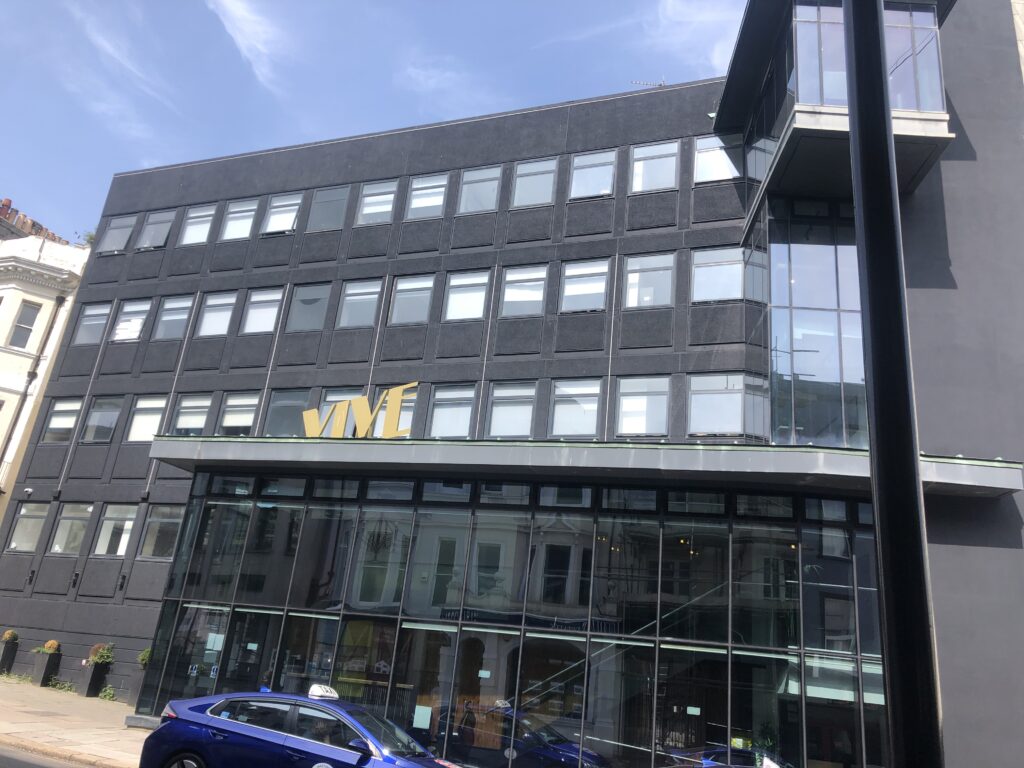
Virtually all the flats had been sold off in previous years on 100+-year leases to buyers – many of them based abroad – who paid between £80,000 and £120,000 for them as buy-to-let investments. The original idea was that most would be sub-let by their owners back to a letting company for use as hotel rooms and/or student accommodation, which would ensure high occupancy rates and thus a good return. But when conflicts arose between the owners and the hotel companies over aspects of sale agreements, service charge demands and accounting of income, the majority of owners started using an alternative letting agency, My Property Host, to rent out their flats, or else let them separately on assured shorthold tenancies.
As reported in HIP back in June [see Uproar Over Vive Closure in HIP 281], two companies involved in the hotel enterprise – Havelock Properties Limited and Havelock 1 – were declared insolvent in May and put into administration. The administrators, Ian Goodhew and Abigail Shearing of London insolvency firm Voscap, immediately installed security staff to restrict entry through the common parts of the building. A small number of leasehold owners and their assured shorthold tenants were allowed access, since it would be a criminal offence under the Protection from Eviction Act to deny it to those occupying their one-room flats as homes. But all guests, would-be lodgers or other invitees were barred – and remain so, nearly six months on.
HIGH COURT ACTION
On 9 July a body of up to 87 leasehold owners joined in a High Court action to apply for an injunction requiring the administrators to permit access and to appoint a managing agent. A consent order made between the parties on 25 July contained undertakings by the administrators (i) to appoint a managing agent immediately; (ii) to ensure that the appointee agent would comply with the landlord’s covenants to give leaseholders “quiet enjoyment” of their properties, i.e. at the very least unfettered access, and to provide services as set out in respective leases, including effecting insurance; (iii) specifically, following the appointment of an agent and effecting of insurance, to afford access to the leaseholders.
Within days of that order the administrators rejected the applicant leaseholders’ proposal for the appointment of My Property Host as agent, but instead appointed a dormant company DR25 Limited with no track record in property management. A sum of £150,000 was allegedly paid by this company to secure their bid, though it’s unclear to the leaseholders what the source of these funds could be.
Since its appointment, DR25 Limited has continued to exclude all but a handful of leaseholders and/or their subtenants or invitees from access to their properties. Services such as repairs and cleaning have been withheld. Individual properties have been accessed and fixtures such as air conditioning units have been removed without notice to leaseholders.
SERVICE CHARGE DEMANDS
The leases provide that at the beginning of each service charge year leaseholders are to be sent an estimate of service costs. Instead, the leaseholders have been served with a series of purported service charges in respect of costs already claimed to have been expended. The amounts charged are grossly in excess of what would be normal for this size of block. They have included an item of £67,250 described as “security costs”, incurred in the period of 16 May to 13 August, presumably for the purpose of excluding leaseholders and their invitees as detailed above.
At least one leaseholder, perhaps many others, have sought to challenge these purported demands in the First-tier Tribunal. Rather than seeking to justify them, the administrators have effectively blocked these challenges by asserting their right to a moratorium during the insolvency process, thus forcing the applicant/s to seek the consent of the High Court to proceed.
In the meantime, the leaseholders have been attempting to restore their application to the High Court for a full hearing. A combination of lack of court time plus what they view as further obstructive manoeuvrings on the part of the administrators and/or their lawyers mean that no such hearing will now take place until the back end of January, perhaps longer.
At a rough calculation, the likely aggregate gross value of lost lettings of 90+ properties may be running at £15,000-£20,000 per week – i.e. approaching £400,000 total loss since May to date and a further prospective £200,000-plus loss continuing to accumulate between now and a court hearing in January.
The administrators’ solicitor Demetrios Dionissiou filed a statement on their behalf in the High Court on 24 July. It declared: “The Joint Administrators are sympathetic to the Leaseholders’ concern that they should obtain a return on their investment as speedily as possible.” The reason for denial of leaseholder access, Mr Dionissiou asserted, was concern for personal safety within the building arising from the build-up of waste debris and consequent fire risk. However, he admitted in the statement that it is the landlord’s obligation under the leases, not the leaseholders’, to keep the building clean and safe. In any event the cost of resolving any safety issue would no doubt be a small fraction of the loss that is resulting from the exclusion.
PURPOSE OF ADMINISTRATION
The supposed purpose of administrators of insolvent companies is to rescue the companies as going concerns or, if that is not possible, to achieve better results for their creditors than would be likely to be achieved if they were wound up. The leaseholders do not understand how this purpose is being served in this case. The companies were not engaged in any profitable business which could be sold as a going concern. The residual value of any property not already sold on long leases is surely dwarfed by the insolvency costs or, in any event, could be realised more easily by a liquidator.
From their point of view, Mr Goodhew and Ms Shearing have appointed a managing agent which appears to have no interest in working with the leaseholders. Furthermore the administrators seem intent on obstructing the resolution of legal issues through either the High Court or the First-tier Tribunal.
That assessment has led the leaseholders to question the relationship between the companies in administration and the purported creditor by whom the administrators were appointed, KNWZ Limited. How and why did it manage to lend £125,000 to these companies when it seems clear that they were already in financial trouble?
Last week HIP raised these and other questions with the co-administrator Mr Goodhew. He declined to make any substantive response, on the ground that the matters at issue are currently subject to court proceedings and that any report run in this newspaper “may prejudice the outcome…The administrations are continuing.”
We hope you have enjoyed reading this article. The future of our volunteer led, non-profit publication would be far more secure with the aid of a small donation. You can also support local journalism by becoming a friend of HIP. It only takes a minute and we would be very grateful.

Leave a Reply