
Longshore Drift
DAVID EP DENNIS
Charles Dickens came to Hastings in 1861 to perform a public reading of A Christmas Carol in the Old Music Hall, now called Yates’s Wine Lodge. This event is celebrated during the Hastings Literary Festival in the autumn as Dickens Day during which other aspects of Dickens’ life are highlighted. He saw poverty all around him in workhouses and factories and described them in harrowing detail in books such as Oliver Twist, Bleak House, Little Dorrit, David Copperfield, and Great Expectations.
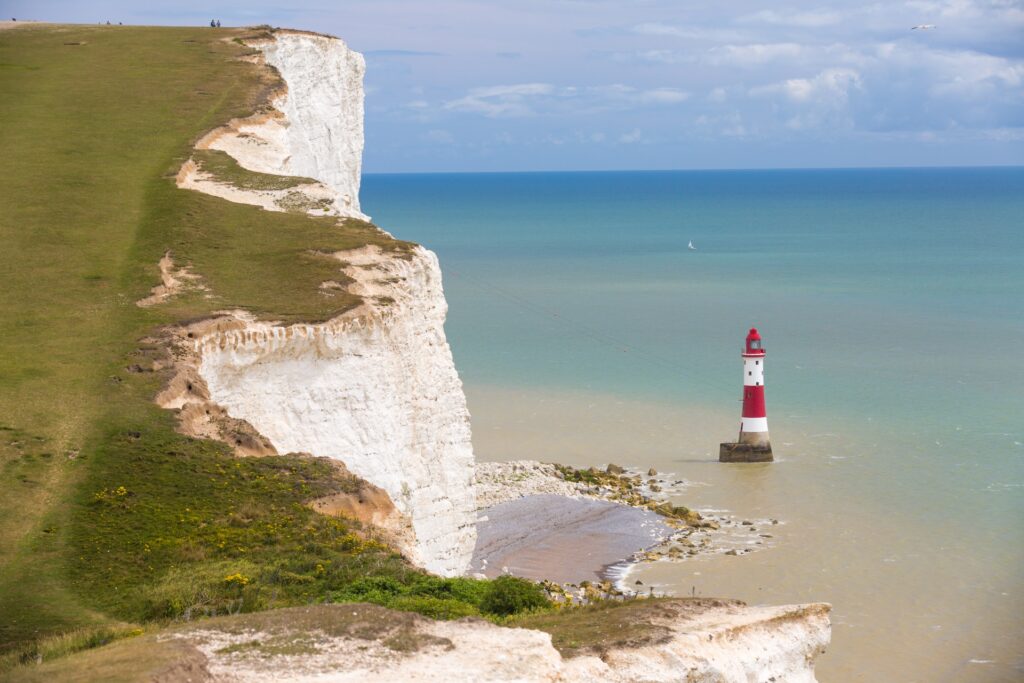
When he came to Hastings, he may well have walked on the seafront and watched the waves shooshing the shingle from Eastbourne to Hastings in a slow rolling movement that has never ceased since the beginning of the world. However, the first recorded use of the precise term ‘longshore drift’ was not written down until 1893 by an unknown wizard of coastal geomorphology. It refers to the geological process by which sediments such as sand and gravel are transported along a coastline, parallel to the shore, by waves approaching at an angle.
The word ‘long’ derives from the Old English word ‘lang’, meaning ‘having considerable linear extent.’ ‘shore’ comes from the Old English ‘scora’, meaning ‘land adjacent to a large body of water’. ‘Drift’ stems from the Old English ‘drifan’, meaning ‘to drive’ or ‘to force along,’ which evolved to denote movement caused by external forces.
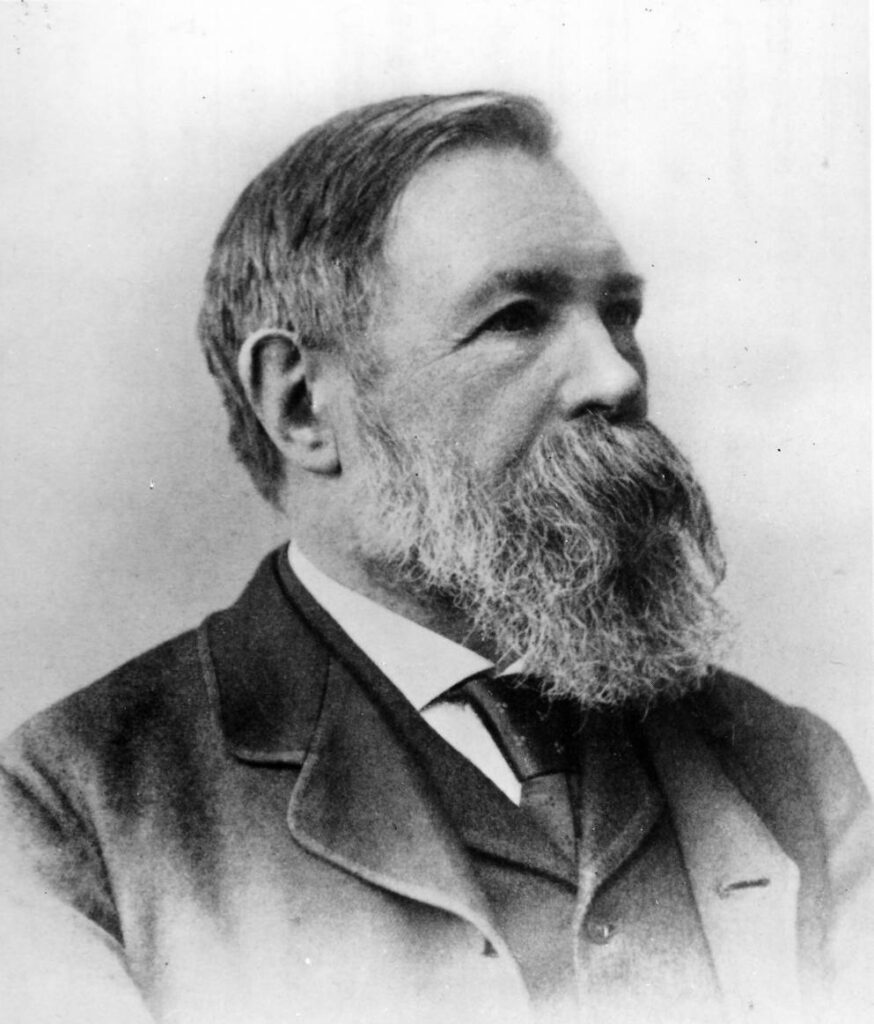
But this article is not purely about shingle movement. Instead, it is about the drift of ideas along the shoreline from Eastbourne to Hastings.
Karl Marx was born on 5 May 1818, in Trier, Prussia (now Germany). His great friend Friedrich Engels was born on 28 November 1820, in Barmen, Prussia (now Wuppertal, Germany). They first met on August 28, 1844, when Friedrich Engels visited Karl Marx in Paris, where Marx was living in exile. They spent ten days discussing philosophy, economics, and revolutionary politics, forming an instant intellectual and political bond. This meeting led to their first major joint works, The Holy Family (1845), and later The Communist Manifesto (1848).

Much later, Volume 1 of Das Kapital (Kritik der politischen Ökonomie – Critique of Political Economy) was published on 14 September 1867 in Hamburg, Germany. The book analysed capitalism’s structure, introducing key concepts like surplus value, class struggle and commodity fetishism.
Marx and Engels both visited Sussex, coming to Eastbourne in the autumn of 1881 because Marx had bronchitis and pleurisy. In those days, the seaside with its alleged iodine atmosphere (really the smell of rotting seaweed) was recommended by physicians for its sea air and mild climate. Coming to the seaside was also an intellectual escape from the pressure of London.
Marx then died in 1883, but Engels continued to come to Eastbourne and other coastal towns to relax – but also to continue developing Marxist Theory. Engels died in London on 5 August 1895 aged seventy-four at his home at 122 Regent’s Park Road, Primrose Hill and, being a resolute atheist, he wanted to be cremated.
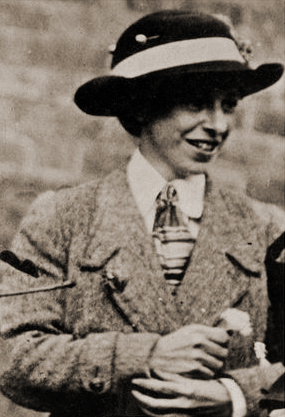
This growing movement away from churchyard internment had already become associated with radical freethinkers and secularists. He had his wish at Woking Crematorium in Surrey, Britain’s first crematorium established in 1878. A large group of colleagues and friends attended this ceremony, including Eleanor Marx, who was Karl Marx’s daughter. There were also Eduard Bernstein, a leading socialist for the Social Democratic Party of Germany (SPD), August Bebel, co-founder of the SPD; and William Liebknecht, who was a Marxist convert and friend of Engels. There were many other people there from the British Social Democratic Foundation (SDF).
Part of Engels’ time in Eastbourne had been spent walking on the beautiful landscape of Beachy Head with its massive chalk cliffs, downland scenery and iconic Belle Tout Lighthouse – which became operational from 1834 with money from slave-owner and slavery supporter John ‘Mad Jack’ Fuller. And following Engels’ wishes, most of the people who attended his cremation service at Woking then travelled to Eastbourne where Eleanor Marx and others, in a simple secular ceremony, cast his ashes into the westerly breeze – out over Beachy Head cliffs and down into the grey-blue sea where the longshore drift carried him ever so slowly towards Hastings.
With each angled wave, the tiny particles of Engels’ dust came along the coast, adding to patches of fine low tide sand as they settled in deep by Hastings Pier, opened in 1872.

The portion of Engel’s powdered remains that had embedded itself in the low tide sands of Hastings may have touched the toes of a man called Robert Noonan, an Irish-born socialist who was walking on the shore in 1901. The dust of Engels perhaps caused him to mystically author his famous book The Ragged Trousered Philanthropist, using the name Robert Tressel. This described poverty, exploitation, and harsh working conditions. By 1910 Tressel was ill, and poverty-stricken himself. He died of tuberculosis in 1911 in Liverpool on his way to Canada for a better life.
However, before he left Hastings, he and others formed the Social Democratic Federation (SDF): a Marxist group hoping to counteract the dominance of Tory capitalist ideology. The SDF in Hastings actively campaigned against local councillors who were perceived to be colluding with big businesses, particularly concerning utilities like William Murdoch’s invention of gas lighting and Michael Faraday’s electricity – inspired during his time at Pelham Place, Hastings. The SDF efforts sought to expose and challenge corruption, advocating for the rights and welfare of the working class.
Members organised public meetings, distributed literature, and engaged in discussions to raise awareness about socialist ideals. These activities aimed to educate the people of Hastings on issues of social justice, workers’ rights, and economic equality.
Although social hero Noonan was no more, his intellectual shockwave stirred the sea at Hastings and longshore waves that developed, still sparkling with the sunlit grains of Engels, flowed over the paddling feet of suffragettes, who did like to be beside the seaside – beside the sea.
So, here, like ornate shells collected by a seaborne swirl, were the Hastings suffragettes. Elsie Bowerman who lived in St Leonards and had survived the sinking of the Titanic via Lifeboat 6 and crested the wave of women’s protests by speaking in 1910 to an audience of 1,000 in Hastings on the subject of Votes for Women.
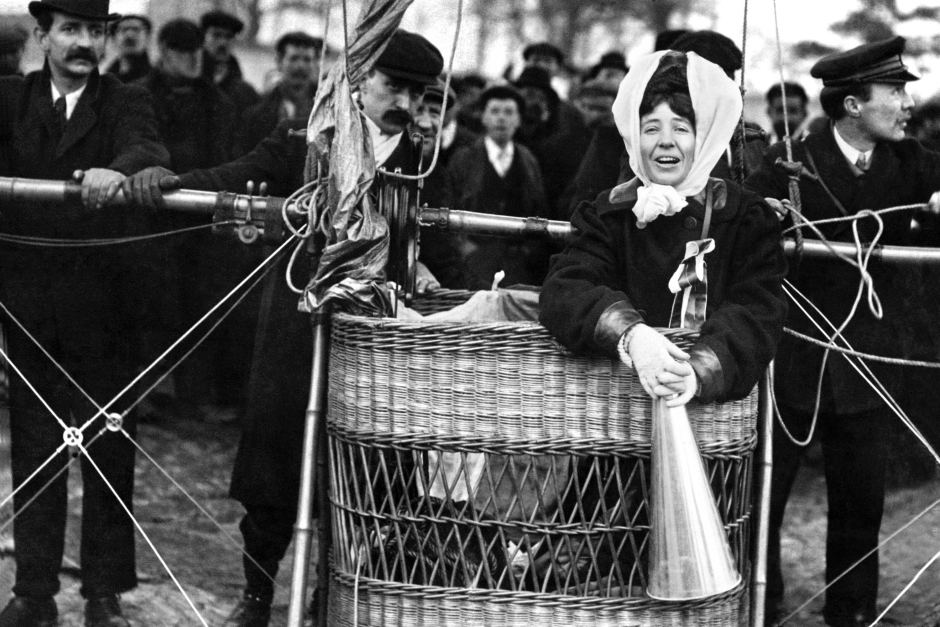
Then there is the great Muriel Matters, the suffrage icon, who lived at 7 Pelham Crescent, skinny-dipped at Pelham Beach and chained herself to the iron grill of the Ladies Gallery in the House of Commons that obscured the female view of democratic debate.
Another campaigner who dipped her toes was Barbara Bodichon of 9 Pelham Crescent – that great precursor of women’s suffrage who wrote: A Brief Summary in Plain Language of the Most Important Laws Concerning Women.
And there was also the brave Mary Richardson, who toiled with Emily Pankhurst, was force-fed under the Cat and Mouse Act of 1913 and who managed to damage the Rokeby Venus, that very Roman Goddess who had been formed from the foam of the sea. Brave Mary later died in her flat at St James’s Road, Hastings, yet before she left us, she had told the Times of London: “I have tried to destroy the picture of the most beautiful woman in mythological history as a protest against the Government for destroying Mrs Pankhurst, who is the most beautiful character in modern history. Justice is an element of beauty as much as colour and outline on canvas.”
Nowadays women are still not treated with sufficient respect for the wonderful work they do. Nevertheless, though the nature of the barnacle people of Hastings is edged with iron resolve, most of us steer sharply away from the excessive revolutionary radicalism of Marx and Engels – a vision ruined by Joseph Stalin.
However, we, men and women alike, the ever-present proletariat who keep safe the tides of life and home, still do wish, like Noonan, for social improvement and a great reduction in the gap between rich and poor – if you get my drift.
We hope you have enjoyed reading this article. The future of our volunteer led, non-profit publication would be far more secure with the aid of a small donation. You can also support local journalism by becoming a friend of HIP. It only takes a minute and we would be very grateful.

Leave a Reply