
Musicof the Future, Music of the Past
VICTORIA KINGHAM
One of the basic principles I have found invaluable is that comparison of one type of music with another, as a value judgement, has got to be invalid. There are certain aspects of any good musical ensemble that are less to do with the musical style and more to do with the quality of performance, whatever the category. How do we decide what is good music, and what isn’t? I guess what I’m trying to ask is, what are the elements common to the music we like which don’t necessarily depend on the genre, or the instrumentation, or the performer? How do we form a critical appreciation? These are just brief, personal notes on a huge question, referencing recent excellent concerts here.
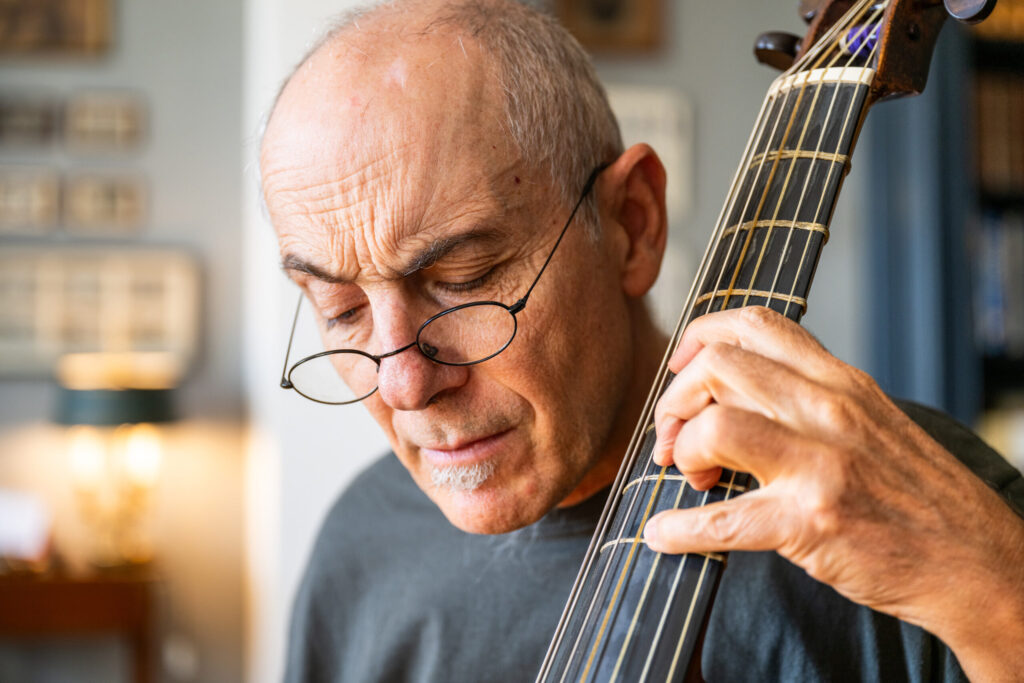
Paolo Pandolfo, viola da gamba
RAPPORT
First, there’s musical rapport – the communication between instrumentalists. So for example, listening recently to Paolo Pandolfo, master of the beautiful, ancient, mellow-yellow sounding viola de gamba, interacting with Max Baillie on violin, was wondrous. Pandolfo is acknowledged world-wide as a virtuoso on this early instrument; a professor of music who plays, teaches, composes, and improvises throughout the world, and whom we were incredibly fortunate to be able to hear in St Leonards. Literally under his hands, the sound of the seventeenth century becomes something immediate, eternal, perfect. He ended with his own composition, Violatango, a kind of baroque, Piazzolla-inspired single-movement piece that begins with an improvisation. Most of the instrumental arrangements were written by Fred Thomas, the pianist and double-bassist.
The joy they all took in the genius of Bach was almost palpable; the soar and swoop of his gloriously interwoven melodic lines was an ethereal experience. Churches must be designed for this; there’s a kind of transport of the sound away, up into the rafters, that makes it seem to emanate from a heavenly sphere. The visceral effect of the human listening experience, however, stems from the interpretation, the deep understanding that precedes great expositions of this universal music, and from the closeness of rapport between musicians.
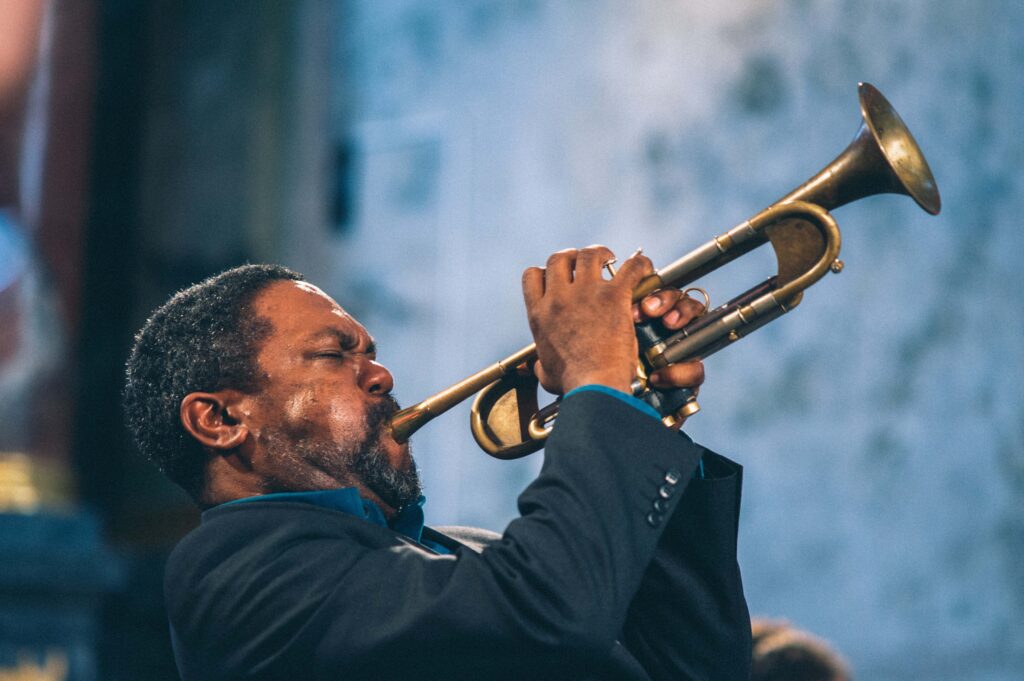
Byron Wallen
INTERPRETATION
With jazz, that rapport becomes important in a different way. With jazz, a player is not only listening to an interpretation of a tune, but also usually contributing to a spontaneous ensemble composition within that tune’s structure. Byron Wallen’s band, performing at a Hastings Jazz monthly session (and if you’ve never been, I can’t recommend that club highly enough) have a close bond. Wallen’s compositions don’t necessarily pander to popular taste; they have an edgy beauty, full of unexpected chord changes and time signatures. To be able to handle these, the band has not only to be technically very accomplished but also musically close enough to internalise what the others are doing, each moment, and to interpolate their own musical responses.
This is what happens in jazz, and this band is a supreme example. Rob Luft, I would say, is a gifted guitarist; likewise Rod Youngs on drums. Together with the restrained, but sensitive electric bass of Paul Michael, the band responded perfectly to Wallen’s exceptional musicianship, leadership and compositional skill. The creation of the harmonically-full, yet still spacious, sound of his music heightens their pleasure in each other’s musical attainment, and this is transmitted to the audience.

PRESENTATION
Sometimes it’s enough for a band to be proficient, and have a communicative on-stage presence, a desire to please an audience – perhaps you could simply call this showmanship. It’s often to do with programme selection, the length of each number, the presentation. Think of the big bands of the 1940s, the choreographed performance of a Duke Ellington or Glenn Miller number, for example, the standing of the horn sections, the raising of the trombones. All of these things are important; I’ve seen the most advanced jazz bands bore audiences not because their music was bad, but because they made no attempt to connect with those for whom they were playing, other than themselves. Conversely I’ve watched bands I expected to be merely pedestrian, play with verve, style, and commitment, and been entranced.
I’ve only tried here to extrapolate a small part of what it is that makes us say of a performance, that was a great concert. Maybe it’s easier. In the words of Duke Ellington, “There are simply two kinds of music, good music and the other kind.”
Paolo Pandolfo played Bach at Christ Church, Silchester Road, St Leonards with Max Baillie (violin) and Fred Thomas (keyboards, double bass) on 3 June. See a preview of his latest recording (of work by Ferrabosco, a 17th century English composer of Italian descent), with his own commentary, at paolopandolfo.com
Byron Wallen’s Four Corners played at Jazz Hastings, EHSAA at The Stade, Hastings, on 3 June. You can hear Wallen’s latest album, Indigo (2023), on Bandcamp at twilightjaguar.bandcamp.com/track/rhythm-of-the-gods
We hope you have enjoyed reading this article. The future of our volunteer led, non-profit publication would be far more secure with the aid of a small donation. You can also support local journalism by becoming a friend of HIP. It only takes a minute and we would be very grateful.

Leave a Reply