
Logie Baird: Wireless Visions
GARETH REES
Last month, ‘The Spirit of Invention’ festival in Hastings saw more than 30 artists take part in a celebration inspired by John Logie Baird, who worked on his television prototype in the town 100 years ago.
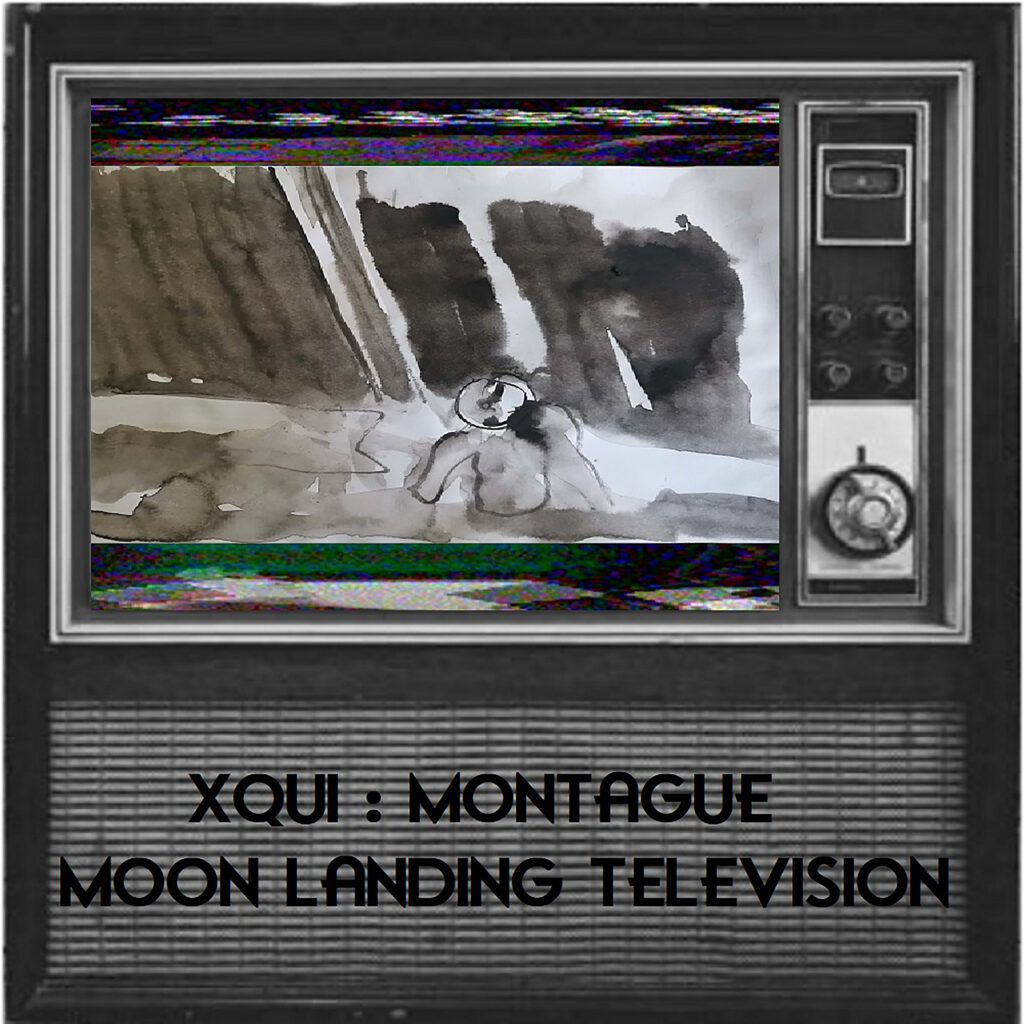
The event also saw the release of Moon Landing Television, an album by Zqui: Montague, featuring Hastings-based multimedia artist, writer and composer, Jude Cowan Montague. Across ten experimental tracks, Moon Landing Television explores the weirdness and eeriness of transmission and broadcasting technologies.
Montague says: “John Logie Baird was a compulsive inventor, who came to Hastings for his health, and, while he was here, decided to make ‘seeing by wireless’ a reality. He created a mechanical television, under his own steam, enlisting the support of friends and friendly people in the town. It was here that he almost killed himself in a blast of high voltage and created the first moving images, only shadows at the time, to be transmitted live.”
For this release, she collaborated with Xqui, an anonymous sound artist who specialises in turning field recordings and found sound into plunderphonic loops. In the past, they have worked with famous names like Vince Clarke, Neil Arthur, Mark Stewart and Lee ‘Scratch’ Perry. Montague supplied the ‘live coding’, which was dissected, manipulated and re-assembled by Xqui in their studio in Lancaster.

For the uninitiated, live coding is the name for a performance of sound patterns, beats, noisescapes and images processed through a computer, then reproduced as audio or visual media – often both at the same time. Montague creates her own samples through field recordings and vocal performance, building up a library of unique sounds that she can manipulate in front of an audience.
“Live coding fascinates me,” says Montague. “The software developed by different makers such as Alex McLean who created Tidal Cycles (the software I used for this album) means that non-specialists can jump in and get creative with code in front of an audience. As an improvising musician, I found it was quite a natural step to bring computers into my avant-garde performances.”
To bring coherence to her live coding performances, Montague introduces thematic elements and storytelling techniques. “The important thing is to put yourself into the process,” she says, “and allow your human senses to drive the work.”
Moon Landing Television exemplifies this union of the human and the cybernetic, with Montague’s voice intoning narratives over dissonant crackles and warped loops of sound. After an initial fragment of the moon landing broadcast, the album treats the listener to an array of manipulated sounds: horses whinny over clattering beats, cat meows blend with electronic pulses, Morris dancers’ clashing sticks and cheers become modulated industrial rhythms.
Central to the album is the track John Logie Baird, which brings the listener into the mind of the famous inventor as he attempts to transmit a wireless image of his dummy, Stookie Bill, through a fuzzy haze of white noise. Like the art of live coded music itself, Logie Baird is trying to conjure ghosts from a machine, “testing the boundaries of time and matter”.
Moon Landing Television by Zqui: Montague (Wormhole World) is available on CD and as a digital download via Bandcamp.
We hope you have enjoyed reading this article. The future of our volunteer led, non-profit publication would be far more secure with the aid of a small donation. You can also support local journalism by becoming a friend of HIP. It only takes a minute and we would be very grateful.


Leave a Reply