
Rapid Increase in SEN Appeals
More than a fifth of all refusals for a Special Educational Needs Healthcare Plan in East Sussex are being overturned on appeal according to Freedom of Information figures obtained by HIP researcher JAMES PRENTICE
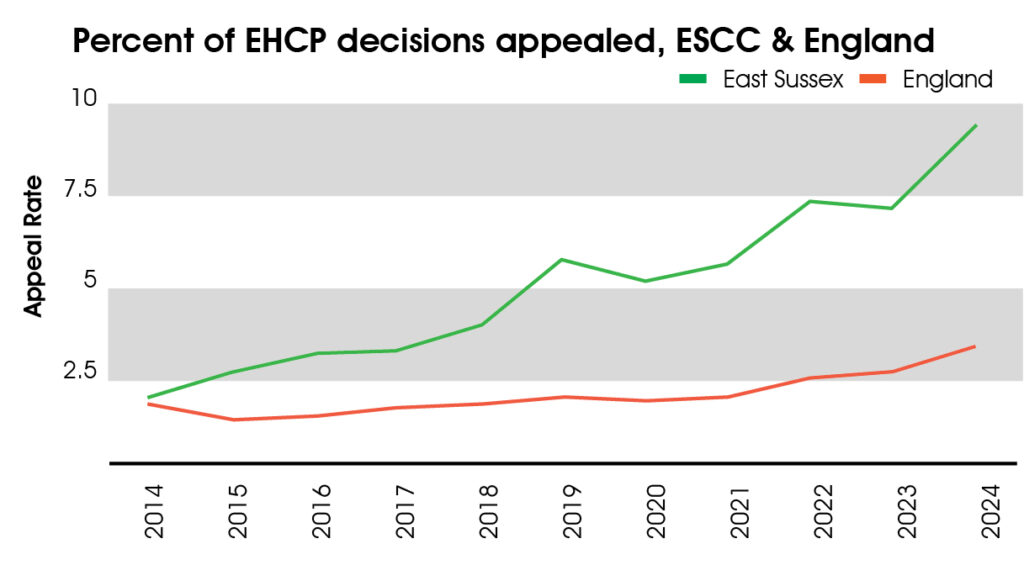
The figures are stark. In 2022/23 only 100 rejected applications led to an appeal. Latest annual figures show 238 did. That’s a huge increase of 138% and comes despite the number of applications being nearly consistent over each academic year.
An appeal is possible if an initial application for an Education Health Care Plan (EHCP) is turned down by the Local Education Authority (LEA) – in this case East Sussex County Council. An ECHP – formerly known as ‘statementing’ – is part of the Government’s Special Educational Needs (SEN) programme which identifies learning difficulties or disabilities that make it harder for a child or young person to learn or access education compared to peers of the same age.
These EHCP plans are legally binding documents that describe a child’s special educational, health, and social needs, and outline the exact extra support required to meet those needs. The purpose for each plan is to provide clear, structured support for any difficulties a child has and identify what a school must put in place to help them. This additional support is important as they are usually associated with a higher student success rate. This is especially so for SEN pupils as they tend to have a lower success rate than the national average. Therefore, intervention is aimed at reducing inequality of outcomes within education.
Over the last two full academic years in East Sussex there have been roughly 1,100 applications for an EHCP. The proportion of these plans being accepted or refused within the target six-week deadline has decreased by 5% to 82.4%. So more parents are experiencing longer waits before knowing the outcome of their initial application, which might influence the decision to appeal.
In any event, more than double the number of applications are now being rejected leading to appeals. And a large proportion of those appeals are successful. In fact the LEA only managed to persuade the appeal tribunal that they were right in up to 7% of cases. A big majority of parents were successful in their appeal, winning the right to an ECHP. This represents a sizeable increase in the number of cases in which the LEA gets the decision wrong.
The Education Authority, East Sussex County Council, now controlled by Reform UK, responded to our figures with the following statement: “We recognise that there are a high number of appeals across East Sussex but we are confident that our decision-making is in line with the expectations set out in the SEND Code of Practice, involving highly-trained professionals from a wide range of schools and services. Although the number of tribunals is higher in East Sussex than other parts of England, the outcomes are similar.” However the ESCC statement did not explain why the county had a higher number of tribunal appeals than nationally and whether it could be because they are wrongly refusing more cases than the national average.
We hope you have enjoyed reading this article. The future of our volunteer led, non-profit publication would be far more secure with the aid of a small donation. You can also support local journalism by becoming a friend of HIP. It only takes a minute and we would be very grateful.

Leave a Reply