
PreviewingThe Situation
VICTORIA KINGHAM
“Nuance,” muses Steve Furst, “is not a great friend of political debate any more.” We’re talking about his new one-man play Fagin: Hero or Villain? written, acted and directed by Furst, due to show at The Stables on 3 June.
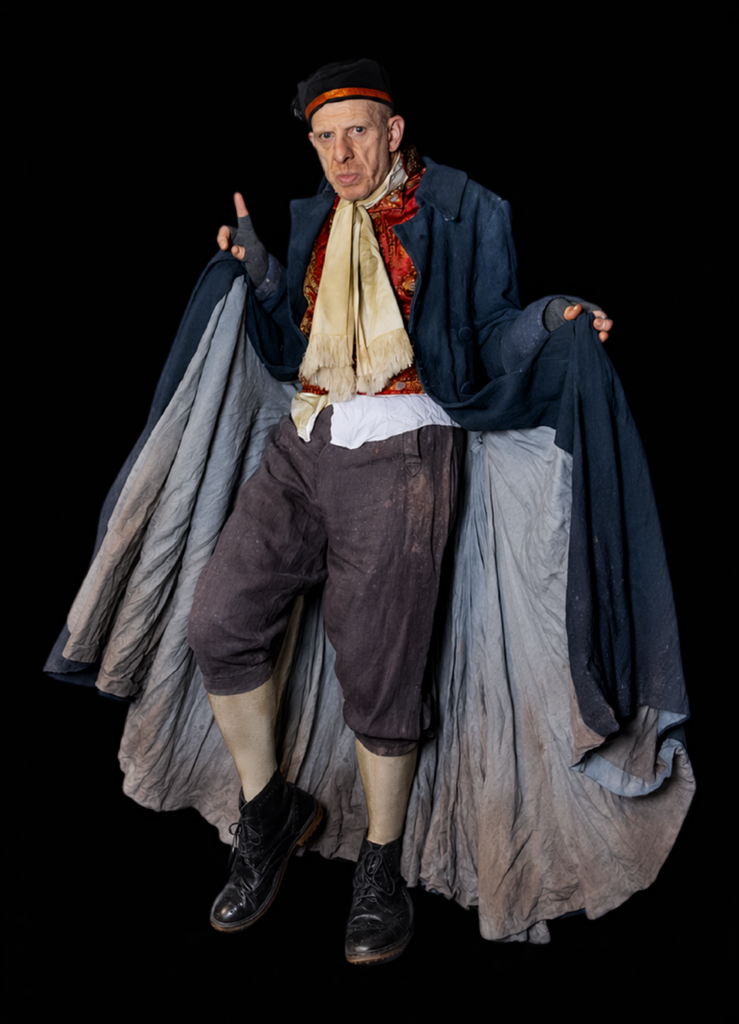
He grew to appreciate Fagin at Leeds Playhouse a couple of years ago, in a universally-praised performance of Lionel Bart’s Oliver! which, for various non-performance-related reasons, had to come to an abrupt end. “I thought, well what’s my way around this? I love the character. I think Oliver! is a near-perfect musical.”
After a careful re-reading of Oliver Twist, he became interested in the character as portrayed by Dickens and the adaptation by Lionel Bart. They are quite different. For example, Furst continues, “He was never perceived as a ‘Jewish character’ by Lionel Bart.” Bart’s, and his own, particularly nuanced approach to the character was one of the critically applauded features of the Leeds show. In his new play, Fagin acts as a narrator, looking back at the antisemitism, or perceived antisemitism, in the book and also at Bart’s remaking of the character.
In Dickens’ time, continues Furst, fictional criminals “were nearly always Jewish”. The Black population in London was quite small then, and were in no way used as scapegoats or vilified as they became in this country, especially post-Windrush.” Dickens’ earlier novels are notoriously packed with Jewish stereotypes, from Sketches by Boz to Great Expectations, in which Abraham Lazarus (‘the Jew”) lisps his way through financial transactions.
It appears that Dickens’ attitude was modified later through a correspondence with a Jewish (female) reader and he later regretted that he had given offence and apologised.
Cultural and casual antisemitism
It isn’t of course all down to Dickens. He used a centuries-long culturally ingrained set of assumptions. Since the thirteenth century, Jews have been portrayed as vile sinners in this ‘Christian’ country. The rising merchant class needed to borrow money to finance their growing businesses, and as usury was a sin they were not allowed moneylending among themselves. Thus Jewish people, forbidden by law at the time to practise almost all other professions, were allowed to become moneylenders, yet simultaneously they were condemned for the same thing. Extraordinary fictions grew up around their existence, rumours that they killed Christian babies and used their blood in rituals, for instance, were widely believed.
The antagonism grew on from the middle ages, and though Shakespeare put in Shylock’s mouth an appeal against hatred (“Have I not eyes?” etc.) his clothing and mannerisms are often portrayed stereotypically on stage.
George Eliot had a more accurate idea in her final novel Daniel Deronda, which some believe to have been a founding influence on the Zionist movement (then a rather different organisation with a different kind of idealism, from that of the present, tragic times). And all kinds of intensely brilliant artists, right up to the present day, have also been fervent Jew-haters: Wagner, George Du Maurier, Ezra Pound, Hemingway, T. S. Eliot, beloved Roald Dahl, Mel Gibson, to name only a few.
The habit of art
“But Art is always where I retreat to and where lots of other friends retreat to and I suppose it’s our safe space,” Furst goes on. “Somehow it seems to be the way forward for many of us to set out our stall and, through the prism of art work, ask questions.” So while it asks questions and offers a few facts, his play is by no means an academic or political lecture. It is, he says, first and foremost, an entertainment.
Those of you who are not familiar with Steve Furst’s name as an actor, may know him (as I’m ashamed to say I did) through the advertisement where he cries his way through his holiday for his lost case of Heinz tins of baked beans. It’s fatuous – but very memorable. Twenty years ago or so he was also in a series of advertisements for Orange, (which I have since watched on YouTube, much funnier than any of today’s holier-than-thou adverts, imho). He is also known for stand-up comedy, and he sings; in addition to the Oliver! ones, he has written new songs to perform in his play.
His work on commercials, though, has happily enabled him to set up his own theatre, the Circle and Star at Hampstead, from where he brings his show to Hastings. He was brought up here, and feels it to be his second home. He’s always done shows here but this is his first at The Stables, which he says has at last become “this vibrant theatre that should be on everyone’s list.”
Fagin: Hero or Villain? will be shown at The Stables for one night only on 3 June. Tickets and details stablestheatre.ticketsolve.com/ticketbooth/shows/873686182
We hope you have enjoyed reading this article. The future of our volunteer led, non-profit publication would be far more secure with the aid of a small donation. You can also support local journalism by becoming a friend of HIP. It only takes a minute and we would be very grateful.

Leave a Reply