
Hiroshima Day 2026
JOHN ENEFER
On 6 August, the annual Hiroshima Day commemoration will take place in Alexandra Park, Hastings, as local people remember those who died from the first use of nuclear weapons in war.
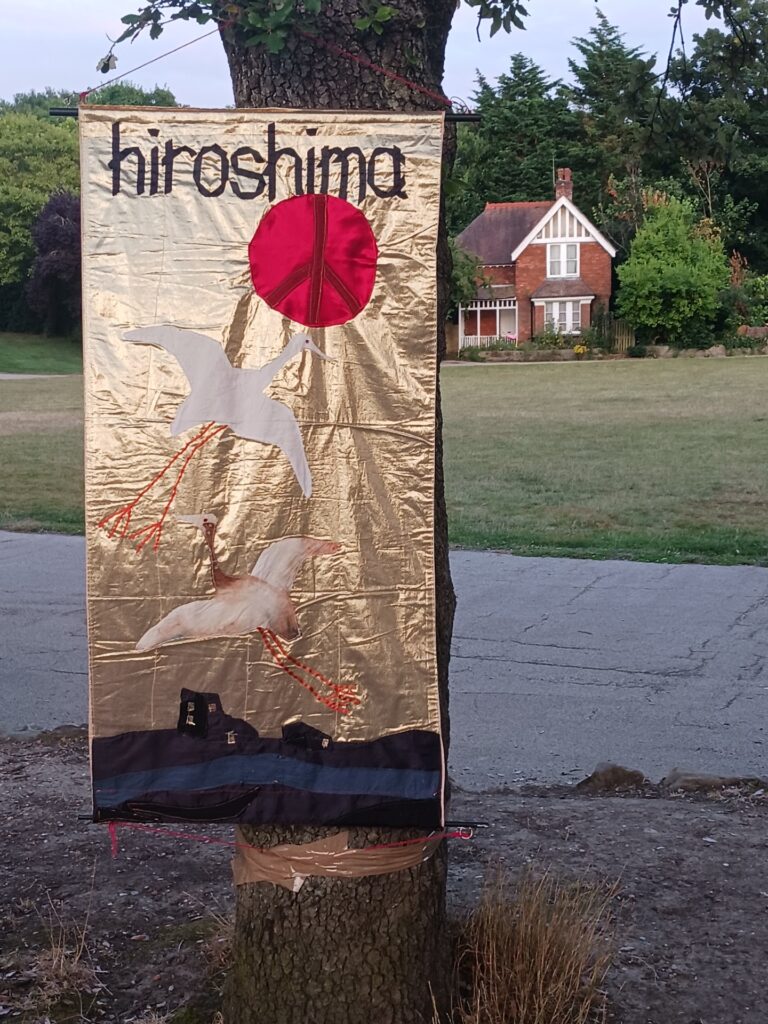
Across the world events will take place to mark the occasion, from Coventry Cathedral to the Peace Memorial Park in Hiroshima. The global events will take place against a backdrop of war and political disputes across the world – some featuring nuclear-armed states – which have increased concerns that we may be on the brink of nuclear disaster.
In January the Bulletin of the Atomic Scientists said the symbolic ‘Doomsday Clock’ was set at 85 seconds to midnight, meaning the human race is now closer to catastrophe than at any time since 1945. This judgement was made because of threats to human survival posed by nuclear weapons, climate change, biological threats and Artificial Intelligence.
The Bulletin of the Atomic Scientists was first produced shortly after World War II to try and promote understanding of the dangers of nuclear weapons and influence policy in relation to them. It was founded by scientists who’d been involved in the creation of the atomic bomb and were acutely aware of its dangers. Key figures in the development of the bomb, Albert Einstein and J Robert Oppenheimer, were early supporters of the Bulletin.
The bomb that devastated Hiroshima on August 6 1945 was followed, three days later, by the atomic bombing of the port city of Nagasaki. An estimated 185,000 people died as a result of the bombs dropped on the Japanese cities by the US air force. They perished due to the force of the blasts, fire, falling buildings, untreated burns and due to radiation sickness, which was little understood at the time.
The standard justification for the attacks – that they were essential to defeat the ‘fanatical’ Japanese – is seriously undermined by an extensive study launched by the US government as it tried to understand the impact of the allied bombing campaigns during the war. The Strategic Bombing Surveys concluded (p107) that “Japan would have surrendered even if the atomic bombs had not been dropped, even if Russia had not entered the war and even if no invasion [of mainland Japan] had been planned or contemplated.”
Those who perished in both Hiroshima and Nagasaki will be remembered on Hiroshima Day as people affirm ‘Never Again!’.
On Thursday 6 August, people will gather from 8.00pm at the lake near the main entrance to Alexandra Park, with the event beginning at 8.30pm. It is organised by Hastings Against War, which is now also known as XR Peace after the group joined forces with Extinction Rebellion in 2024.
We hope you have enjoyed reading this article. The future of our volunteer led, non-profit publication would be far more secure with the aid of a small donation. You can also support local journalism by becoming a friend of HIP. It only takes a minute and we would be very grateful.

Leave a Reply