
Must It Be Done?
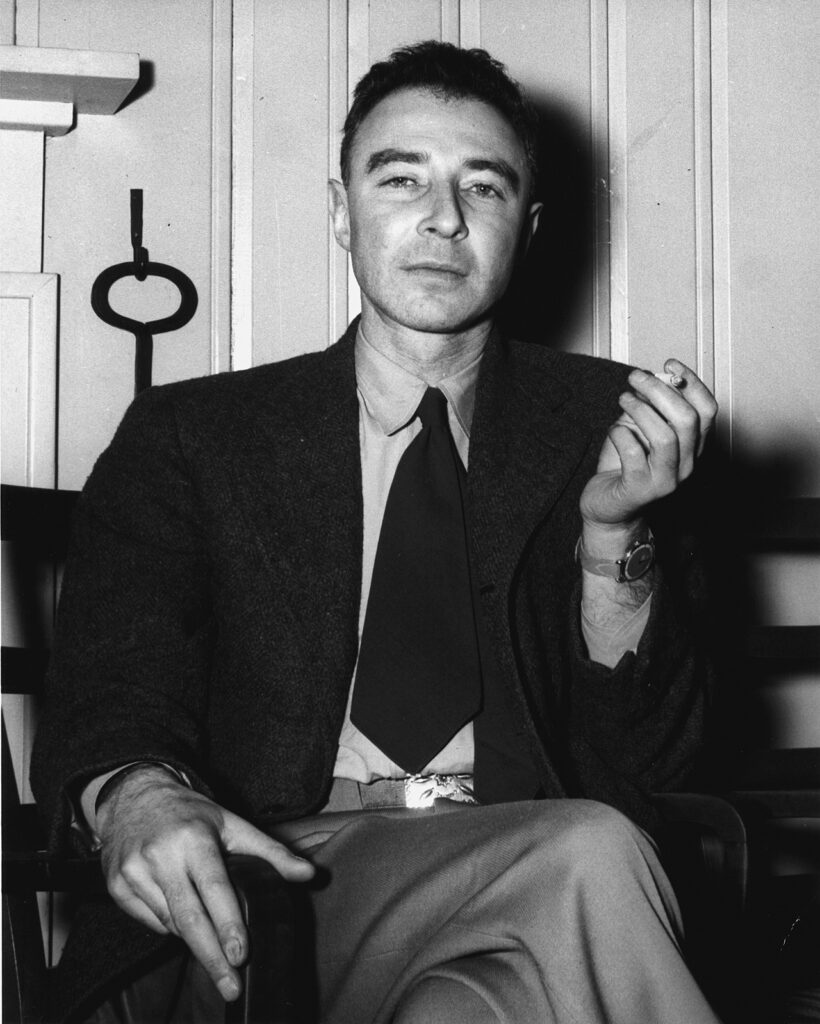
ROBIN HOLTOM recalls how Robert Oppenheimer described inventing the atom bomb as ‘technically sweet’, and wonders how this concept might apply to other technological advances.
At the end of the 17th century Sir Christopher Wren invented a machine to make silk stockings ten times faster than could be done by hand. He offered to sell it to the silk weavers but they felt it would damage their trade. Thereupon Sir Christopher broke “the model all to pieces, before their faces.” Other innovators followed with none of Sir Christopher’s humane reservations, ushering in the Industrial Revolution with dire consequences for traditional skills. Eventually the Luddites attempted, unsuccessfully, to emulate breaking these machines ‘all to pieces’.
We cannot stop progress, we are told. Eventually, someone else would invent a machine to transform the silk weavers lives and the Spinning Jenny soon wove cotton 200 times faster than a hand weaver. So was Sir Christopher Wren’s gesture in vain? I don’t think so. He had the courtesy to include a modifying human factor and to consult the people whose lives would be affected by his invention. They had enough sense of self-preservation to protect their skills and reject the invention.
Omitting the moderating human factor in our mania for progress clearly influenced the recent Post Office scandal. The labour-saving Fujitsu system was not negotiated with the people whose jobs were to be changed by it. The workers were not only deskilled, but then they were also turned into criminals. Hearing the Post Office prosecutors saying they were only doing what they were told to do was eerily reminiscent of Eichmann’s defence of the concentration camps.
This process of first deskilling people and then turning them into criminals is not a new one. In India the British Empire was confronted with a challenge to this process when Gandhi encouraged Indians to spin and weave their own cotton rather than importing it from industrialised England. The Empire sought to deskill Indian weavers and sell them cloth made in England.
It has taken ecologists a century since Charles Darwin to redefine the unit of survival from being just a species to being a species plus its environment. There is a comparable change in mindset needed now in the way we, the human species, consider ourselves. We are not just one-dimensional units performing duties to produce or consume goods. We are individuals plus our skills. Our skills are part of our life support system. These skills create meaning for us and our fellow humans, and to ignore these established skills in the interest of apparent speed and efficiency is a kind of desecration of our humanity.

In 1930, the brilliant economist, John Maynard Keynes, estimated that his grandchildren would work just 15 hours per week with machines doing most tasks. He was wrong. We are too easily seduced by the glamour of new gadgetry. Just because it can be done does not mean it must be done.
We hope you have enjoyed reading this article. The future of our volunteer led, non-profit publication would be far more secure with the aid of a small donation. You can also support local journalism by becoming a friend of HIP. It only takes a minute and we would be very grateful.

Leave a Reply