
Beyond the Job Description
Bexhill-based FERDUSARA ALI outlines the systemic racism she encountered while working in Children’s Services for East Sussex County Council and the endemic racial prejudice she and her siblings endured throughout their childhood in Britain
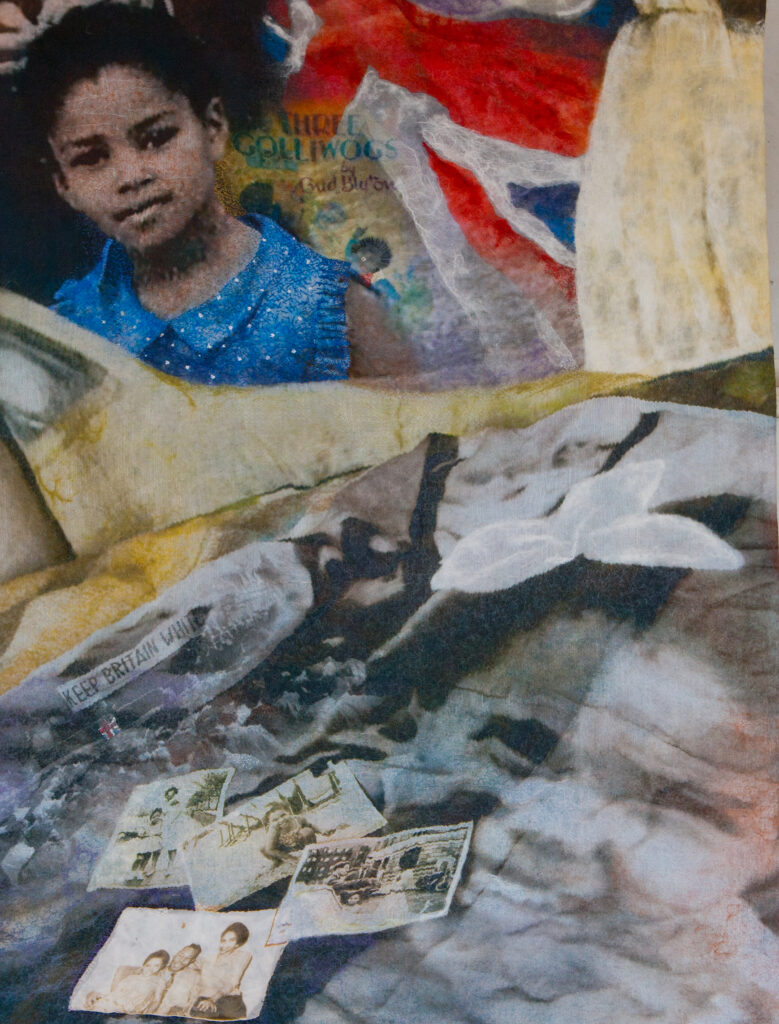
Growing up, my reality was far from idyllic. In a community often driven by prejudice, discrimination, and racism, I witnessed my parents being ridiculed for the colour of their skin. I saw first-hand the struggles my family – particularly my brothers – had to endure. Those formative experiences have woven themselves into a tapestry of memories—some tinged with laughter as my brothers reminisce about their past hardships. Yet for me, those moments carry a heavy weight, as if the wounds have never fully healed.
I vividly remember the times spent in our old housing estate, where the very neighbours who once savoured the aroma of my mother’s cooking were the ones hurling bricks at our windows, shouting racial slurs and demanding, “Fuck off, you Paki! Go back to your own country!” Despite hearing those derogatory words countless times, I still feel the terror that gripped me as a five-year-old girl. That fear followed me into adulthood, ultimately leading me to grapple with the internalised hatred thrust upon me.
The loss of love for the colour of my skin—deemed ‘ugly’ by those who do not share my features—lingers deeply within me. This wound has profoundly shaped my perspective and continues to cast a long shadow over my life. Despite the wave of protests and bold promises that emerged following the tragic death of George Floyd, movements like Black Lives Matter – which I witnessed in Alexandra Park – and various anti-racism efforts advocating the recognition, value, and dignity of people of colour, they have yet to bring about substantial change.
Hollow discrimination pledges
However, systemic racism remains deeply entrenched, with grand anti-racism initiatives often devolving into mere facades that offer only temporary solace in a landscape that urgently demands genuine transformation. The pledges made to combat discrimination in education, employment, housing, and law enforcement frequently prove hollow—a predictable outcome in regions like East Sussex. I’m not at all surprised, given its historical context, which isn’t historical at all; it’s more an ongoing manifestation of racial behaviours and rhetoric. I have personally witnessed the appalling realities that persist in this environment.

During my tenure with the Children’s Services Department of East Sussex County Council, I encountered a deeply troubling work environment characterised by systemic racism, unprofessional conduct, and a complete lack of staff support. My experiences were far from normal or acceptable; I often found myself signed off due to the stress stemming from both the job and the people I was working with—particularly the management. Despite repeatedly voicing my concerns about the racial abuse that I and others endured, our complaints were often met with criticism and dismissal rather than comfort or empathy. Management would brush aside our worries, callously stating that this type of treatment was “part of the job,” suggesting that if it became “too much to handle,” we should simply leave.
But it was never that simple. As the job market deteriorated, I found myself trapped, with no choice but to continue in a role that took an immense toll on my mental health. The racial and often homophobic rhetoric projected onto staff by the young people in our care—behaviours often minimised as mere “low-level racism”—ultimately led to a state of desensitisation among us.
‘Go back to the cotton field’
While management continued to pacify the unacceptable conduct of the young people, allowing their actions to go unchecked, a tumultuous cycle ensued. Staff members, many of whom looked like me, were left to lean on each other for support that the organisation failed to provide, all while being expected to “get on with it.” As my employment continued, the comments grew worse: “Go back to the cotton field,” “At least I’m not as dark as my shoe,” “Return to Somalia, you fucking Paki,” and the “N-word” were among the derogatory slurs often dismissed by both staff and management. These experiences were not isolated to me; my colleagues faced similar hostility.
One incident stands out as the final straw during my time at a particular children’s home. I felt increasingly unsafe working with a young person who had previously exhibited extreme racism. In a shocking escalation, he threw a ketchup bottle at me with full force, screaming, “You fucking Paki! Go back to your own country!” When I went to inform the senior staff member on duty about the verbal and physical attack, she challenged me, saying, “Well, you have no one to cover your shift,” dismissing my distress in the face of such blatant aggression.
Escape the consequences
To make matters worse, the only recourse available in East Sussex was to report incidents to the Sussex Police. Unfortunately, this often proved ineffective, as the police would frequently attempt to dissuade you from pressing charges, citing their reluctance to “criminalise” young individuals due to their age. So, while grappling with the trauma of being racially abused at work, the young people returned home, bragging, and boasting about their experiences of being arrested. This created a troubling dynamic: when racial or other incidents occurred again, these young individuals knew they could essentially escape the consequences of their actions. After witnessing so many previous incidents go unpunished, in their minds, what would make this time—this new arrest—any different?
Ironically, my experience of racial abuse in a children’s home is neither unique nor unprecedented. Numerous reports have documented instances of racism faced by staff from BAME backgrounds in similar settings. For example, a 2019 study published by the Children’s Commissioner for England revealed that staff frequently encountered discriminatory remarks and behaviours from the very young people they were meant to support, leaving them feeling unsafe and unsupported. In 2020, a report by The Independent highlighted the experiences of several foster carers and residential workers who spoke out about being undermined and marginalised by management. Further research by The Children’s Society has shown that staffing shortages in children’s homes contribute to increased stress and burnout among workers, many of whom come from minority backgrounds. This lack of adequate staffing and support exacerbates existing issues of racism and discrimination, making it difficult for staff to effectively address the problems they encounter. Additionally, in 2019 an article produced by Community Care raised similar concerns about the culture within some children’s services, describing it as “toxic.” Workers reported experiences of bullying, discrimination, and a lack of support from management.
It comes with the job
In 2025, it is deeply troubling that employees from minority backgrounds continue to encounter discrimination and racism in the workplace, often dismissed by management. Historically, both verbal and physical discrimination have been viewed as inherent aspects of roles within Children’s Services, with a former manager infamously stating that “It comes with the job.” This normalised and dismissive attitude toward such pervasive issues is wholly unacceptable.
While some may argue that the young people involved are simply ‘‘vulnerable children,’’ the core issue lies in the systemic and institutionalised nature of these biases. It is imperative for job descriptions in Children’s Services to explicitly acknowledge the potential for discrimination and racism, enabling individuals from minority backgrounds to make informed decisions about these roles. Furthermore, it is crucial to recognise that exposing already traumatised, marginalised individuals to an environment where chronic racism is embedded perpetuates a continuous act of dehumanisation. This reality strikes at the very heart of identity and dignity, and it is we who suffer, not them.
We hope you have enjoyed reading this article. The future of our volunteer led, non-profit publication would be far more secure with the aid of a small donation. You can also support local journalism by becoming a friend of HIP. It only takes a minute and we would be very grateful.

Leave a Reply