
Teachers to Strike Over School Trust Management
MERLIN BETTS
On Saturday 8 June the National Education Union (NEU) held a meeting to consult with parents and the public on possible strike action against University of Brighton Academies Trust (UBAT). In the days following the meeting, the NEU balloted their members on strike action: 93% voted yes on a 74% turnout.

NEU members at four schools in Hastings and Burgess Hill Academy in West Sussex, all part of UBAT, will now be striking against job losses and cuts to provision that will seriously harm education for local children. The first strike day is on Wednesday 26 June, and there will be picket lines from 07.30 to 09.30 at the schools, followed by a rally in Hastings Town Centre at 11.00. Further ballots are set to take place in more Trust schools.
The NEU wants UBAT to take no more than 6% (the national average) of the government funding annually allocated to its schools. As HIP has recently reported, a freedom of information request reveals they’re taking up to four times that figure. NEU District Secretary Jenny Sutton is also personally calling for the resignation of CEO Dr John Smith following his gross mismanagement of the trust.
At the time of going to print, Jenny said, “There’ll be further negotiations at a meeting this week, but until they have satisfied us that they are addressing the staffing, workload and health and safety issues we’ve raised, our dispute is still on.”
PEOPLE, NOT POLITICS
Hastings’ former MP and current conservative candidate Sally-Ann Hart attended the meeting on 8 June because alleged UBAT mismanagement has become one of her main campaign issues. But neither she nor Labour’s Helena Dollimore (or any other candidate) were invited – the NEU wanted this to be a platform for staff and parents affected by the issues raised, not an opportunity for electioneering.

Inserting herself into questions from the audience, Sally-Ann said, “If strike action is called, whilst I don’t agree with strike action […] I will be supporting our community and standing with you on those strikes to shout out loud that this is unacceptable. I want the resignation of Dr John Smith, I want the entire board overhauled, I want the schools taken out of the trust.”
Hastings NEU responded: “We are perplexed by the concern now expressed by our MP about the state of schools in Hastings. The underlying issue facing our schools is 14 years of cuts by her government that mean that 70% of schools have less funding in real terms than they did in 2010. On top of this, schools are dealing with the impact of soaring poverty; Britain is now at the bottom of the table for child poverty in EU and OECD countries, beating only Turkey and Colombia.
“Unless our MP is prepared to disavow Conservative Party policies and commit to increasing education spending to 5% of GDP, as well as scrapping the two-child benefit cap and guaranteeing a free, nutritious school lunch for every pupil, she is not welcome on our picket lines. Our dispute is not a vehicle for electioneering.”
NO ALTERNATIVE LEARNING PROVISION
While there’s a catalogue of errors at each of the four Hastings schools run by UBAT, there are two overriding structural issues, one being the closure of the Alternative Learning Provision (ALP). Based at Baird Primary Academy, this unit deals with pupils in danger of permanent exclusion, many of whom haven’t yet received a diagnosis, or an Education, Health and Care Plan (EHCP).
The ALP worked with students across many UBAT schools, certainly all four schools in Hastings. In the words of ALP teacher Elizabeth, it gave “sanctuary” to pupils “for whom every day is a struggle, but no-one yet knows why,” – those with complex social, emotional and mental health needs, and often Special Educational Needs and Disabilities (SEND) needs. The ALP also gave advice on how to curate friendlier and more effective classroom environments and helped teachers to better understand the needs of a diverse body of pupils.
Staff were informed of the ALP closure on 7 May, weeks after the restructuring of Baird Primary Academy had been announced, implying that it wasn’t part of the original plans. Adding to the confusion, UBAT now claim they want to keep the ALP open. Since the meeting on 8 June they’ve confirmed they won’t be cutting site staff, although they’ve already fired their minibus driver who provided transport and safeguarding check-in for students – and allegedly left the driver with no redundancy package.
Health & Safety
At Hastings Academy, NEU rep Anthony explains their heating system was broken for two winters running. For the first of those winters, they had to dismiss all year groups early in the two weeks before Christmas, except year 11 who were preparing for their GCSEs. They had to come in and work toward their exams in ski jackets and woolens. That summer, during the holidays, the heating was still not repaired because UBAT failed to allocate funds in time.
On discovering that UBAT had been claiming 16% of his academy’s funding, Anthony said, “To find out that that money maybe was there and was being held back was… very disturbing.”
At St Leonards Academy, NEU health and safety rep Justin explains that their school finance officer, who’s also responsible for health and safety, is being made redundant to be replaced by an inaccessible, centralised UBAT service. Meanwhile staff numbers have been cut to the point where teachers are taking regular sick leave for mental health reasons – being overworked and overstressed.
He says: “It feels like they are laughing at us. They’re taking 20% of the money that should be for our school, and using it for a service that we can’t access.”
NO SUPPORT FOR STAFF
The other key structural theme is the policy of cutting support staff across all schools, particularly teaching assistants (TAs), who’ve become an indispensable part of school life. They can provide focused attention on individual pupils, whether they’re misbehaving or struggling with work, that the teacher leading the class doesn’t have time to give. They can also lead classes themselves, although aren’t paid any extra if they do so.
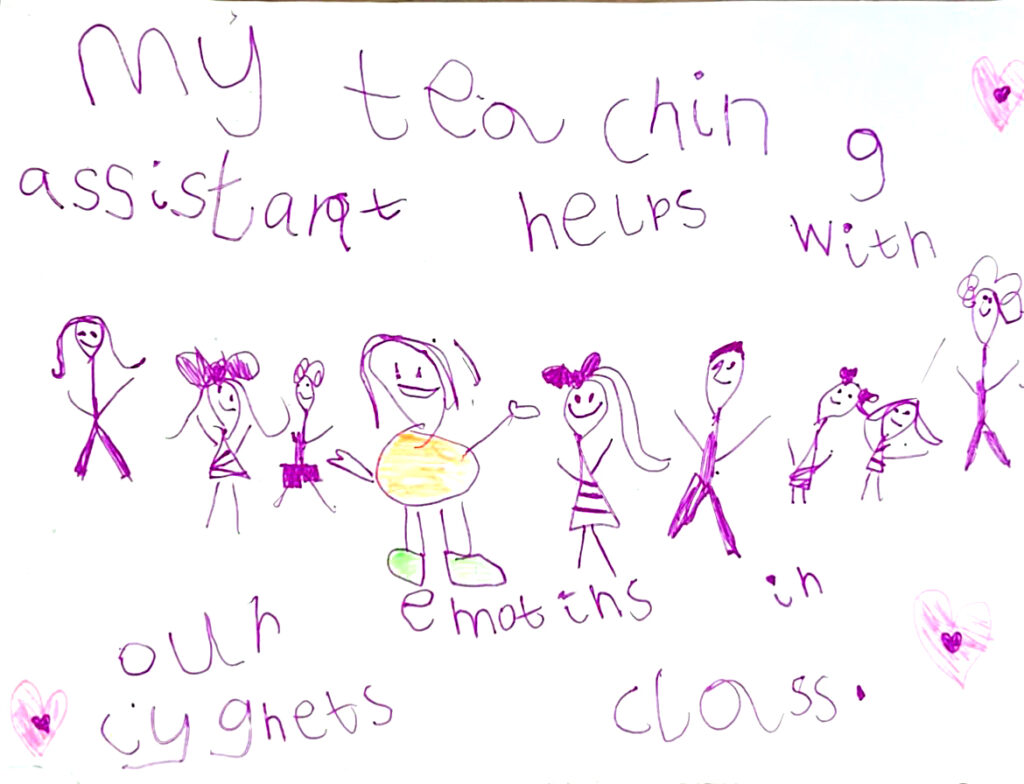
Claudia, GMB rep for Baird, says “Next year there are going to be eight TAs in the whole of the school […] at Key Stage Two, three TAs will be covering seven classes.” Apart from the personal tragedy of those who’ve been made redundant, the proposed number of TAs keeping their jobs simply won’t be enough. One of the eight remaining will soon be on maternity leave – leaving seven teaching assistants for the whole school.
Recently Baird has proposed further restructuring: classes are to be moved to a 1.5 form entry, meaning fewer classes and mixed year group teaching for years 1, 2, 3, and 4. While class numbers might be reduced, one would assume that mixed year group teaching will come with its own complexities – challenges that need TA support. At the time of going to print, the principal at Baird still refuses to meet with parents to discuss these changes. Claudia says: “TAs are the backbone of our schools […] we’re like family, and now they’re being cast aside.”
HIP has contacted a spokesperson for UBAT but has not received a response before going to print.
We hope you have enjoyed reading this article. The future of our volunteer led, non-profit publication would be far more secure with the aid of a small donation. You can also support local journalism by becoming a friend of HIP. It only takes a minute and we would be very grateful.

Leave a Reply