
Sewage Debris: Some Home Truths
Andy Dinsdale, founder and CEO of local environmental company Strandliners, calls for more awareness of sewage-related debris.
Water quality has been in the news recently, following numerous sewage discharges polluting our waterways (see Public Shit Storm and A system designed to overflow in HIP 210). But Strandliners, operating along the East Sussex coast from Cuckmere to Camber and up the Ouse, Adur and Rother rivers, has been active in campaigning for ‘Cleaner Rivers, Cleaner Seas’ since 2012. The problem is not just poor water quality, there’s also sewage-related debris.
It’s crucial to increase public awareness that the mess on our riverbanks and beaches is often a direct result of people’s behaviour at home. What goes down the loo isn’t always treated; it gets swept into the drainage system – ending up on our beaches.

CREDIT: Strandliners
In every survey conducted by Strandliners, sewage-related debris has been found. That is, plastic items that have been deposited ‘down the toilet’, such as wet wipes, cotton bud sticks, and period products. After heavy rainfall, these are often discharged into the environment along with untreated sewage.
Releasing single-use plastic into the environment is a disaster as it will remain there for decades, even centuries, causing long-term harm not just to marine and wildlife but also to humans. Microplastic toxins are now in the food chain, with toxins having direct and documented impacts on our health.

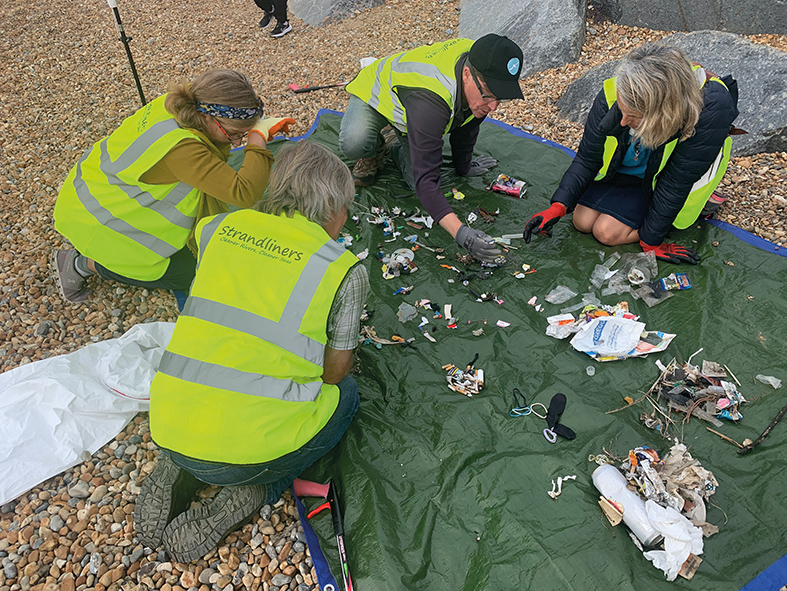
To help combat this rising tide of toxic waste, Strandliners’ local volunteers regularly survey and record environmental pollution on our beaches and along river catchments. Events are open to all – everyone can join in and become citizen scientists.
What’s different about Strandliners?
A normal litter pick is ‘pick, bag, bin’, which is great for wildlife, improves the appearance of beach or riverbank, and makes us feel good – but it is not a long-term solution. It’ll just keep coming back. To create change and reduce environmental pollution, we need to do more. We need to identify and record what we find. Only then will we know exactly what’s there and be able to track the source of the pollution. We particularly need to build a data-rich picture of sewage-related debris found on our coastline.
CREDIT: Strandliners
So Strandliners community volunteers have been surveying and auditing plastic pollution since 2012 (with some surveys going back to 2005). We have been unique in our approach – going further than ‘just litter picking’ but in methodically identifying and recording mismanaged waste. Our data goes to national and international research and campaigning organisations, such as the Marine Conservation Society, Break Free From Plastic, SAS and Fidra, who can use it to lobby for change.
Data that volunteers have collected have been influential in:

• introducing a tax on plastic bags usage (90% reduction found in the environment);
• changing cotton bud sticks from plastic to cardboard;
• contributing to the government consultation on a bottle deposit return scheme (hoping for a positive announcement in 2023/2024!);
• modifying wet wipe use – e.g. Boots will ban all wet wipes containing plastic by the end of the year (we still suggest even ‘flushable’ wet wipes are not good for our sewerage system or the environment);
• raising awareness of bio-beads – see column below.
What can I do?
Sewage-related debris affects us all. We need to be aware of the consequences of what we do and what we put into the environment. The issue is not just about water companies:
• Question anything on the beach that should not be there: how did it get there?
• Question what the water companies are saying. Local authorities should be held accountable too.
• Become involved in your local area. Help Strandliners gather the evidence that can lead to change. The more people that become involved, the greater the chance of directing the future and creating a cleaner, sustainable strategy.
Strandliners are equally at home delivering activities to schoolchildren or running corporate team-building days. The reaction is usually the same: “I will never be able to walk the beach the same way again!”
• For more information on Strandliners see our website www.strandliners.org and sign up to our monthly news sheet to find out about our latest events. Or email [email protected] with any specific queries.
Bio-bead Pollution
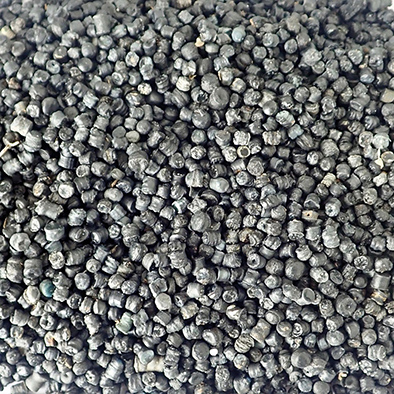
Bio-beads are microplastic pellets smaller than 5mm, exclusively used by water companies as part of the waste water treatment process, but giving rise to further toxic pollution. Being derived from burning hydrocarbons, and containing lead, bromine and cadmium, these pellets are potentially carcinogenic both in composition and in effect. Bacteria attach to their wrinkled surfaces during the cleaning process in the sewage treatment works, which stimulates fungal growth. Their small size renders them easily lost – most water treatment plants, including those of Southern Water, use only a single mesh screen to prevent loss, which is inadequate – and they are easily ingested by both animals and humans when released, though their impact is not then well researched or understood.
CREDIT: Strandliners
Strandliners data collection has confirmed that a key coastal area around Camber Sands is a ‘bio-beads hotspot’. They have amassed here after several catastrophic accidents along the south coast, which were reported to the environmental regulator, the Environment Agency, in 2010 and 2017.
As a result of campaigning, some water companies are no longer using these poisonous pellets.
Strandliners have been involved in researching the issue in the local area, with a report produced by an MSc student from the University of Brighton as part of a collaborative activity between the Green Growth Platform at the University and Rother District Council.
We hope you have enjoyed reading this article. The future of our volunteer led, non-profit publication would be far more secure with the aid of a small donation. You can also support local journalism by becoming a friend of HIP. It only takes a minute and we would be very grateful.

Leave a Reply