
Potholes – Government Cuts Funding For Repairs
During the first full lockdown in May 2020 Transport Secretary Grant Shapps announced that he was taking advantage of emptied roads “to fix potholes and improve roads”. He claimed that “millions of pounds worth of upgrades” had been completed during the lockdown period. The money was coming from a £2.5bn potholes fund announced in the earlier Treasury Budget for the year which would target around 11 million potholes across the country plus smaller upgrades to local networks. “We’ve been accelerating infrastructure upgrades”, he said, “to make sure that, as we gradually reopen our society, everyone can benefit from smoother and safer journeys with better connections for our future”.
During the second lockdown, on 15th February this year, Mr Shapps announced the allocation of “a further £500 million” to local authorities across the country to “fix the equivalent of ten million potholes”. He tweeted: “When the unlock comes, I want our roads to be ready”.
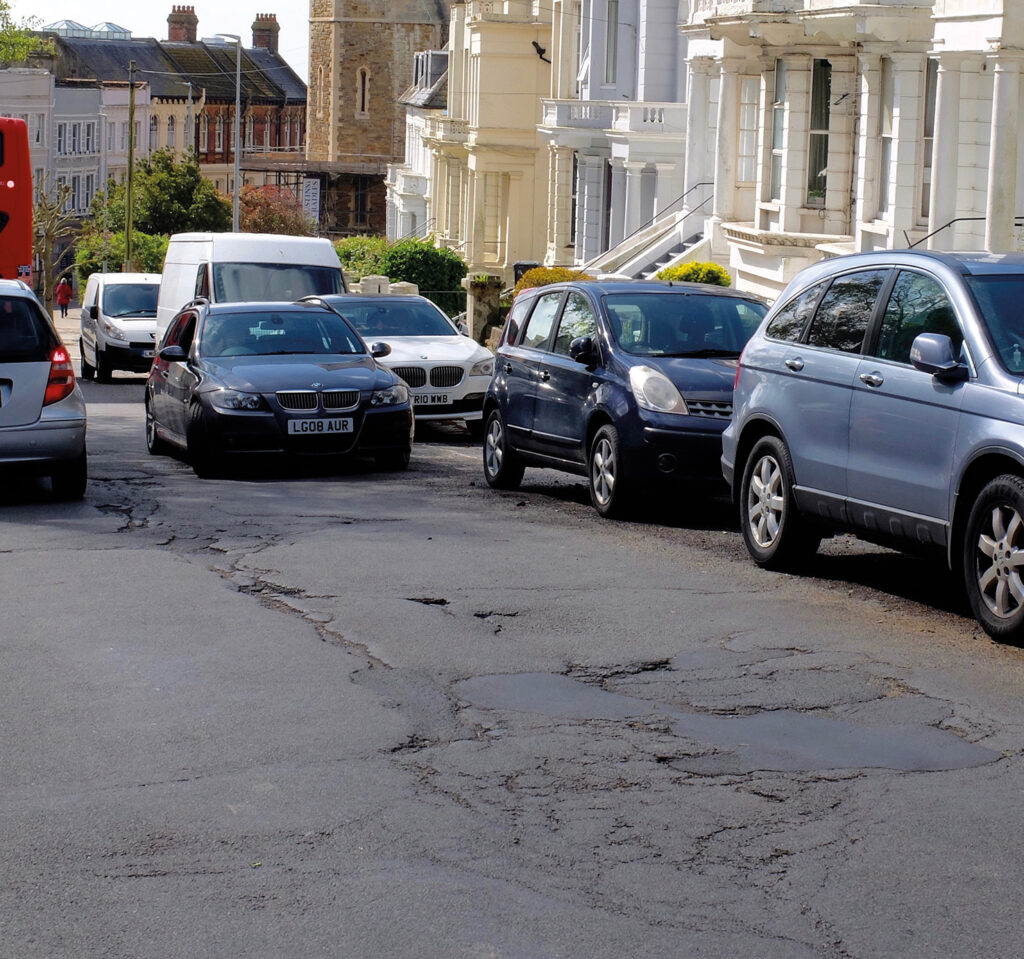
PICTURE: Dave Young
However, the Local Government Association (LGA) issued a press release last week calculating that overall capital funding allocated to councils for local road maintenance in 2021/22 has been cut by almost £400m, bringing the figure of £1.78bn in the last financial year down to £1.39bn. At an average cost of just over £40 per pothole, that is 9.5 million of them – an average of 64,000 per local authority area – that will not be funded.
Cllr David Renard, Transport spokesperson for the LGA, said; “Councils are on the side of motorists, and are working to keep our roads safe and resilient, repairing potholes as quickly as they can. However, it would take £11 billion and more than a decade for councils to clear the current local roads repair backlog, with the cancellation of important planned works risking extending this backlog further”.
East Sussex Highways, the relevant authority for road maintenance in Hastings and its hinterland, report that they typically repair 30,000 ‘safety defects’ – that’s mainly potholes, blocked drains and missing road lines – at a cost of £1.5m per year. Priority is given to deeper holes on main roads, but any holes deeper than 40 mm and at least 300mm in all directions are supposed to be ‘made safe’ within 28 days.

We hope you have enjoyed reading this article. The future of our volunteer led, non-profit publication would be far more secure with the aid of a small donation. You can also support local journalism by becoming a friend of HIP. It only takes a minute and we would be very grateful.

Leave a Reply