
Heart Surgery Stitch-Up?
Conquest Hospital Loses Out to Eastbourne on Future Provision…
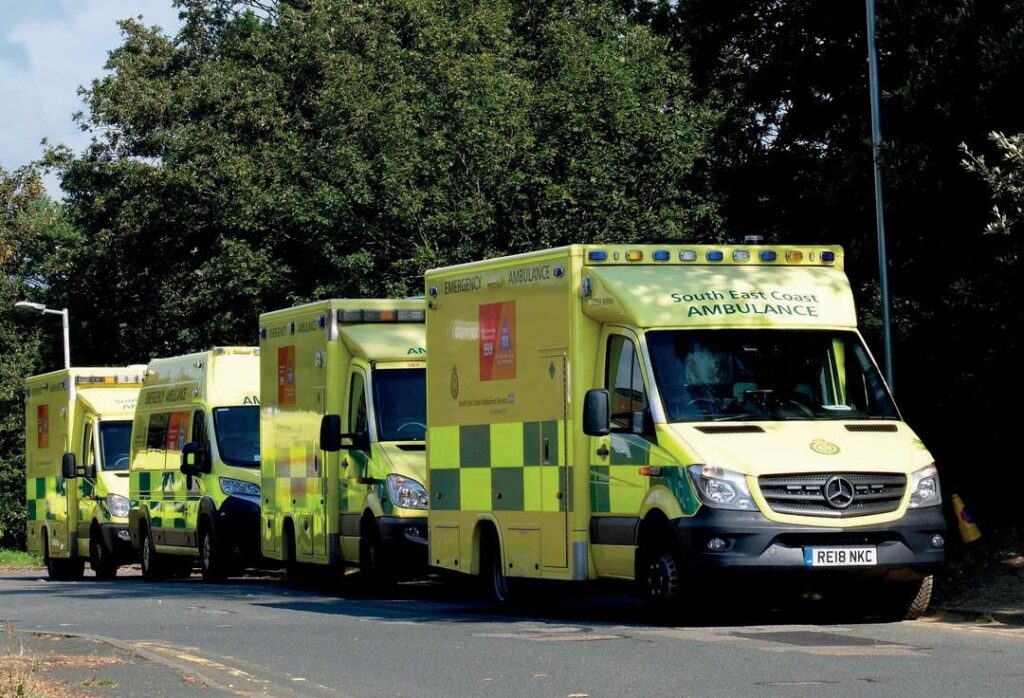
Despite an outcry by Hastings Borough councillors and more muted objections from within the local medical community, the Conquest Hospital is to lose its in-patient cardiac facilities including the capacity to treat emergency cases. Within the domain of the East Sussex Healthcare NHS Trust (ESHT), stretching along the South Coast from Camber to Seaford, anyone who in future suffers an acute heart attack and needs immediate life-saving surgery in the form of an angioplasty will have to be brought by ambulance (or otherwise) to Eastbourne District General Hospital (EDGH). Under plans approved last month at a meeting of the East Sussex Health Overview and Scrutiny Committee (HOSC), cardiology consultations and non-emergency out-patient treatments will still be offered at the Conquest, and a Cardiac Response Team will remain there primed to carry out urgent assessments. But they will no longer have the facilities – in particular a catheterisation laboratory (cath lab) where angiograms, angioplasties and pacemaker operations can be carried out – to undertake surgery where needed. The surgery team would be concentrated solely at EDGH, likewise beds for cardiac in-patients.
The plans are intended to be put into effect as soon as government funds are made available to develop additional space at Eastbourne for transfer of the existing Hastings cath lab and establishment of additional in-patient wards there.
Hastings versus Eastbourne
The idea of combining acute cardiology services in a single hospital within the Trust’s domain has been floated for many years. Senior clinicians have agreed that the specialised nature of emergency heart surgery requires the establishment of a team of quality and experience, equipped with the best technological support. A national NHS improvement programme recommended in 2020 that trusts across the country should consolidate these services at a single location. After some delay caused by the onset of the Covid-19 pandemic, lengthy consultation was undertaken up to March last year which endorsed this principle. But choice of the location remained to be decided – should it be Hastings or Eastbourne?
Medical practitioners in Hastings, both in the cardiology department and in primary care, seem to have assumed that the geography of East Sussex and its socio-economic demographics would be seen as overwhelming factors in preferring the Conquest to the EDGH.
There is common acceptance that in cases of heart attacks there is a critical time between the onset of chest pain and the implementation of angioplasty procedures (“call to balloon”) which should not exceed a maximum of two and a half hours. But this includes the time the ambulance team takes to arrive and the immediate assessment process they need to undertake on arrival. The further travel time that the ambulance team must then incur to deliver the patient to the doors of the hospital should clearly be minimised.
If ESHT chose the Conquest as their single emergency site, patients suffering a heart attack at a location west of Eastbourne could be taken in emergency to Brighton, where full angioplasty facilities are also available. But if Eastbourne were the chosen site, patients from Rye or other locations east or north of Hastings would have little choice but to endure the additional drive, ironically with the ambulance passing the entrance to the Conquest on its route west.
Historically, moreover, while EDGH has run a slightly bigger cardiology department and, for instance, fits more pacemakers than the Conquest (there is also rather more opportunity to augment salaries with fees from private patients in Eastbourne), Hastings has generated a higher proportion of angioplasty cases. That’s the result of almost double rates of cigarette smoking, present or past, amongst its population, associated in turn with other indices of social deprivation. Preference for the Conquest in these circumstances would seem to accord with the government’s claimed ‘levelling up’ policy.
How the decision was made
However, it was apparent from early in the decision-making process that both senior clinicians and others involved in the provision of cardiology services might have their own personal reasons for preferring one site rather than the other. The Trust engaged an external consultancy – an “independently facilitated site panel” – to review the arguments on either side in an effort to arrive at an objective decision. But HIP has learnt that the crucial meeting conducted by this external panel, held on 12 September last year, was attended by seven cardiologists either currently or formerly based at EDGH, led by the Trust’s Deputy Chief of Medicine Professor Nik Patel, compared to only one based at the Conquest. Two other senior consultants from the Conquest were not invited because they are locums, even though both have been working there for several years.
When the meeting was convened, some financial projections were presented on screen, without any supporting documentation, apparently showing that transfer of facilities from Eastbourne to Hastings would be more expensive than vice versa; there were also calculations suggesting that ongoing maintenance costs would be higher, again unexplained. Problems of relative patient accessibility were downplayed from a Hastings perspective.
The process was in due course determined by a series of votes of the attendees, recorded confidentially, on parameters measuring projected outcomes for either location, including financial implications. The panel announced that on all counts Eastbourne was the favoured site.
The decision has subsequently been ratified by an ESHT Board meeting held on 11 October and approved by the East Sussex HOSC on 15 December. At the latter meeting Cllr Sorrell Marlow-Eastwood, who is the ward councilor for St Helens and Silverhill on East Sussex County Council, and Cllr Mike Turner, representing Hastings Borough Council, raised pertinent questions concerning the extent of travel times from Hastings to Eastbourne and the comparatively greater neediness of the Hastings population. But these were batted away by Professor Patel, to whom the committee deferred as the clinician in charge. He maintained that, while prompt delivery to hospital was important, “door to balloon” times (measured from when patients arrive at the door of the hospital) were best minimised by having a top quality response team assembled in readiness.
Political intervention
Hastings councillors are far from satisfied at the result. Labour party leader Cllr Paul Barnett has written an open letter to the Health Minister Steve Barclay, co-signed by Cllrs Andy Patmore for the Conservatives and Julia Hilton for the Greens, describing Hastings as having “the worst health and highest deprivation in the south of England” and claiming that removal of heart surgery facilities would be “very harmful” for patients.
“1,500 residents a year will be forced to travel 20 miles (and public transport makes this a long and very difficult journey for early morning surgery appointments), and many will as a result not follow through on this critical treatment.
“This comes after other services have been moved, such as stroke services, and capital investment here is scheduled to be far below Eastbourne. It feels as if our hospital is being downgraded.”
He referred to the potential for legal action in the form of a judicial review. “However, I would much prefer for you to help us ask the new Trust to review and change this proposal”, he wrote. “Hastings needs a first-class hospital or our residents’ health will continue to lag well behind where it should be.” No response is yet known to have been received from Mr Barclay.
We hope you have enjoyed reading this article. The future of our volunteer led, non-profit publication would be far more secure with the aid of a small donation. You can also support local journalism by becoming a friend of HIP. It only takes a minute and we would be very grateful.

Leave a Reply