
Hastings Heritage in Peril
KENT BARKER
Conservation campaigners have castigated Hastings Borough Council (HBC) for failing to protect the numerous heritage sites in the town. One said Hastings had a “sorry record of failing to care” for its built heritage, while another said they were allowing “wanton acts of destruction”.
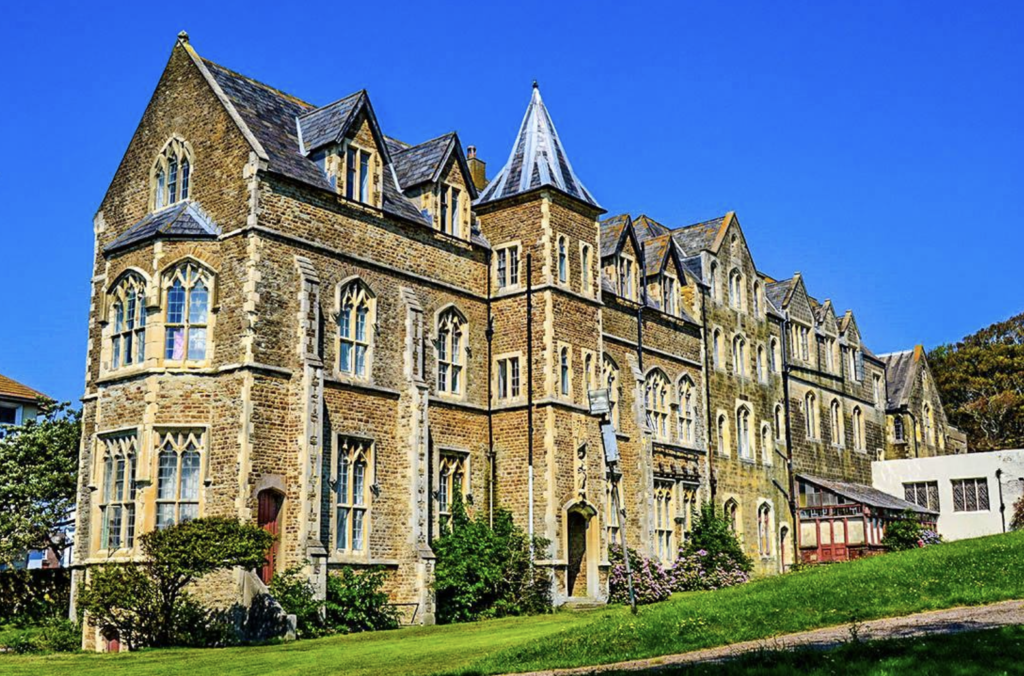
The protests follow vandalism at the former convent in St Leonards and local conservationist Bob Hart’s discovery that a historic boundary stone had been removed during the re-development of Gensing Manor. The Italianate-style Villa was described by HBC’s conservation officer as a “positive contribution” to the local heritage in the area. It is currently being redeveloped into 17 residential units. The builders are said to have “widened the gates”, leading to the disappearance of the historic parish boundary marker stone.

Meanwhile HBC is accused of allowing the former Convent of the Holy Child Jesus to “crumble before our eyes” as vandals destroy the interior. The convent chapel was designed by Edward Pugin, son of the famous Gothic revivalist architect Augustus Pugin. It is a Grade II* listed building. HBC has been criticised for failing to issue a ‘repairs’ notice to the current building owners and for unreasonably delaying registering it as an Asset of Community Value.
Hastings has an astonishing number of Listed Buildings entries – 567 in all – encompassing 933 individual properties or features. An entry can sometimes include more than one property, as in Pelham Crescent. Some are humble sea-front shelters while the prized Grade I listing is Hastings Castle – or its remaining piles of stones.
Historic Importance
However the council’s ‘definitive’ list of important monuments and statues was drawn up in 2010 and does not appear to have been updated in the intervening 16 years.

Many parishes in Britain have proudly retained their marker stones – often dating back hundreds of years before maps were available to delineate ecclesiastical and civil parish limits. Historians say their importance is far greater than their relatively simple appearance.
Bob Hart has demanded to know what policies HBC has in place to safeguard historic assets such as the parish boundary marker stones. “The Old Hastings Preservation Society and the Hastings Local History group were reviving an ancient custom of beating the bounds on May 9” he said. “They were dismayed to find that parish stone MM36 had disappeared. These stones are part of the historic heritage of the town and should be included in any conditions for planning consent.”
Mr Hart complained to Hastings Councillor Mark Etherington, portfolio holder for Planning and Infrastructure, about the disappearance of the Gensing stone and questioned whether the Planning Department was failing to provide a ‘culture of care’ for historic assets including boundary markers.
Cllr Etherington said he regretted its removal but was powerless to intervene: “As the stone was not listed, and HBC has no record of the stone being noted as a non-designated heritage asset, Conservation does not believe that the removal of the stone constitutes a breach of heritage legislation …this boundary stone enjoyed no protection or listed status …the fate of that particular stone (was) left to the builder who originally led the contract.”
Mr Hart told HIP that the real fault lay with previous political parties controlling the council “not having a conservation management plan in force for its heritage structures’.
Holy Jesus

The Convent slowly decaying
A group aiming to “Save the Convent’ now meets weekly in St Leonards to put pressure on the council to take action over the rapid deterioration of the Holy Child Jesus buildings. A group spokesperson told HIP “Some of us have been boarding up entrances, windows, and rooms to try to save them. These boards are promptly removed by the youths, and smashing begins again. I called the heritage crime officer because I witnessed tiles being removed from the East Wing back in November 2025 by professionals on scaffolding. I reported it to the council as a heritage crime. To date, nothing has happened about that.” Privately some in the group suspect the owners are deliberately allowing the buildings to be wrecked. However, identifying the actual owners is problematic. After the convent nuns relocated to Mayfield in the 1970s the site was operated as a summer language school until it was sold to private investors. In 2019 DKSS Holdings Ltd took over management but went into administration before restoration work could continue. It is currently believed to be owned by a firm of receivers and private property developers who do not publish contact details.
At the start of June, HBC issued a lengthy statement saying the council was working closely with Historic England and emergency services and other partners to take “urgent action” over the Convent. However, they continued: “The site is privately owned and the council is legally required to notify the site’s owners and receivers of the required works and allow them an opportunity to act before further formal action is taken. Officers are now working to finalise the detailed schedule of works … including potential barrier or hoarding options.”HBC made it clear that their overriding concern was the risk to life posed by entering the site, “but we are also clear that further avoidable damage to this important heritage asset must be limited wherever possible.”
Brisco’s Bath
Cash-starved local authorities are clearly in a bind when it comes to prioritising the maintenance of heritage sites over other issues, like homelessness. Nonetheless HBC stands accused of actively contributing to the neglect of the Roman Bath which it owns on the former Summerfield Estate in Bohemia. Although the bath is not Roman – nor indeed a bath – but rather a Victorian folly – it is a Grade 2 Listed structure. Built in the mid-nineteenth century, it comprises a semi-circular grotto with steps to either side leading to a viewing platform and a Romanesque arch with colonettes.
According to conservationist Bob Hart “For over twenty years Hastings Borough Council has failed to develop a management plan for this structure in their care. Without knowledge of any maintenance that is required,they erected metal fences on the structure without listed building consent in 2016 and most recently installed metal grids above the water and a metal fence within the arch and within the curtilage of the site a large wooden bridge.”
Historic England said that the introduction of the large, galvanised metal structures “causes a high level of harm to the significance of the listed Roman bath.” They said they understood the issues around safety to the public, however “a more sensitive and sympathetic way of protecting the baths … should have been explored”. That was five years ago, and since then the council appears to have taken no action, despite being the body charged with enforcing the conservation of listed structures within the borough.
Municipal Vandalism
Along with the Walled Garden and a listed Ice House, the Roman Bath is among the last remaining features of Summerfields – a grand early-19th century country estate in Bohemia built by Wastel Brisco. The centrepiece was the Jacobean style Bohemia Mansion. Hastings Borough Council bought the estate for just £170,000 in 1966 and, six years later, demolished the mansion to make space for what later became the Law Courts and Police station. It was, according to the late historian and conservationist Ion Castro “an orgy of the most incredible municipal vandalism”.

Abandoned cannabis factory in the former Convent
While HBC is currently active in trying to find a solution for the jewels in its crown – St Mary in the Castle and Pelham Crescent – conservationists argue that previous administrations have been guilty of sustained neglect of this and other items of the town’s heritage. The Albert Memorial clock-tower was torn down in 1973 with the connivance of the then council and, many years earlier, the magnificent Boundary Arch between Hastings and St Leonards was demolished in 1895.
Bob Hart points to a list of other council-owned heritage structures that need attention. They include two listed bus shelters on the East Parade and two shelters at Robertson Terrace. He says the listed drinking fountain at Gilsmans Hill “requires attention” and that although not listed, the Source Park/Ice Rink may need so much spent on it that it could be cheaper to close and fill in. The famous Bottle Alley was previously under threat from the council who wanted to demolish parts of it. “There are plenty of other examples of council negligence,” he argues, “the Priory Street Institute became a snooker club but was destroyed to create Priory Square behind the Post Office. Hastings Rail Station was demolished while Cllr Jeremy Birch was in control although Bexhill, Eastbourne, Rye, Ramsgate and Margate Stations survived.”
According to Heather Grief of the Hastings Local History group,even when the council commissions heritage surveys – such as the one carried out by former council official David Dine – they simply get buried: “What was the point of David Dine doing his survey if the local authority takes no notice of it, as is the case with HBC’s Planning Dept and Gensing Manor and its stone next to the gateway.” Heather Grief believes people are far more interested in their heritage than the council. “The one bright spot is the way in which individuals have managed to rescue stones from skips – this happened several times in Tower Road, when locals made the workmen put them back and ‘re-home’ them in their gardens at the nearest spot to their original location. Also, one lady somewhere in town thought ‘her’ boundary stone was a pet grave marker and topped it with a concrete cat!”
Bob Hart also believes that community involvement is vital and points to local ‘successes’ such as the preservation of the Alexandra Park Greenhouse and the Bohemia Walled garden. “But it shouldn’t be just up to community action”, he says. “The council and its conservation officer could – and should – be taking a much more proactive role in guarding Hastings’ historic heritage.”
HASTINGS HERITAGE LOST
- Albert Memorial, town centre, 1863-1973
- Bohemia/Brisco Mansion 1818-1972
- Hastings Railway Station 1851-2004
- Priory Street Institute c1870-2012
- Art Deco Dorset Laundry Elphinstone Rd c1930-c2000
- St Leonards Bathing Pool 1933-1993
- St Leonards Archway 1828-1895
- St Paul’s Church
St Leonards 1868-1964 - Central Cricket Ground 1864-1966
IN DANGER
- St Mary in the Castle
- Pelham Crescent
- Roman Bath at
Summerfields - Listed Bus Shelters at Swan Boat Lake and Hastings Contemporary
- Above-ground shelters, Roberson Terrace.
- Drinking fountain,
Gilsmans Hill - The East Well at Rock A Nore
- Bottle Alley – not listed.
- Lion and Unicorn ‘Buckingham Palace’ statues Robertson Terrace
- The Source Park/Ice rink – cheaper to fill in?
- Hastings Pier – up for sale but lacking condition survey.
SAVED
- Alexandra Park Greenhouse
- Bohemia Walled Garden
- Bohemia Icehouse
- Observer Building
We hope you have enjoyed reading this article. The future of our volunteer led, non-profit publication would be far more secure with the aid of a small donation. You can also support local journalism by becoming a friend of HIP. It only takes a minute and we would be very grateful.

The Above-ground shelters,at Roberson Terrace are the outlets for the fans that ventilated the car park when it was originally built. The machinery was removed some time along with the ducting which provided ventilation in a time when most cars produced a lot of fumes when running.
HBC and it’s officers do need to.protect our heritage (and any tourism benefit), but we should all care. The protection and restoration of buildings and monuments must be the norm – not the exception! With the dearth of industry in our area we rely heavily upon tourism to supplement the rates. Not caring about our heritage is to not care about our area’s future. We do need to move forward, but we need to work around our history.