
Cruel April on the Farm
Last month in East Sussex was one of the coldest and driest Aprils in living memory. Away from the coast, many inland farms experienced up to 20 nights of frost out of 30; and, though there were plenty of sunshine hours during the days, a cold north or east wind kept temperatures consistently well below the seasonal average. Rainfall was minimal – according to the Met Office, an average of just 10.1 mm across the south-east and south-central areas, which is less than 20% of the long term mean for April.
PICTURE: Dave Young
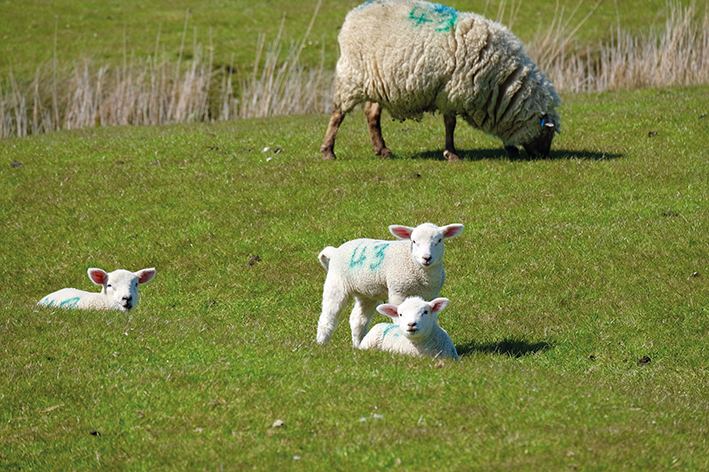
Andy Dunlop, operating a mixed farm in Pett, is protected from most frosts by his proximity to the sea but still experienced unusual frost pockets. Lambing was not affected in any major way – cold is easier for newborn lambs to cope with than long damp spells – but spring-sown crop yields are bound to be low, he advises, and that will have a knock-on effect in the autumn – there are going to be shortages, and certainly high prices, of hay and silage.
Neighbouring sheep farmer Tim Jury in Icklesham points out that last summer’s dry weather had already reduced the yield of such conserved forage, in some cases by 50%. “We were all hoping for an early spring, not the latest ever known”, he says. “Grass growth has been very slow if at all, due mostly to the cold nights. Will it right itself? The short answer is no, it’s growth time lost. Grass is a plant that matures by date, not conditions – though, if we have a damp summer and extended autumn, there will,
I am sure, be great relief all round”.
PICTURE: Dave Young
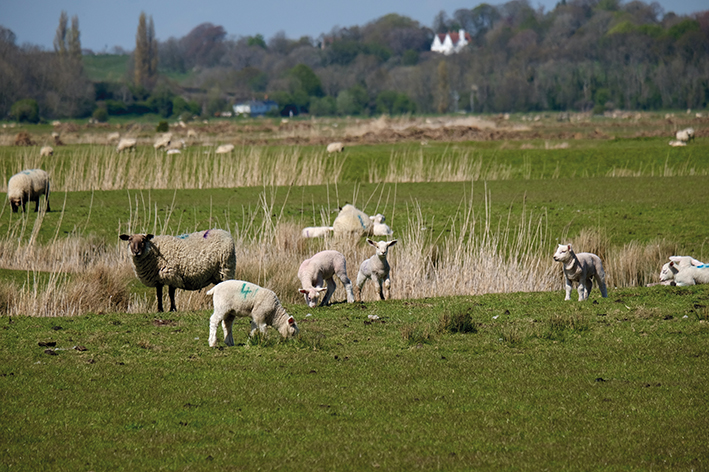
The Wheeler family – father David and sons Edward and William – own a farm in the Brede Valley on the other side of Icklesham, combining sheep, apple trees and vines. David’s wife Maura described the short grass and hard ground in the valley last week as conditions “more like July/August than early May”. Lambs have no long grass to chew on, and haven’t developed teeth to bite the short stuff, though most look healthy enough at this stage.

The long sequence of late frosts may have been devastating for plum and other soft fruit trees, but apples probably less so, and the vines have simply been very slow to bud. The weather in late summer and early autumn will matter more. All local farmers agree that a warmer and wetter May, which is the general forecast despite another cold week at the start, could change growing conditions quickly. “Nature is very good at compensating when it has to,” Mr Dunlop says. “Although growth may be slow in a cold spring, it can catch up rapidly when some warmth arrives. One month’s drought is not a big problem after the pretty wet winter we’ve had.”
We hope you have enjoyed reading this article. The future of our volunteer led, non-profit publication would be far more secure with the aid of a small donation. You can also support local journalism by becoming a friend of HIP. It only takes a minute and we would be very grateful.

Love the articles on what to do with elderflowers, or strawberries on the turn and very much liked the perspective of what farmers face> It is far worse than what gardeners face I suppose, and it is a living that is increasingly hard to pursue for most small farmers. A lot of milk producers have gone out of business and chucked it because they could not make a living. Farmers have had the double blow of believing the Government over Brexit. Now the Australia deal will pressure them further. As if fishermen aren’t disappointed enough. This year is going to be so difficult for fruit and plant growers or animal husbandry farms and smallholdings. Food is already going up massively in price. That can only get worse and consumers, partcularly poorer consumers may find they are having to join the foodbank queue in Hastings. Well done. More please on how to scrimp and save and also help others in ther town, particularly those who find it hard to ask for help but need it.