
Crime and Punishment in Hastings
Few would disagree that Britain’s criminal justice system is in crisis. Prisons so overcrowded that inmates are released early, courts so backlogged that defendants wait up to two years for trial, and serious crime on the rise. Government has pledged to recruit 13,000 more police officers, putting ‘Bobbies back on the beat’. But more police mean more arrests; more arrests mean more court appearances and more delays, which ultimately means more prison overcrowding. In this special report, KENT BARKER examines Crime and Punishment in Hastings.
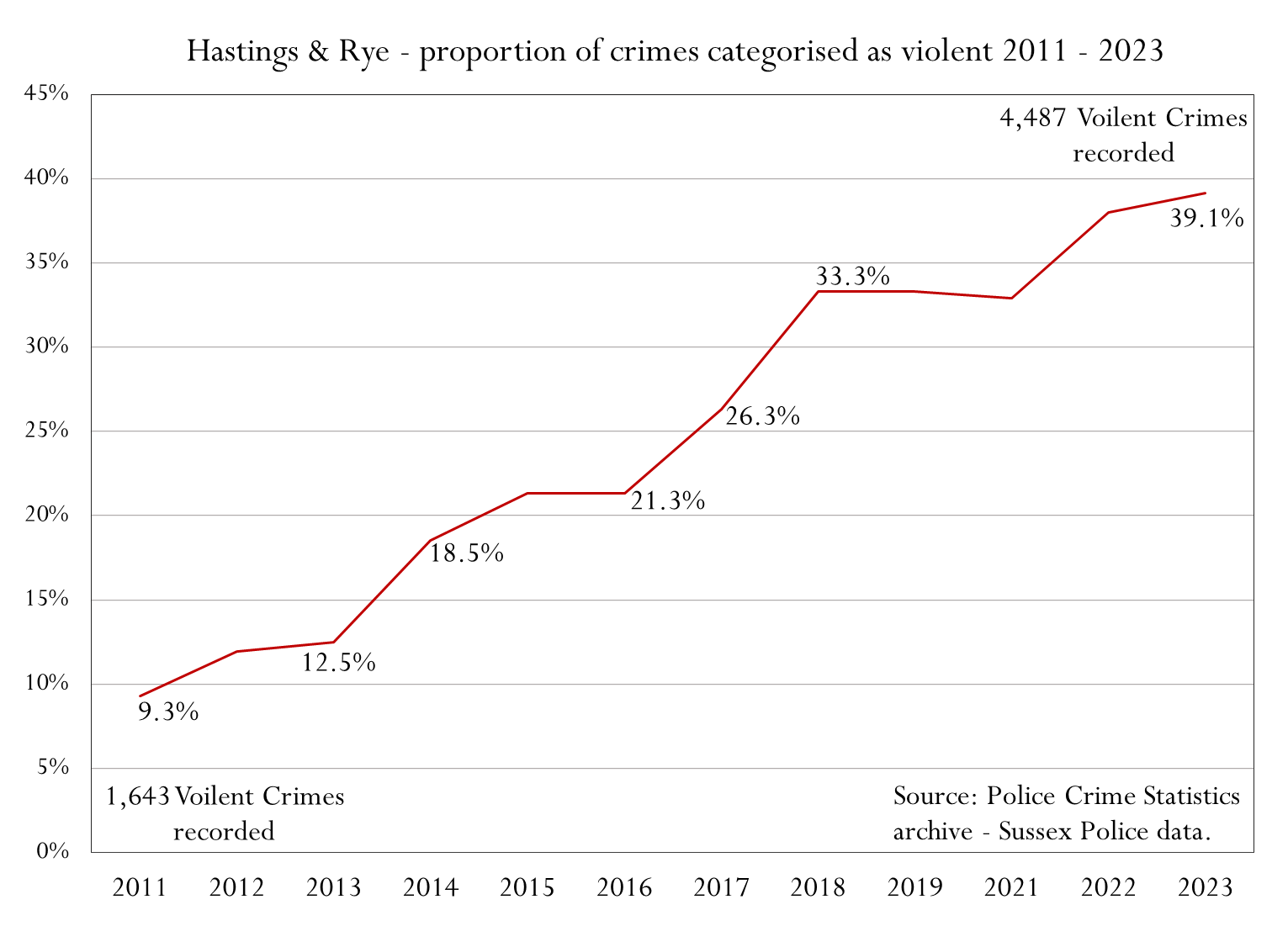
Total crime rates have remained fairly constant over the past decade. 12,000 were reported in 2012, and 11,400 in 2023. But violent crime and sexual offences have seen a very sharp rise, up from 1,643 instances reported in 2011 to 4,487 in 2023 – an increase of 173%. Almost one in ten crimes reported in Hastings are now in this category.
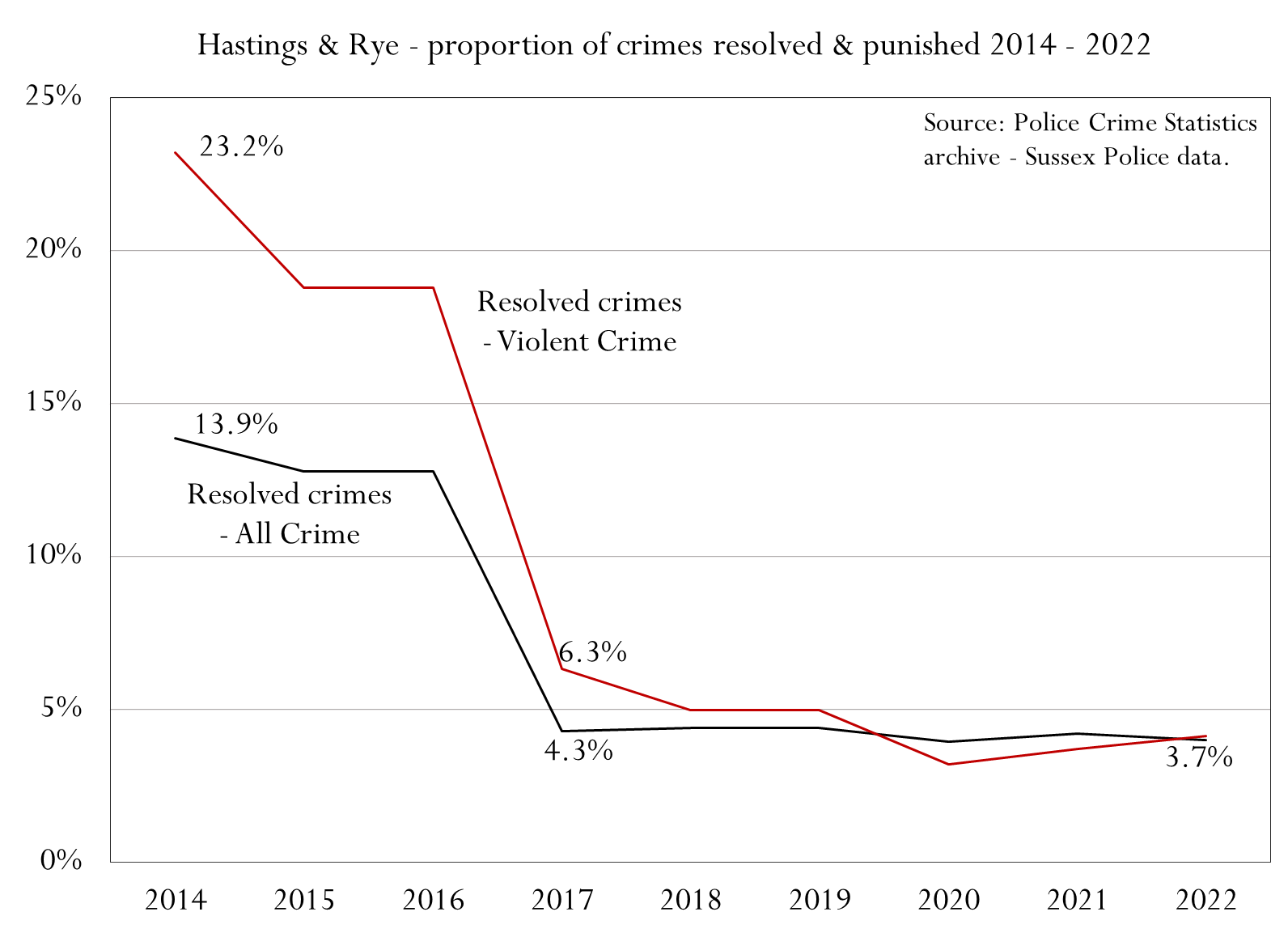
But how many are successfully prosecuted? The answer is: far fewer than a decade ago. ‘Resolution’ of reported crime means an outcome leading to a caution, fine, community service or prison sentence. In 2014 14% of reported crime was resolved. In 2023 it was down to 4%. That means only 456 out of the 11,400 reported crimes led to a caution or conviction.
HASTINGS MAGISTRATES COURT
If you are arrested and charged by police, you are likely to appear before the magistrates in Bohemia road. The Ministry of Justice does not release figures for individual Magistrates’ courts, but nationally there is a backlog with more than 5,000 ‘open’ cases. This means long delays. On average you can expect to wait for 239 days for your case to be resolved; that’s more than 30 weeks. On the day HIP visited the magistrates court, all three cases were being heard more than a year after the original offence. And if you are accused of a serious crime – murder, rape or robbery – you will be remanded for trial to the Crown Court in Lewes, where the wait could be even longer.
LEWES CROWN COURT
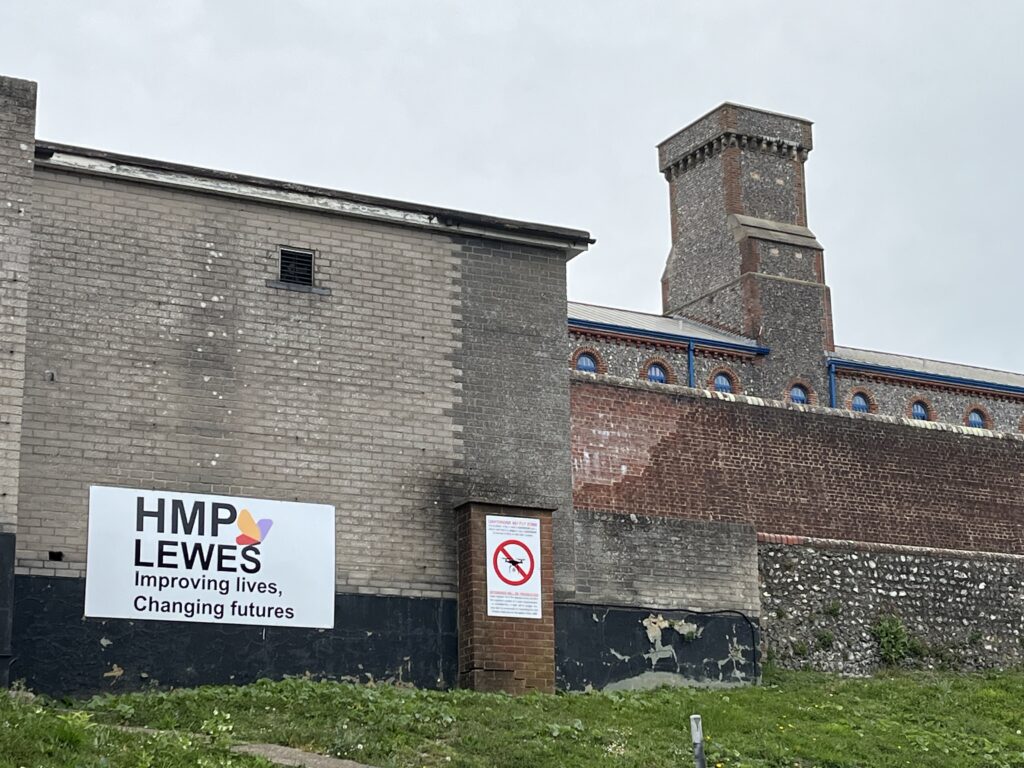
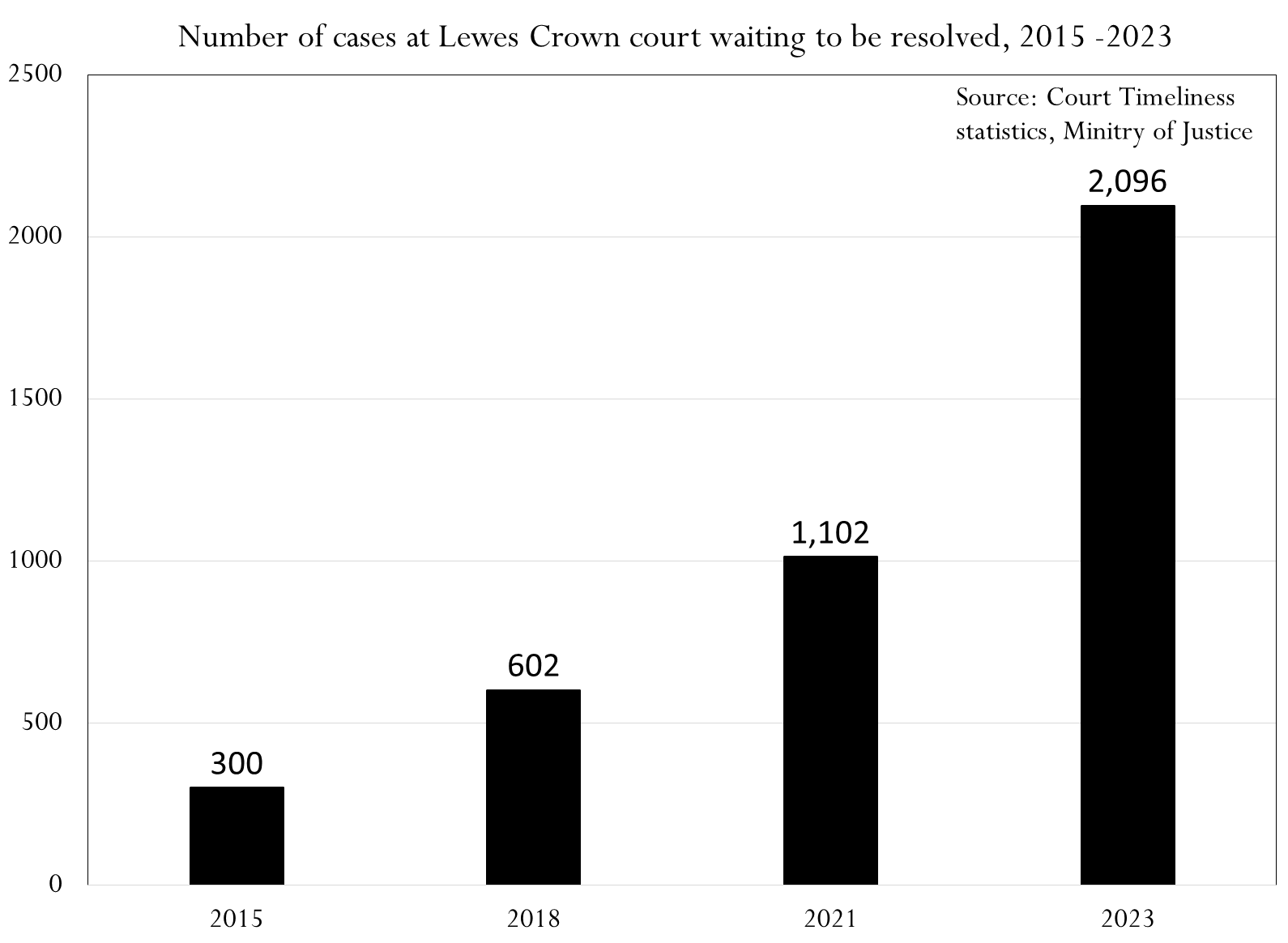
On one fairly typical day earlier this month there were 37 cases scheduled to be heard before nine different judges in the four courtrooms at Lewes. The busiest judge was Her Honour Judge Laing KC who was due to preside over seven of them. Mostly she would be hearing pleas or applications for further remands rather than a full trial, but the numbers mean that there is a severe backlog of cases. In 2015 there were fewer than 300 cases at Lewes CC waiting to be resolved. By 2023 that figure had risen to 2,096

The Public Accounts Committee of MPs reported last month that the population of defendants on remand waiting for their cases to be heard is at its highest level for fifty years. One in twenty of those in custody awaiting their trial had been on remand for more than two years. The committee warned that some were spending longer on remand than the sentence they eventually received. And, crucially, they point out that 13% of those who have been waiting in prison were acquitted, i.e. found not guilty, while more than a third did not ultimately receive a custodial (prison) sentence.
Theoretically a ‘Custody Time Limit’ of six months is in place for Crown Court defendants held in jail, but a House of Commons report from 2022 showed that 32% of the remand population had been held for longer than that.
LEWES PRISON
More than half of the 578 men held in Lewes were on remand awaiting a date for their trial. The most recent inspection of HMP Lewes found the jail “battling rising violence, self-harm, drugs and a churn of men caught in a cycle of homelessness and offending as the prison service continues to grapple with the effects of the population crisis … many men spent as little as two hours out of their cell a day. Concerningly, when first night cells were full, men were instead held in cells on the wing that housed sex offenders or others wanting to be kept separate from the main population where they received no induction and very little support or time out of cell until a cell became available.”
The report found that the Government’s early release scheme was undermining safe release planning and risk management. Release dates for some high-risk prisoners had been brought forward at short notice, forcing already stretched resettlement agencies to redraw existing plans from scratch in as little as two or three weeks. In one case, a high-risk prisoner who was a risk to children had his release date brought forward despite having a history of stalking, domestic abuse and being subject to a restraining order.
COUNTY COURTS
County Courts are civil, not criminal, dealing with things like money issues, contract and property disputes, personal injury claims and family matters such as divorce and child custody. Although not part of our Crime and Justice analysis, average delays for cases across the country’s 170 courts is just over a year, with delays at Hastings County Court averaging 501 days – making it the twelfth worst in the country.
We hope you have enjoyed reading this article. The future of our volunteer led, non-profit publication would be far more secure with the aid of a small donation. You can also support local journalism by becoming a friend of HIP. It only takes a minute and we would be very grateful.

Leave a Reply