
Bin the Beads – But Who Pays?
Scientists from King’s College London have tested some of the plastic ‘bio-beads’ washed up recently on Camber Sands and found they contain heavy metals, including lead, arsenic, and cadmium. The scientists warn the poisonous beads would be harmful if swallowed by wildlife.
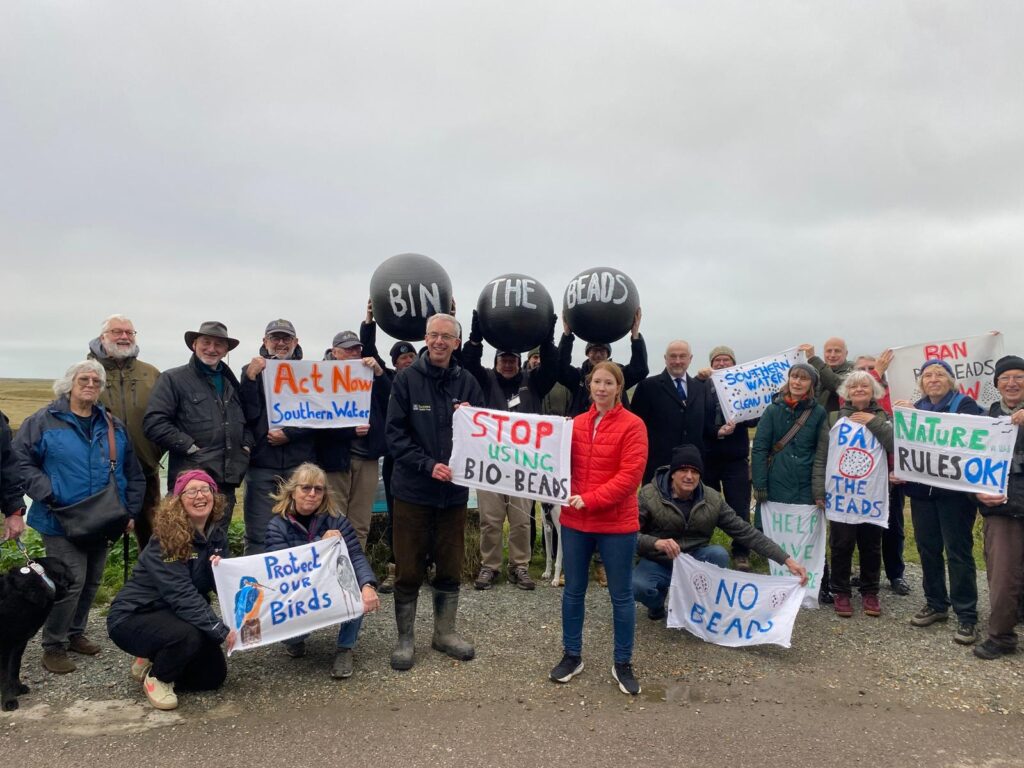
The beads were washed ashore following a catastrophic spill from Southern Water’s Eastbourne wastewater plant in late October. Some 320 million were released after a mechanical failure during heavy rain. Many of them washed up on Camber Sands and the nearby Rye Harbour Nature Reserve – the internationally important sanctuary for over 4,000 species of birds, fish, and marine mammals – causing substantial pollution along the South coast.
Southern Water faced significant criticism for its reaction. Although the beads began washing ashore around 3 November, the company took a week to confirm they originated from its Eastbourne plant. Public anger also grew because Southern Water did not immediately spearhead the clean-up, leaving efforts heavily reliant on local volunteers and environmental groups.
At a public meeting in Rye organised by Hastings and Rye MP Helena Dollimore, the company formally acknowledged its failures. It has since initiated a daily clean-up at Camber Sands and nearby beaches, deploying more than 660 staff and contractors. Teams now monitor over 60 miles of coastline daily.
However, campaigners argue the response does not go far enough. Both Ms Dollimore and the Sussex Wildlife Trust have launched a ‘Bin the Beads’ campaign calling on all water companies to end the use of plastic bio-beads. Henri Brocklebank of the Trust warned the beads could persist for generations, harming delicate ecosystems. “The only guarantee against another spill,” he said, “is to stop using them.”
Ms Dollimore, the local Labour MP, has demanded a complete ban. She recently brought Water Minister Emma Hardy to Camber Sands to witness the damage and meet clean-up volunteers, arguing that better modern methods exist to treat wastewater.

In response, a Southern Water spokesman said: “Bio-beads are commonly used across the sector. Removing them would require significant change, impacting customer bills over many years.” Regarding the King’s College research, the spokesman added that Southern Water was “unable to comment on any third-party testing,” noting that independent experts and the Environment Agency are investigating the incident.
We hope you have enjoyed reading this article. The future of our volunteer led, non-profit publication would be far more secure with the aid of a small donation. You can also support local journalism by becoming a friend of HIP. It only takes a minute and we would be very grateful.

Leave a Reply