
Sustainable Fashion
By Suzanne Kelly
As the world wakes up to the environmental changes that are upon us – floods, droughts, temperature extremes, rising sea levels – many of us have started to change our eating habits. Is our food grown close to home? How much water or chemicals is needed to produce what we eat? Can we avoid animal cruelty while reducing our carbon footprint and our waste? Attention is also turning increasingly towards the fashion world and its sustainability – or lack thereof.
For some businesses, sustainability is just a new greenwash buzzword to be used as a marketing tool. More and more self-appointed accreditation bodies are starting up, charging manufacturers fees to display logos. Do they all really signify clothing that is greener?
THE REAL COST
Hastings Independent spoke to Philmore Clague of Philmore Womenswear Design. He has been designing and making sustainable apparel since the 1990s. He started his own label in 2003 and now has two shops, one in Portobello road and one in Kings road St Leonards. Philmore told us “the independent sustainable model for fashion labels is…the one that makes the most sense not just for the planet and environment but also for creativity and innovation. It is important because the over production and over consumption we see now has done untold damage to the planet and environment whilst simultaneously dumbing down and diminishing the medium of clothing design itself in order to accommodate mass production and encourage fast turnover.”
Growing public awareness has resulted in “a desire from the public for sustainable products, but the truth is there is no way to mass produce clothing sustainably. There is now a mad scramble by both fast fashion labels and luxury goods brands to appear sustainable when industrial factors make this impossible. In short the problem with the fashion industry isn’t fashion, it’s industry! The bottom line for industry is always profit margin…If a label figures they might sell say 5000 of a product they won’t produce 5000 at a cost of £2 an item because the same manufacturer will produce 10,000 at 80p per item for them, making it cheaper to over order and then dispose of the excess in landfill or similar.”


‘Oil Slick’ Protest at British Museum
CREDIT: Guy Reece
“Add to this the over production of the textiles to make the products to start with (I use a lot of discarded excess fabric or “ deadstock “ …for my label so I see just how much is out there)…the level of waste involved in even the smallest run of a fast fashion product is horrific but of course, not visible to the consumer.”
FASHION’S GREENWASH
”By way of contrast however the greenwash campaigning to distract us from all this is VERY visible!
How many times have you seen a logo carrier bag proclaiming it’s recycled credentials in bold print conveniently ignoring the fact that the shop’s product it’s carrying is sweatshop produced from cheap synthetics with no concern for sustainability whatsoever. How many times have you seen a major label have a big champagne laden press launch and huge fanfare about their new trainer made from entirely recycled textiles failing to point out that the hundreds of other products in their range are produced with the same polluting, wasteful, ethically dubious practices they always have been.”
“Basically they have gone 0.0001 percent sustainable but because of the vague nature of the term they can actually claim to now be ‘more sustainable’ and ‘making a change.’

Then there are the pledges. Oh my god the pledges!! How many times have you heard a chain store loudly announce… how sustainable they intend to be in five…or ten years time? Essentially they are hoping that by then either technology will allow them to live up to this whilst retaining business as usual (unlikely) or that the public will have lost interest in the issue by then…after all, there’s nothing legally binding in these pledges and no penalties attached to failing to fulfill them. It’s just PR bullshit.”
SLICK OILS
Philmore Clague does a lot more than talk about the problems; he has long been involved in environmental actions. Amongst many other projects he created the dramatic black-cloaked ‘Oil slick’ costumes first seen at the occupation of the British Museum, protesting their sponsorship by BP. Since then the ‘Oils’ have gone global and viral with groups appearing at fossil fuel protests around the world. I am a great believer in performance activism and the power of imagery to communicate.”
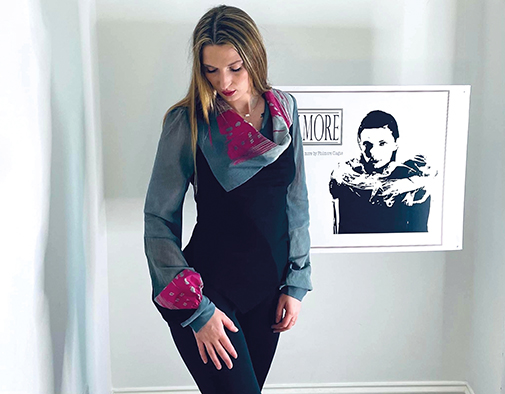
Despite his involvement in activism Philmore is keen to emphasise that he does not support consumer shaming. “I’m never going to criticise a single mother on benefits for buying clothes from a budget retailer, she may have little other option. However the budget retailer in question does have a choice about how it operates, sources and produces. They should be made to make better choices without passing the cost on to the consumer.”
HIP asked Philmore to describe his own brand of sustainable fashion. He explained that they use recycled and deadstock fabrics, vintage cloth and trimmings and sustainable textiles. “Production runs begin with as few as a dozen made of a new design.” If they sell rapidly then production will gradually increase. In this way there are rarely any items left unsold, and if there are, they can be deconstructed to make new creations. “There is essentially no waste.”
WHAT CAN WE DO?
Some of the most sustainable things we can do with regard to our clothing are also the easiest and most affordable. We can stop buying so many items. We can choose to buy clothing made from sustainable textiles, which require less water and fewer chemicals to produce. Organic cotton takes considerably less water to create than non-organic. According to the WWF, it takes 2,700 litres of water to produce the cotton needed for just one t-shirt, whereas organic cotton only uses 243 litres. PET plastic fibre clothing uses less energy to create textiles than virgin plastics. We may also consider animal cruelty issues, and the ethics of how much money is being paid to all those in the supply chain-from growing to weaving, printing, sewing delivering and retail.
We can also repair and/or repurpose items that have become damaged. Christine Arnold-Solomon, a retired lecturer from Gray’s School of Art, gives talks on the subject. She explains how rather than repairs and patches being something to make as invisible as possible, they are now being embraced. There are techniques for repairing most kinds of fabrics, and they can be done in such a way that celebrates them as design features. Ms Arnold-Solomon purchases vintage items, repairs them as needed, often adding an artistic flair along the way. She saves money, she cuts down on demand for new textile products, saves items from going to landfill – and winds up with unique garments that have been enhanced by her mending and embroidery skills.
REPAIR WHAT YOU WEAR
She recommends Repair What You Wear, which is a unique, free to access website that teaches and inspires anyone to easily mend their own clothes. Their website, repairwhatyouwear.com offers videos and instructions you can download. They believe that fashion causes 10% of global carbon emissions. When it comes to buying interesting second-hand and vintage clothing, St Leonards’ many shops offer a huge variety, and are a favourite stop for serious collectors from around the UK. What could be better than supporting local businesses and designers who work in sustainable ways, using recycled textiles and reclaiming and customising vintage clothes?
We hope you have enjoyed reading this article. The future of our volunteer led, non-profit publication would be far more secure with the aid of a small donation. You can also support local journalism by becoming a friend of HIP. It only takes a minute and we would be very grateful.

Leave a Reply