
Land of Giants
David EP Dennis

Giant redwood in the garden at Scotney Castle, Kent
The giant trees of Beauport Park woods are huggable, but only if you have a happy herd of huggers holding hands. These trees are huge. Although Beauport Park Estate and Golf Course is private land, there is a legal East Sussex County Council footpath, number Bat/74/1 which takes you from the woodland entrance near the Blackhorse Hill (A2100) water tower, right through the wood to Kent Street. The path leads past the Roman Navy Bath House of the Classis Britannica iron bloomery – the third largest producer of iron in the Roman Empire. This trail will take you to the land of the giant redwoods. These awesome trees were planted in pre-existing ancient oak forest more than 160 years ago, firstly as a memory of Canada. Later, more great trees were planted as Victorian status symbols.
In the Iron Age the woods were part of the vast Andredsweald forest. Early owners of the 5,000-acre Beauport Park Woods estate within that forest were David Denham, who was distantly related to the Hastings Town Clerk, and Mayor John Collier (1685-1760). It was Denham who started to develop the estate, after which it passed to the Collier family. It became the property of Cordelia Collier and her husband, war hero General Sir James Murray (1721-1784), who fought in Canada. He named it ‘Beauport’ after a Canadian village.
Planting Giants
The estate passed to Charles Lamb (1785-1864) who built a maze and a place for practicing medieval combat – a titling ground – and there was even a curling rink when the ice was right. It was during this later time that many of these great trees were planted, Wellingtonias and Sequoias. Of particular interest are the Monterey cypresses (Cupressus macrocarpa), one of which is nearly 12 metres (40 ft) in girth, the giant sequoia (Sequoiadendron giganteum), one of which is 46 metres (150 ft) high and the huge Chestnut-leaved Oak (Quercus castanifolia), which is 29 metres (95 ft) high. The wood is a wildlife haven where deer, including stags, can be seen. There are woodland butterflies and many insects that depend on a range of plants, some of them rare. It is surprising that the wood is not a Site of Special Scientific Interest (SSSI).
Coral Discoveries
A recent ‘expedition’ to the woods seemed to generate an amazing find of a plant never seen in East Sussex – coralbells (Heuchera sanguinea Engelm.), but when a set of clear photographs was sent to the recently retired Nevil Hutchinson, formerly the Vice County Recorder of the Sussex Botanical Record Society, he kindly and expertly identified it as a member of the cabbage family.

Measuring a Beauport redwood
Not just any cabbage though – in fact it was the rare plant known as coralroot (Cardamine bulbifera (L.) Crantz). This is a rhizomatous perennial herb which grows in two habitats in Britain: on dry woodland slopes over chalk in the Chilterns, and in damp woodlands over clay in the Weald – hence the ‘find’ in Beauport Park woods – but we must not say exactly where!

Naming of Trees
So what is a sequoia and where does the name come from? The giant redwood is a conifer family, the cypress (Cupressaceae). The Austrian botanist and linguist Stephan Endlicher was fascinated by the work of the Cherokee named Sequoyah who had invented a way of writing that language – a syllabary. Endlicher described the giant tree (Sequoiadendron giganteum) and named it in honour of Sequoyah (1767-1843). Once the tree’s magnificent properties had been identified, with towering heights reaching sometimes to 311 feet, it became a ‘must have’ for the rich.
Do take the winding path through the woods alongside the golf club fairways. There is a shimmering tranquil peace to be found as you journey through the land of giants.
From the Redwood Forest
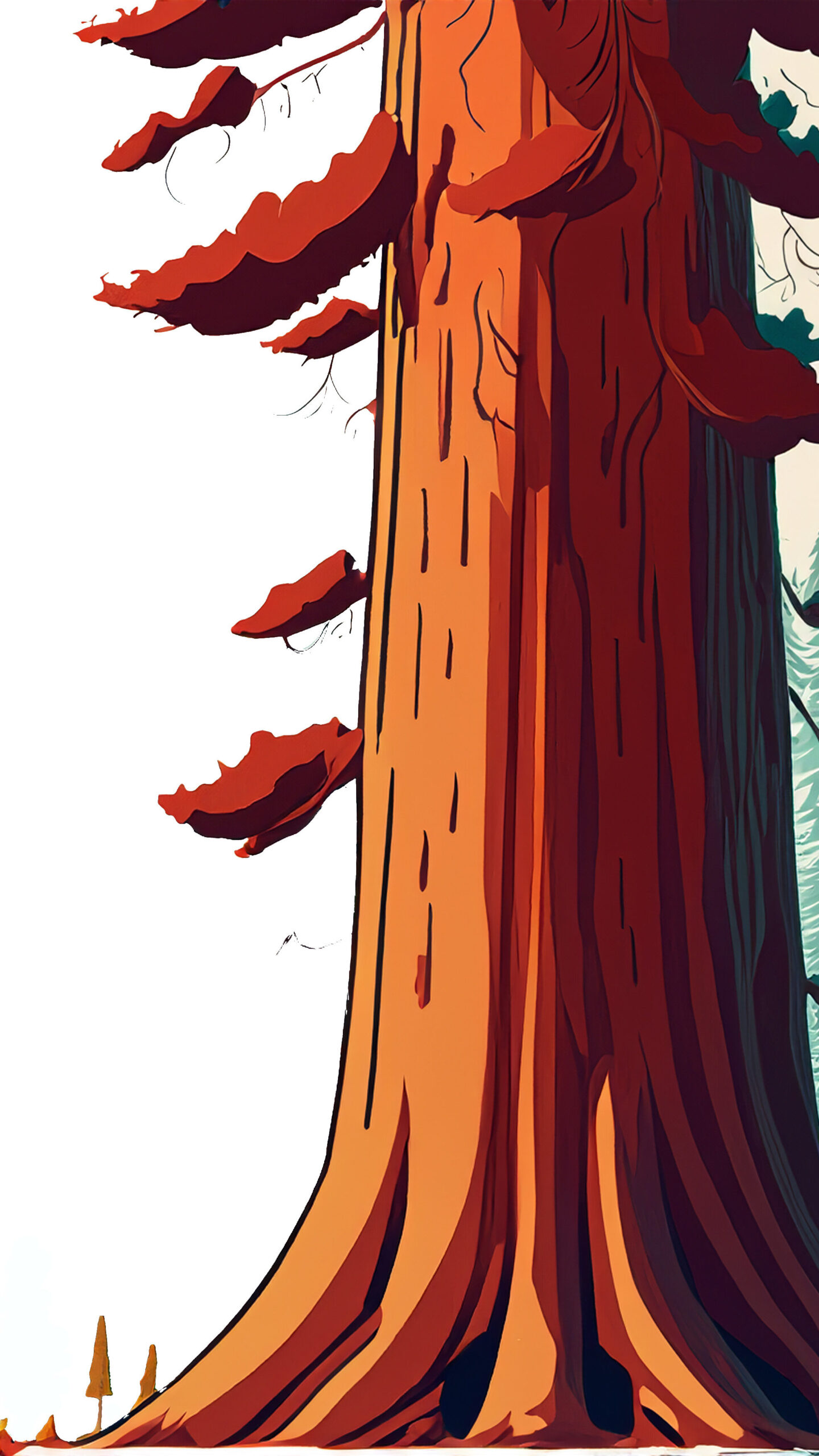
Giant redwoods, Sequoiadendron giganteum, are the largest trees by volume on Earth. They are native to California and can grow up to around 300 feet tall and live as long as 3,000 years.
They were introduced to British country estates as Victorian status symbols by a Scottish grain merchant Patrick Matthew, who is credited with bringing the first seeds to the UK in 1853. Later a renowned nurseryman, William Lobb, imported and distributed a large quantity of seeds and seedlings.
The trees grow at similar rates in the UK as they do in their native California, despite the ecological and climactic differences.
Around half a million giant sequoia and closely related Sequoiadendron Sempervirens – coastal redwoods – are now estimated to be growing in the UK, compared to just 80,000 still growing in California’s Sierra Nevada mountains.
A recent Royal Society report said large Sequoias of more than 70cm diameter at chest height are disproportionately important in terms of ‘ecosystem service provision, particularly in terms of their carbon storage in aboveground biomass’ sequestering carbon at a rate of 85kg a year.
The study used non-destructive three-dimensional structural measurements performed either by specialised tree-climbing teams or terrestrial laser scanning to estimate the AGB – Above Ground Biomass – of individual giant sequoia.
Forests comprising giant sequoia and their near relative – coastal redwoods – are likely to be the most effective worldwide for carbon sequestration. The report says they accumulate AGB at a faster rate than any other vegetation, maintain high rates of productivity throughout their potentially very long lives and are fire-resistant because of their insulating bark.
There is increased interest in planting giant sequoias in the UK, given their potential carbon sequestration capacity and apparent suitability to the UK climate.
nationaltrust.org.uk
We hope you have enjoyed reading this article. The future of our volunteer led, non-profit publication would be far more secure with the aid of a small donation. You can also support local journalism by becoming a friend of HIP. It only takes a minute and we would be very grateful.

Leave a Reply