
Butterflies are free … but under threat
By Suzanne Kelly
The world’s prominent scientists agree that climate change is all too real, and is threatening the world’s plant and animal populations. Much attention has rightly been paid to the importance of bee species for pollination, and many initiatives are underway to help bees. But butterflies and moths are also under threat from loss of habitat, use of toxic chemicals, pollution and climate change. The charity Butterfly Conservation reports that 76% of butterflies have declined since 1976.
A spokeswoman for Sussex Wildlife Trust said: “Butterflies and moths are important in their own right but also provide an essential pollination service, as well as food for birds, bats and other wildlife. Caterpillars are especially important for birds feeding their young during the breeding season, and it can take up to 10,000 caterpillars to rear a single brood of Blue Tits!”
“Right now, we are facing a man-made disaster of global scale,” says Butterfly Conservation’s vice-president Chris Packham. “The twin challenges of climate change and biodiversity loss are pushing much of the natural world to the brink – including many of our most treasured species. In the UK, the majority of our butterfly and moth species are in worrying decline.”
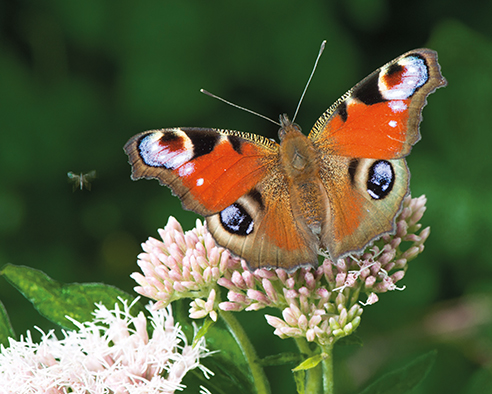
Peacock butterfly
CREDIT: Nigel Symington/Sussex Wildlife Trust
Butterfly Conservation has launched a three-prong initiative to tackle the problem. First is to halve the number of species of butterflies and moths that are under threat in the UK. Second, to improve the condition of 100 of the most important landscapes for butterflies and moths, and third to transform 100,000 wild spaces in the UK for the benefit of butterflies and moths as well as people.

“These beautiful and fascinating creatures are not just important in their own right, but are also indicators of a healthy environment for all wildlife. Over the next five years, Butterfly Conservation is committed to delivering the biggest possible impact for nature, playing a leading role within the conservation sector, with our new, ambitious strategy,” says Chris Packham.
How to help
A good place to start in supporting butterfly and moth populations is to stop encouraging children to catch and kill these insects. Butterfly nets are still widely sold – it’s time to re-think this activity. Instead, why not encourage your family and friends to participate in Butterfly Conservation’s ‘The Big Butterfly Count, which will begin on Friday 15th July 2022 and run until Sunday 7th August, or perhaps visit one of East Sussex’s many nature reserves (see resources section).
The Big Butterfly Count
The Big Butterfly Count is a nationwide citizen science survey aimed at helping the charity Butterfly Conservation assess the health of our environment. It was launched in 2010 and has rapidly become the world’s biggest survey of butterflies. Over 107,000 citizen scientists took part in 2021, submitting 152,039 counts of butterflies and day-flying moths from across the UK. And yes, there’s even an App for this (see Resources below).


LEFT: Brimstone butterfly CREDIT: Roger Wilmshurst/Sussex Wildlife Trust
RIGHT: Blue Tit with caterpillar CREDIT: Roger Wi lmshurst/Sussex Wildlife Trust

Gardens and plants are crucial
If you have a garden or even a window box, then you can help. If you can put in some of the kinds of plants that support butterfly and moths, you’ll be helping enormously, and you will hopefully have a few butterflies visiting your garden.
Caterpillars’ diets include grasses, ants, twigs, animal waste and moss among other things. Butterflies feed on nectar from flowers, and as such are important pollinators as are bees. One of the best plants is Buddleia, also known as the Butterfly Bush. It is not uncommon to see a Buddleia covered in butterflies, and they are not difficult to grow. Lilac, Lavender and Honeysuckle are also greatly favoured by butterflies.
More Flowering Plants
The Sussex Wildlife Trust says: “It’s easy to help butterflies in the garden by including a wide range of different flowering plants to provide nectar right through the year, from the earliest spring arrivals like Brimstones and Orange-tips, through to the last Red Admirals and Peacocks in autumn. It’s also important to think about caterpillars and provide the plants that butterflies need to lay their eggs and complete their lifecycles. Top caterpillar food plants include Holly, Ivy, Bird’s-foot Trefoil and Nasturtium, as well as grasses like Yorkshire Fog and Fescue – so letting a patch of lawn grow long can be a great benefit.”
Delay Garden Clearing
It’s also good not to clear away any dead leaves and ‘weeds’ until later in the spring – this will prevent you accidentally throwing away any eggs. If you can also resist the urge to get rid of dandelions, they feed caterpillars and provide a hugely-important early season source of food for bees. The leaves make a good health tea rich in Vitamins A and C, and the roots are used to make a coffee substitute. It will take very little effort to encourage butterfly populations, and the rewards are many.
As the Sussex Wildlife Trust says, “butterflies can also help us monitor the health of the wider environment. They are very sensitive to environmental change and are known as ‘biodiversity indicators’. They provide an early warning system, a bit like the canary in the coal mine, so a decline in butterfly numbers can indicate a wider ecological problem. Detecting this early gives us a chance to take action before it’s too late.”
RESOURCES
Know your butterflies
Sussex Wildlife Trust has several videos on their YouTube channel;
They also have a map to help you find your nearest wildlife reserve https://sussexwildlifetrust.org.uk/visit After you watch some of their videos, you will know what to look for and where. Some butterflies are high up in the tops of trees; many are in meadows.
Count your Butterflies
Big Butterfly Count / Butterfly Conservation: Sign up to their free newsletter, https://bigbutterflycount.butterfly-conservation.org/ to stay updated or support this charity with a membership or donation. Get their App here https://butterfly-conservation.org/our-work/recording-and-monitoring/irecord-butterflies# , or download their butterfly identification chart here https://bigbutterflycount.butterfly-conservation.org/charts
Feed your Butterflies
The Natural History Museum has information and advice on plants and nectar feeders www.tinyurl.com/ywp6d365 and has a video showing you how to make a very simple, effective butterfly feeder www.nhm.ac.uk/discover/
how-to-make-simple-butterfly-feeder.html
Selection of plants butterflies like: Verbena, Sedum, Wild Marjoram, Field Scabious, Echinacea, Hebe. Some food for Caterpillars: Oak, Willow, Cherry, Apple, Clover, Dandelions.
We hope you have enjoyed reading this article. The future of our volunteer led, non-profit publication would be far more secure with the aid of a small donation. You can also support local journalism by becoming a friend of HIP. It only takes a minute and we would be very grateful.

Leave a Reply