
A Tale of Two Sectors
KENT BARKER reports on the apparently growing divide over the environment between large- and small-scale farmers in France
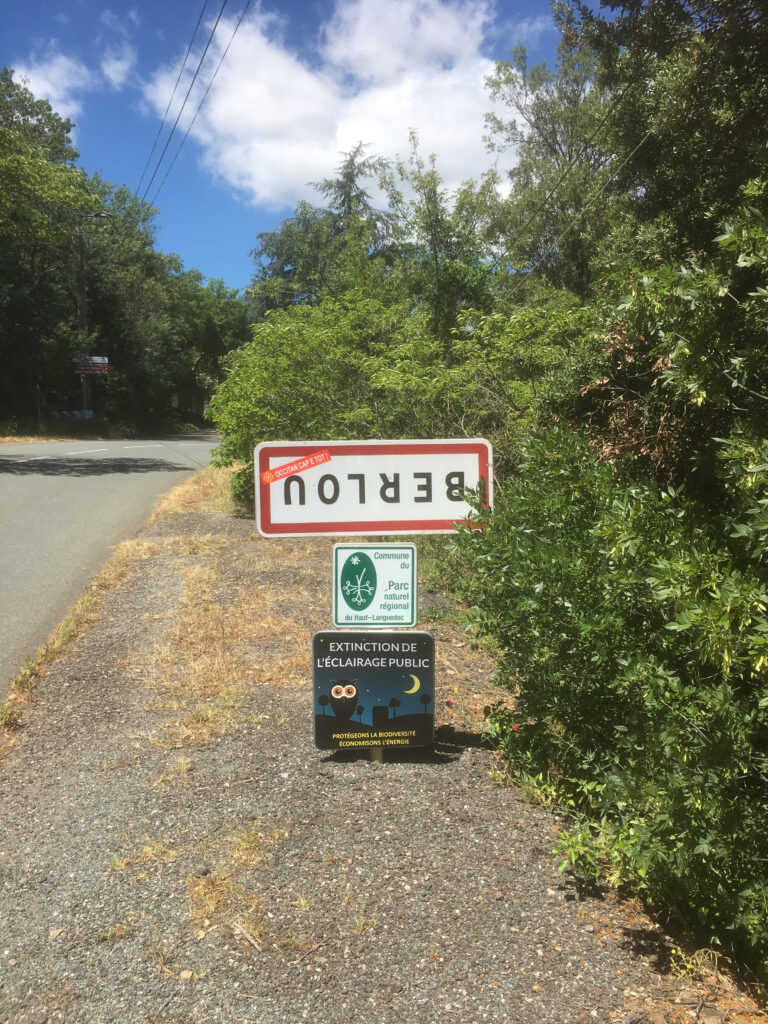
A striking image for anyone travelling through France this summer is the inversion of village and town names. Apparently unobserved, someone has been undoing the bolts on the backs of signs, turning them upside-down, and re-fixing them. And, perhaps most extraordinary of all, no one seems in any hurry whatsoever to turn them back again – despite the obvious insult to local civic pride.
It started off in the Tarn area of the Languedoc last winter and has now spread throughout most of the country. And the people behind this latest craze appear to be angry farmers. Agricultural protests are by no means new in France, but this latest round is pitting large agribusinesses against small farmers and, effectively, against an EU environmental initiative – the Green Deal.
Jean-Marie Rimbert, a 60 year old vigneron from the small village of Berlou in the Languedoc, says no one actually knows who is putting the signs on their head and that people generally don’t know what the protest is about. But he thinks that local mayors support small producers and so are content to leave the signs be.
The Green Deal is a multi-faceted programme which seeks to use subsidies from the Common Agricultural Policy (CAP) to ‘tackle climate change, protect natural resources and enhance biodiversity in the EU’. One aspect of this is to develop a more sustainable system of agriculture in European Union countries, including an upcoming requirement to leave 4% of farmland fallow and to restore hedges – which are almost entirely missing over large parts of the French landscape. Coupled with moves to reduce food price inflation, improve animal welfare and reduce pesticides, it has angered the intensely powerful French farming lobby and unions.
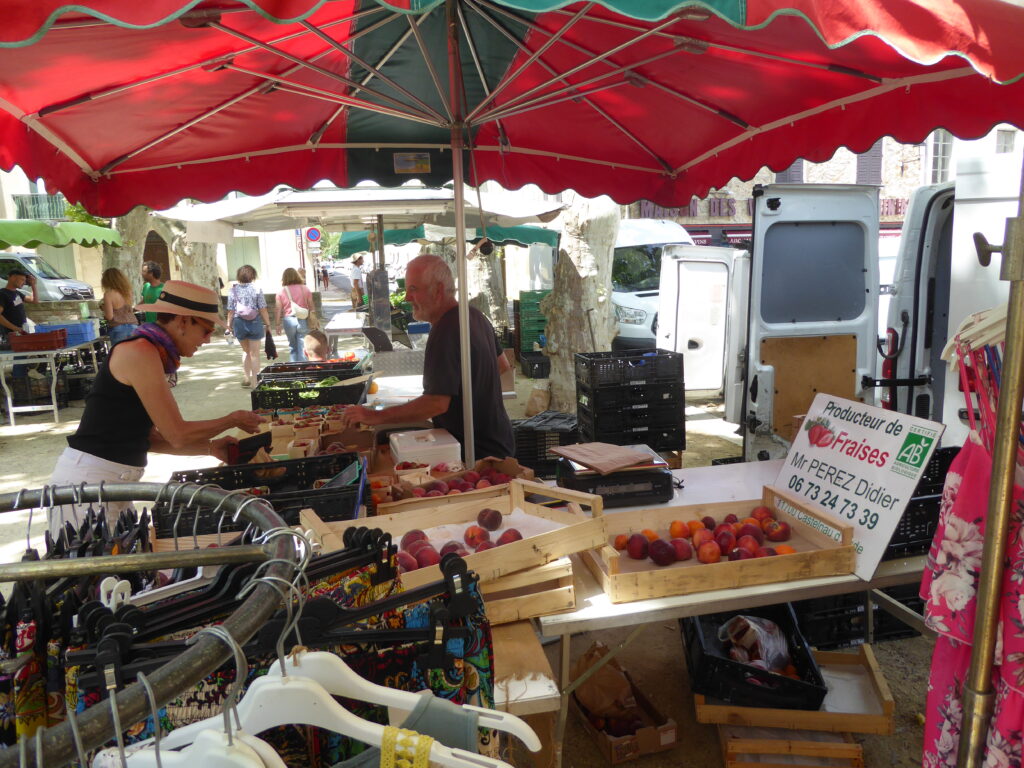
St Chinian Market
France’s biggest farmers’ union FENSA (Fédération Nationale des Syndicats d’Exploitants Agricoles) has enormous influence within the country’s political establishment as well as a formidable lobbying presence in Brussels. It has persuaded the Macron government to accept policies known as ‘Agricultural Exceptionalism’, seeking derogation from some EU rules. According to the monitoring group Corporate Europe Observatory (CEO) FENSA ‘did not utter a word on the need for CAP subsidies to be spent on supporting farmers towards more environmentally friendly practices’ and that it ‘opposes any hard, binding environmental measure at the EU level that would be tied to CAP subsidies, hoping it can sufficiently influence France’s own Strategic Plan’.

Faustine Bas-Defossez of the European Environmental bureau regards this as a threat to European democracy. “French farmers are trying to ride the wave of anti-EU sentiment — although they are the EU Common Agricultural Policy’s biggest beneficiaries,” she says. “They are making the EU’s Green Deal, which is supposed to ensure a transition toward a more sustainable society, a scapegoat,even though the deal has yet to have any concrete impact on the agricultural sector.”
The farmers’ perceived anti-democratic tactics of blockading the roads around Paris with tractors and threatening to ‘starve the capital’ earlier in the year led to government payments of €400 million (around £340 million) to address farmers’ grievances along with concessions on environmental measures.
Somewhat surprisingly, environmental groups in France have been anxious to be seen to support the farmers. Following the Paris ‘blockade’ a joint statement released by more than 50 green organisations – including Friends of the Earth, Greenpeace, and Extinction Rebellion – said they “refuse to be labelled as enemies of the farmers”, arguing “environmental standards should not be attacked indiscriminately, but should be financed in such a way as to maintain incomes and make their application compatible with farming practices.” Sandy Olivar Calvo, agriculture and food campaigner at Greenpeace France went even further: “The anger of farmers is just and legitimate, and we share it,” he said, while backing demands for a ban on the sale of agricultural products at prices below production cost, minimum prices for imported food and strict controls on how much profit supermarkets can make on produce among other measures.
All this seems to be at the expense of smaller farming enterprises. France and Britain have similar populations of around 67 million people. But, according to respective government statistics, France has 456,000 farms compared with the UK’s 216,000. However, France has lost almost 300,000 farms in the past two decades and many blame the unions in general, and FENSA in particular, for protecting the big agribusinesses at the expense of small farmers. The huge cereals producers of Northern France are seen to dominate FENSA, leading it to oppose any major moves away from acreage-based subsidies – just what’s needed by small acreage farms elsewhere.
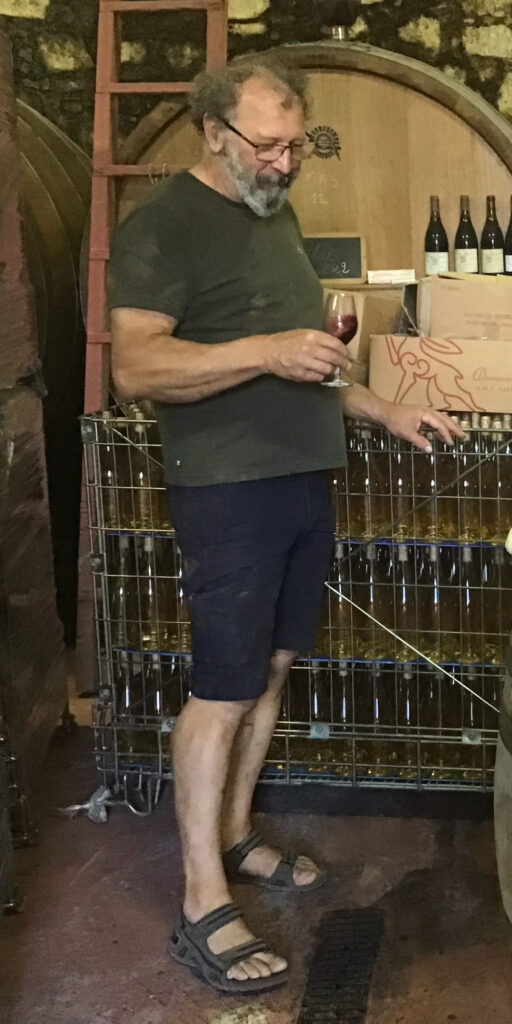
Jean-Marie Rimbert
Jean-Marie Rimbert farms around 45 hectares of organic vines on the hilly and stony ‘schiste’ ground around Berlou – within the Saint-Chinian appellation. His annual production is around 80,000 bottles, half of which he exports – mainly to Canada as well as North and South America. He says he has no particular gripe with the EU or the Green Deal – though the latter mainly benefits arable and livestock farmers in the north. “The CAP is proportional and therefore seems fair.” he says. But he is intensely frustrated by the huge bureaucracy involved in getting even simple things like agricultural diesel subsidies: “After a long day in the fields the last thing I want to do is to go online and deal with logins and passwords and complex forms.” When he retires in five years’ time, he thinks his wine ‘domaine’ will shut and the vines will return to nature – following the trend of small farms closing across the country
And yet, when you visit the vibrant weekly markets in most French towns, you get a rather different picture. Thousands of ‘producteurs’ appear to survive by selling seasonal fruit and vegetables as well as cheese and meat on a small local scale – and much of it is organic as they venerate and protect their environment. They seem far removed from the huge tractor protesting farmers of the north and their union representatives whose attitude to the Green Deal appears decidedly negative.

We hope you have enjoyed reading this article. The future of our volunteer led, non-profit publication would be far more secure with the aid of a small donation. You can also support local journalism by becoming a friend of HIP. It only takes a minute and we would be very grateful.

Leave a Reply