
The Ultimate Seville Orange Marmalade
By Mick Studd
Commercial marmalade tastes nothing like home-made – it’s well-worth making your own. Seville oranges are the most sought-after fruit for making marmalade, although the season for Seville oranges is very short – from late December to mid-February. Luckily, you can buy them now and freeze them until you want them. The flavour
of organic oranges is incomparable, and Trinity Wholefoods is a good place to buy them.
Ingredients
• 700g (about 7 or 8) Seville oranges
• 1 large lemon
• 1.4kg of granulated cane sugar

• 1.75 litres water. (3 pints)
You will also need a large stainless steel or enamel pan (24 by 11cm), a smaller pan, a stick blender or sieve, a lemon juicer and some sterilised empty jam jars.
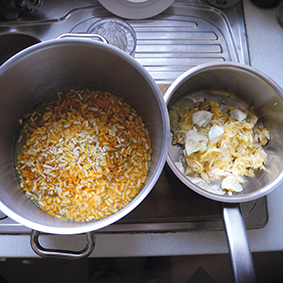
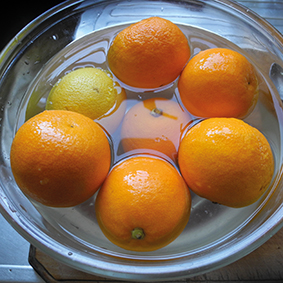
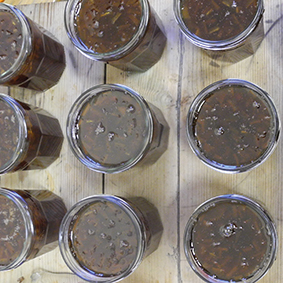
CREDIT: Mick Studd
Method
1. Halve and juice the oranges and the lemon.
2. Remove the inner mem-branes with a teaspoon, chop them and put in the small pan with the pips and pith from the juicer. If you have a stick blender, you can blend pith and pips into a sludge.

3. Cut the orange ‘shells’ into quarters and then chop as finely or as chunkily as you like. Put this peel and the juice in the larger pan.
4. Add 1 pint of water to the small pan and 2 pints to the larger pan. Ideally leave to stand overnight to allow the pectin to seep into the solution.
5. Simmer both pans gently for up to two hours until the peel is tender, and the liquid has reduced by about one third. Stir occasionally so they don’t catch and burn at the base.
6. When cooked, add the membrane and pips ‘sludge’ into the large pan (or strain through a sieve if you didn’t use a stick blender).
7. Add the (warmed) sugar to the large pan and heat slowly, stirring until it is completely dissolved.
8. Bring the large pan to a rolling boil until a temperature of 104.5°C is reached. After five minutes, start testing to see if the setting point has been reached: spoon a small amount onto a cold plate and see if, when cooled, it wrinkles when pushed. When the setting point is reached, leave it to cool for 10 minutes and then ladle into jars.
If you put the marmalade in jars but it remains runny when cool, you can try repeating the setting boil with an extra 200g of sugar and the juice of an extra half a lemon.
More information, recipes and pictures can be found in First Preserves by Vivien Lloyd, Citrus Press.
As an alternative try lime marmalade – it’s easier because you can put the juice and chopped peel with the pith in just one pan and soak overnight, then add the sugar and hard boil as for orange marmalade.
We hope you have enjoyed reading this article. The future of our volunteer led, non-profit publication would be far more secure with the aid of a small donation. You can also support local journalism by becoming a friend of HIP. It only takes a minute and we would be very grateful.

Leave a Reply