
Foraging for Wild Garlic
STEVEN SHORT
Ever wondered why the rats in Alexandra Park are so chill? It’s probably all that wild garlic they’ve been munching on. Wild garlic has been scientifically proven to lower the blood pressure of our furry friends. Yes, really. The plant also has medicinal benefits for humans – more of which later.
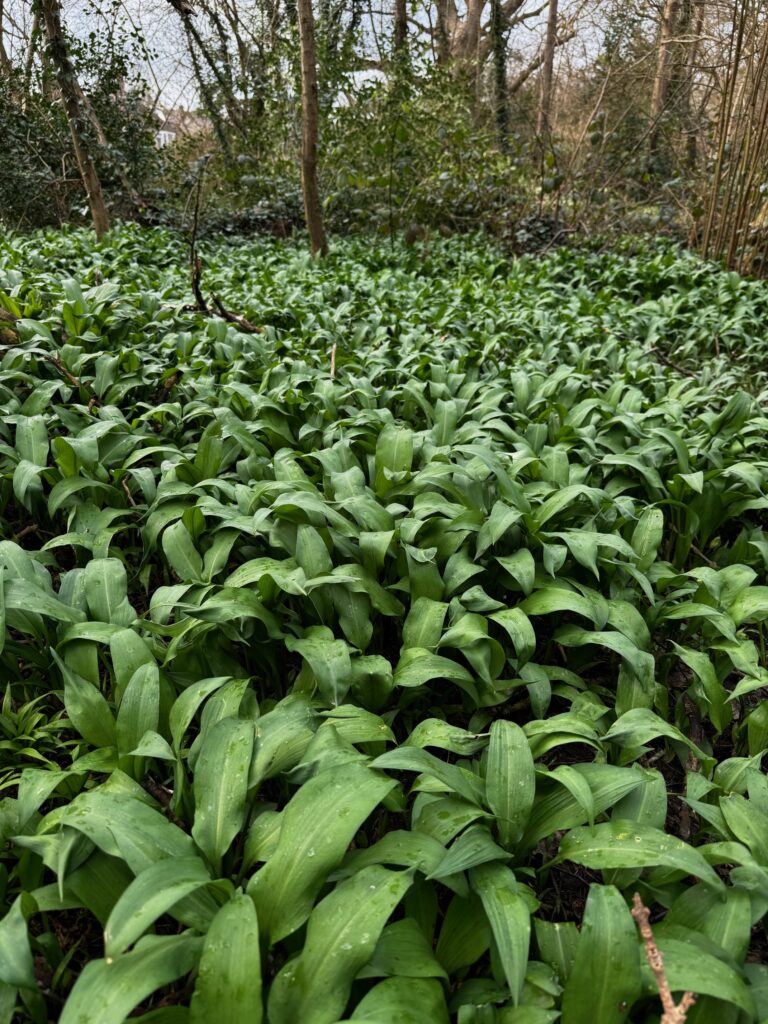
Allium ursinum is most commonly known as wild garlic, though some call it ramps, ramsons or bear’s garlic. The wild plant grows in woodlands, meadows and damp places in Europe and parts of North America and Asia.
The ‘ursinum’ bit of wild garlic’s botanical name translates as ‘bear’ in many Eurasian languages. Folk tales suggest the name comes from bears’ predilection for the lush green leaves and its white flowers, which they would eat after hibernation to remove toxins from their sluggish bodies and regain strength. Others argue that it got its bear nickname because the plant emerged at the same time as the bears did.
It’s believed that we have used the plant in cooking and in our medicine cabinets as far back as the Stone Age. Wild garlic was known to early Celts and ancient Romans who referred to it as Herba Salutaris, the healing plant. Recent research has shown that the plant has antioxidant, antimicrobial, cytotoxic, and cardio-protective effects on humans. A 17th-century proverb praises wild garlic’s qualities thus: “Eat leeks in Lide [March] and ramsons in May, and all the year the physicians may play.”
Wild garlic has one of the longest seasons of wild plants and can be found from mid-February to April. It’s at its most lush and pungent around mid-March, which is when you’ll find me in Alexandra Park, picking it (for pesto) from a couple of my favourite spots – both of them by the stream that runs along the side of St Helen’s Road.

Wild garlic grows in fairly large patches and is easy to spot once you know what you’re looking for – its bright green leaves are long and pointed, and its flowers look like bulky dandelions. Be careful though, as wild garlic looks similar to some toxic plants like autumn crocus or lily of the valley. A key distinguishing feature is a strong garlic odour.
Be sure only to pick the leaves though – you can’t really do much with the flowers apart from sprinkling them on salad to look pretty – and be sure not to pull up its bulb root as this is illegal under the Wildlife and Countryside Act of 1981.
Spots to find wild garlic in and around Hastings include Alexandra Park near Roar Gill, the East Hill and Gillsmans Hill woods.
We hope you have enjoyed reading this article. The future of our volunteer led, non-profit publication would be far more secure with the aid of a small donation. You can also support local journalism by becoming a friend of HIP. It only takes a minute and we would be very grateful.

Leave a Reply