
The Wreck of the Amsterdam
As an experienced sailor living in St Leonards, PETER GRAY finds the established story at odds with how this type of ship sailed
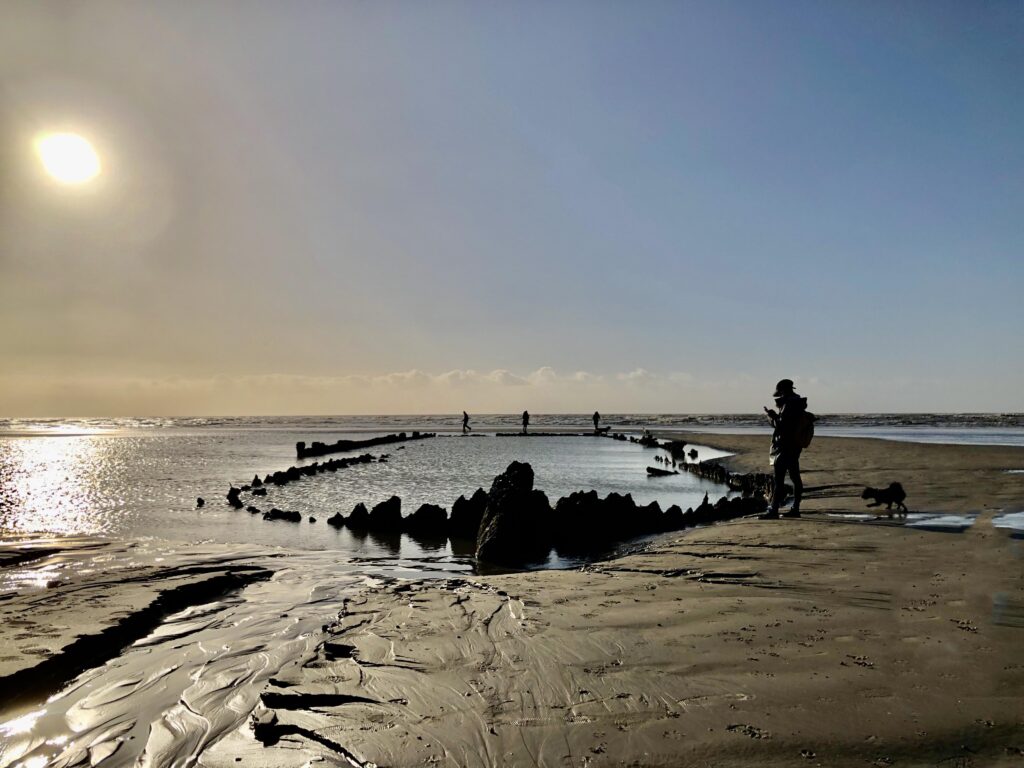
There is a mystery as to why the Amsterdam ended up in Pevensey Bay during a great storm, unable to get beyond Beachy Head: five other ships did get beyond and as far as Portsmouth. So the great storm was not quite as significant as some think. After all, these were all ocean-going ships unlikely to be overcome by a bit of a blow at the stand-up paddle board end of the English Channel. Wind direction, not wind strength, would be the important factor here; however, that also doesn’t explain the different outcomes.
The six ships had been together at the Downs Anchorage off Deal, after the second attempt by the fleet to get through the English Channel. This is a safe anchorage, still in use today by P&O when it’s too windy to get into Dover. It can only be accessed from the south, as it lies between the East Kent coast and the treacherous Godwin Sands on which 2,000 ships have been wrecked. It’s hard enough for a motor vessel, but for a square-rigged sailing ship, one at the mercy of wind and tide, a highly skilled manoeuvre.
They stayed a little over 24 hours, leaving with the tide and a favourable wind on the night of 10 January. This was where the Amsterdam took a different route. The ship’s logs are long since lost, so we only know of their stay at the Downs because of land-based observations. These observations continued for the Amsterdam, but the other ships passed by unnoticed until they arrived in Portsmouth. What could account for this difference? The sickness on board is almost certainly the answer. By the time she set an anchor in Pevensey Bay a few days later, 50 of her crew of 204 were dead, with more dying at the rate of three a day. The ships with healthy crews could set a better course, keeping offshore and out of sight. This is a much safer place for a sailing ship passing through the English Channel in a storm. Keeping as far out as possible from an onshore wind was always desirable.
TRAPPED IN PEVENSEY BAY
The Amsterdam was seen off Rye and Hastings and then at anchor off Bexhill. Around this time, the other ships had taken refuge in Portsmouth as the wind became more southerly and ended up southwesterly. The other ships were able to sail with the wind over their beam (side) as they headed into a safe port. These ships had a tough time in the strong winds, but again, it was wind direction and not wind strength that brought them into port. The Amsterdam, already close to shore, was trapped in Pevensey Bay.
To add to the misery, the ship had lost her rudder on a sandbank. If the Amsterdam had made Portsmouth too, she could have been repaired and taken on a fresh crew. This makes the suggested mutiny sound more like justifiable belligerence than an attempt to take over the ship – although it seems they did take over the large drinks cabinet. Yet all hands must have pulled together to make the final short journey to the sands of Bulverhythe.

She only just made it, narrowly avoiding the Bo Peep rocks to the east of the Bexhill reef. Since then, the ship has moved very little from this spot except downwards, as she sank into the muddy sand over the next few weeks. There she remains, the most intact East Indiaman ship in existence, said to be two-thirds complete and with all her cargo still in her hold. The masts and rigging were removed shortly after she was officially abandoned on 11 March 1749.
The ship is still visible on low spring tides if you want to visit, though be aware that this is a protected shipwreck and you should stay a safe distance. It is thanks to the work of Peter Marsden, whose book Wreck of the Amsterdam was the source of much of this article, that this status has been afforded. There still remains, however, the mystery of how she came ashore bow first in a violent storm, having lost her rudder.
BEACHING WITHOUT A RUDDER?
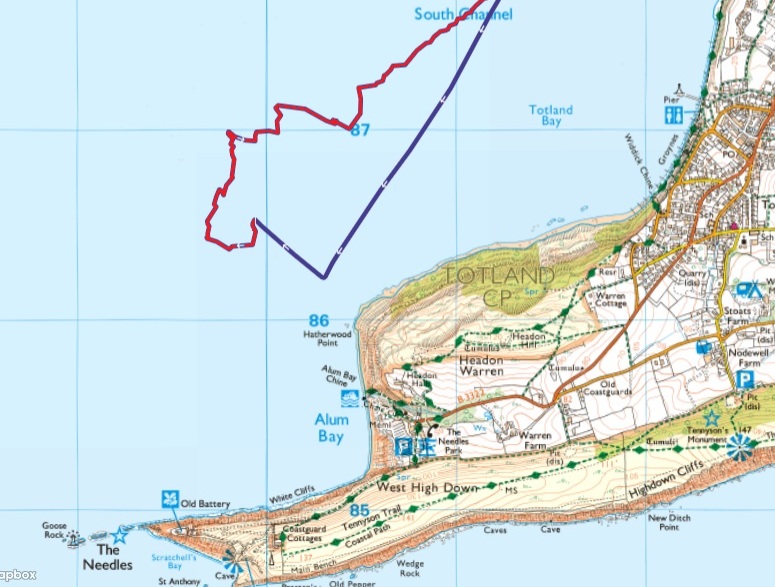
As the Amsterdam lay at anchor off Bexhill with sailors dying at a rate of three a day, the Captain eventually decided to beach her. They wouldn’t need a telescope to see the sands at Bulverhythe or the rocks on either side as the tides cycled. They had a big problem though, the loss of their rudder on a sandbank on their way in.
My experience of rudders and sailing boats is that it’s game over when one is lost. Once, while racing around the Isle of Wight and heading towards The Needles, the rudder had suddenly broken off in my hand as we put in a tack. We’d managed to get the thing on board, but that was it; we were finished. The boat naturally headed into the wind, sails flapping noisily. We ended up being rescued by the RNLI, having randomly drawn a dog.
So it’s with that experience that I approach the last moments of the Amsterdam’s journey. With three ships’ carpenters and eight apprentices on board, they could jury-rig some kind of rudder, but this would be a challenge. I needed to learn a bit more about how square-rigged ships like the Amsterdam are sailed. One minute into a YouTube clip, and they drop the bombshell: square riggers “don’t use their rudders to steer when underway”.
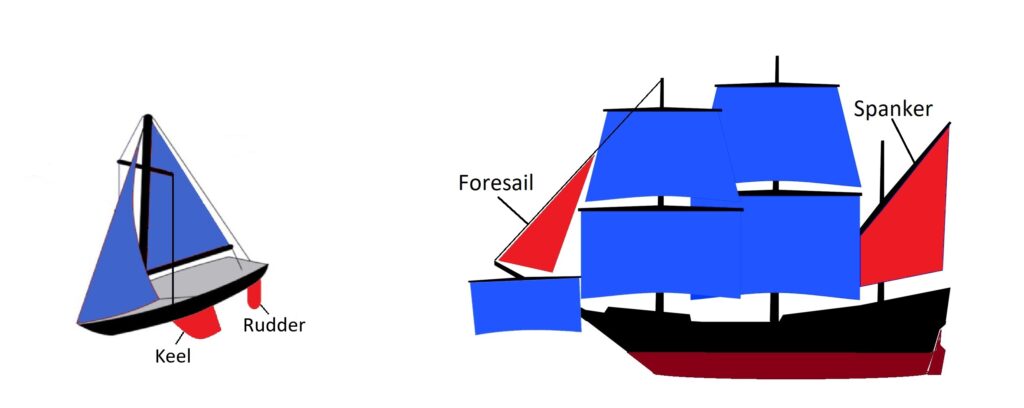
A square-rigged ship balances the power of the foresails at the bow (front end) with the spanker at the stern. This helps hold the ship on a course and also assists with turning. Rudders on small sailing boats are very effective and work almost instantly, but it’s different for heavy ships. Firstly, they are slow to react; there was that incident in the North Atlantic when one was trying to steer around an iceberg. Secondly, once they start turning, they are hard to stop, as happened with the ship that blocked the Suez Canal more recently.

SQUARE RIG EXPERT HELP
I was out of my depth, I needed help and managed to get the attention of a genuine square rig sea captain at classicsailing.com. I wasn’t expecting an answer, but Adam Purser the joint founder and qualified sailing instructor for these ships replied: “I think they didn’t have much say in the matter: if the anchor parted suddenly, the bows would have been blown off by the wind, and once the moment of the swing began, she would spin out of control. Setting sails would just have made them approach the beach faster. That they went ashore bow first is therefore likely to have been entirely a result they had no control over.”
This took the wind out of my sails. It looked like the Amsterdam finally had some good luck and came ashore bow first before the bad luck set in again as she started to sink into the muddy sand. However, I think there’s still a way for the Amsterdam to come ashore under command, bow first and still fit with Adam Purser’s assessment above.
HOW DID IT HAPPEN?
The captain would have observed the tidal sequence and realised that as the tide came in, the tidal stream headed east. This meant that just cutting free from the anchor on a rising tide, the ship would drift ashore nearer Hastings. Could they control her sufficiently to make a graceful bow-first beaching on the nearby sands at Bulverhythe, or would they swing out of control as suggested by Adam Purser, the ship’s captain from Classic Sailing?
The irony is that the safest place for a ship in a storm is to stay at sea. Coming into port is the dangerous part. The land is a very solid object to come up against when you are being pushed around by a storm. The captain and crew would know this too. So why did they choose to come ashore in a storm? The answer I believe, is that they didn’t.
HOW TO BEACH A SHIP
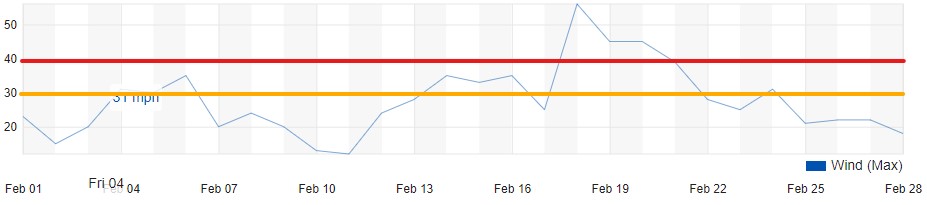
For a successful beaching, three conditions would need to be met. First, they would need to come in on one of the higher tides in the cycle to push them as high on the beach as possible. Every two weeks for a few days the tide is at its highest; these are known as spring tides. Secondly, as the Amsterdam had no upwind performance there would need to be some southerly aspect to the wind to help push her ashore. And finally, the missing piece: the wind would have to have abated. It may have seemed windy to the church congregation on shore as they heard the ship’s canons being fired on that Sunday afternoon (a sign of a ship in distress). But if the wind was a force 6 or below i.e. 30mph or less, then the game is very much back on.
Sailors are skilled at reading the weather, watching clouds and monitoring conditions, and would know they only need a few hours to pull off the short journey to shore. So with great skill and courage, the remaining healthy crew likely sobered up and pulled together, motivated by a common goal. They only just made it onto the sandy beach, which probably meant they came in faster than they would have liked, just as Adam Purser predicted. They did make it, and she held fast, a little too fast, for there she remains.
Of course, I can’t be certain that this is what happened, but it is unlikely they took the risk of beaching in storm conditions, there was too much at stake. A brand-new ship, barrels of silver, and a young captain’s reputation and career, not to mention the lives of several hundred people. Captain Klump had to get the signature of all the senior officers for this beaching to go ahead. After which, Klump took this document to the Mayor of Hastings for signing and then on to the London office of the Dutch East India Company for ratification. They did everything by the book. Klump went on to make five more East Indies trips before retiring. The beaching therefore, sounds organised, skilful and planned.
A HUMAN TRAGEDY
The beaching of the Amsterdam is a human tragedy with well over 50 people dead and some too sick to leave the ship. But after housing the crew ashore, there was no further outbreak of the disease amongst the people of Hastings. Whatever it was, it was left on the ship. Interestingly, the disease struck only one group of people on board: none of the senior crew got it, nor the 130 soldiers on board, only the general crew. Perhaps their water supply was contaminated, or something else specific to this group, as they bore the brunt of this with their lives. It also gives a touch of gothic horror to the idea of recovering the ship and floating it home to Amsterdam.
We hope you have enjoyed reading this article. The future of our volunteer led, non-profit publication would be far more secure with the aid of a small donation. You can also support local journalism by becoming a friend of HIP. It only takes a minute and we would be very grateful.

Leave a Reply