
‘Mad Jack’ Fuller: Racist
Hastings’ Isobel Blackman Centre was standing room only as Black Lives Matter organiser Gary McFarlane and Sussex historian Mike Anderson spoke about the ‘Myth of Mad Jack Fuller’ to a meeting organised by Hastings Stand Up To Racism. SIMON HESTER reports back.

“Fuller had an undeserved reputation as an eccentric and philanthropist, hiding his true identity as an enthusiastic supporter of slavery, his wealth mostly coming from his two Jamaican sugar plantations where over 250 enslaved Black women, men and children were ruthlessly exploited. Fuller’s reputation as an eccentric comes from a number of follies he built around his estate – one reputedly to win a drunken wager.”, Mike Anderson told the meeting.
Fuller, Squire of Brightling, near Battle, was Tory MP for Sussex from 1801 to 1812 and used his Parliamentary position to obstruct and delay abolition. Parliamentary records of an 1807 debate regarding the slave trade, outlines his contribution:
“Mr Fuller was of the opinion that the abolition of the slave trade would have the effect of rendering the conditions of the slaves much worse in the West-India islands. The negroes on his estate were more comfortable than labourers in this country, and it would be his desire to place them on the same footing in every respect. This, however, was impossible, because of the fertility of the soil was such in many parts of the West-Indies, that by the labour of a day and a half per week, one negro could procure support for a whole family, and in that case would not be disposed to work; so that it was necessary to keep them employed by moderate discipline.”
RECORD ON SLAVERY IGNORED
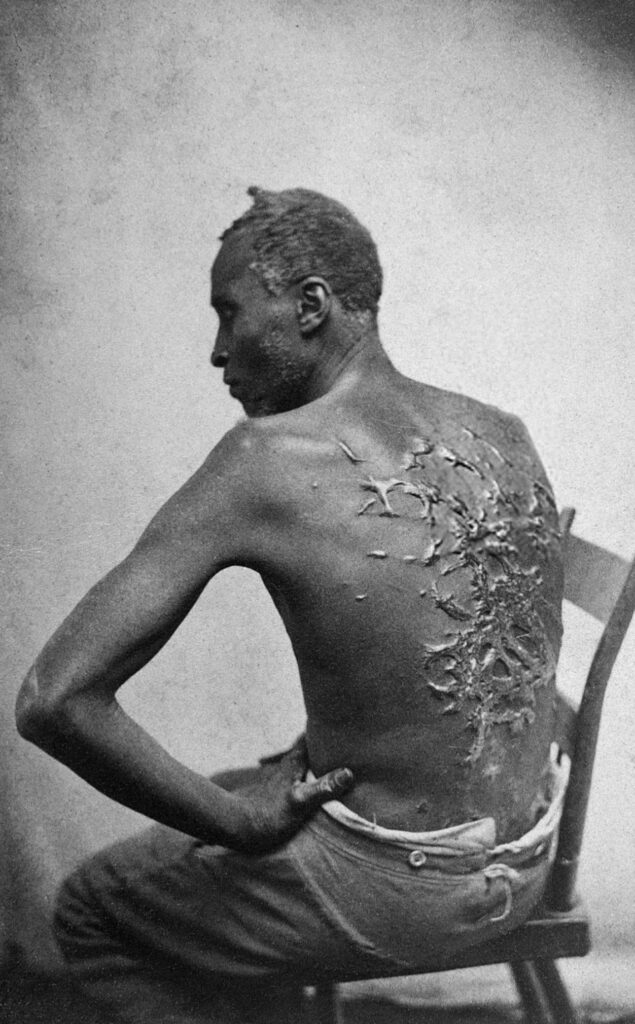
Anderson went on to give examples of how the myth of philanthropy and eccentricity was being promoted, and his record on slavery ignored. The website for Hastings-based Mad Jack’s Morris, until recently made no mention of his record on slavery, and only says:
“Mad Jack’s is named after a local eccentric…he was also a philanthropist most famously employing out-of-work soldiers at the end of the Napoleonic War to build a wall around his estate, thus giving them work and saving them from destitution.”
Anderson pointed out that in fact Fuller paid only half the normal wage of a shilling a day to workers building the wall, adding, “This fake philanthropist actually took advantage of economic conditions to exploit Sussex workers.”
ASSOCIATED WITH HBC & JITG?
The Mad Jack’s Morris website now does acknowledge Fuller’s role as a slave-owner, though describing him merely as “by today’s standards, flawed”. As a slaveowner, he was always ‘flawed’, as many at the time made clear.
Drawing attention to Mad Jack’s Morris’ position as a partner, alongside the Hastings Borough Council, in the Jack in the Green Festival, Anderson said, “The Festival is a fine example of English culture and history, celebrating the spirit of summer being released. In contrast, Mad Jacks Morris are named after someone who represents the worst of English culture and history, a man who believed that Black people were chattels to be bought and sold, beaten and whipped for his financial gain.”
WALK IN HISTORY? OR MYTH?
A History Walks website run by David Clarke of St Leonards-on-Sea, provided another of Anderson’s examples: “The website doesn’t mention Fuller’s record on slavery, calling him ‘a public benefactor’, saying ‘regrettably one of Mad Jack’s less favourable actions, or so the story goes, was to move the village pub half a mile away from the village centre.’
“It seems,” concluded Mr Anderson, “Mr Clarke considers moving a pub is infinitely more regrettable than the systematic brutal exploitation of enslaved Black people.”
Mr Anderson went on to say, “None of Fuller’s so-called philanthropic acts can be separated from the source of the money that financed them. That money is tainted by the blood, endless misery and brutality inflicted on countless Black women, men and children who toiled on Fuller’s Jamaican plantations. Currently Black lives do not matter as much as White lives in Britain. I believe one of the reasons for this is that Britain will not face up to the reality and consequences of its colonial past, and clings to a sanitised and airbrushed version of its history. The myth of Mad Jack Fuller exemplifies the national myth of empire and colonialism.”

Concluding his address, Anderson told the meeting that much had already been achieved to tell the truth about John Fuller. One of the most significant advances mentioned by Mr Anderson was the ending of the Royal Institution of Great Britain’s Fullerian Professorships, which the organisation considered were “no longer relevant or appropriate to the Royal Institution of the 21st Century.”
PROMOTING RACISM TO JUSTIFY SLAVERY
Gary McFarlane talked in detail about Britain’s role in the slave trade, and how the enormous wealth it generated financed the Industrial Revolution. The average life expectancy of a slave in Jamaica was seven years – they were worked to death in a regime of torture, terror and death. Fuller was a central figure in the West India Interest, a powerful slaveowners lobby group which was set up to counter the growing and massive abolition movement in Britain. The West India Interest financed ‘scientific research’ to ‘prove’ that black people were less than human and so it was reasonable, they claimed, to treat slaves as beasts of burden, as chattel to be bought and sold.
This was the era of ‘Liberty, Equality, Fraternity’ and ‘all men are created equal’ but, in order to justify the brutality of slavery, its supporters deliberately developed the ideology of racism.
Gary described the resistance of the slaves, notably the rebellions in Jamaica led by Sam Sharp, in which tens of thousands of slaves rose up. Despite eventual defeat, the uprisings heralded the end of chattel slavery. They fused with the abolition movement inside Britain, arguably the first mass working class- led movement in the country.
Gary concluded, “Slavery was defeated by the actions of ordinary people, but its legacy lives on in the ideology of racism which still permeates society and affects the lives of so many people. The struggle against racism includes our efforts to uncover the hidden truths about slavery, and the people, like Mad Jack Fuller, who benefitted from it.”
Hastings Stand Up To Racism will continue to campaign to expose the myths about Mad Jack Fuller, and to support the growing calls for restorative justice and reparations for slavery.
You can find Hastings Stand Up To Racism on Facebook or email them on [email protected]
We hope you have enjoyed reading this article. The future of our volunteer led, non-profit publication would be far more secure with the aid of a small donation. You can also support local journalism by becoming a friend of HIP. It only takes a minute and we would be very grateful.


Leave a Reply