
Fading Beauty: The Art of Anne Lydiat
VICTORIA KINGHAM
This article was originally intended to be the second item in an occasional series about Hastings photographers. However, from Anne Lydiat’s work and writing, it is quite clear that she is an Artist in the most profound sense. “Several years ago,” she has written, “I made a decision to make some changes in my life and my sense of being.”

This was the beginning, she continues, of her ‘expedition into the territory of self’, which also involved a physical expedition to Europe, and a blank book called lost for words… which she placed surreptitiously into libraries wherever she went, usually in the Philosophy sections between Kant and Lyotard. She then took a photograph of the book. She was exploring ideas, the idea of loss, the idea of being lost.
Her photography is wonderful, but it is only part of what she does: a means to an end. For each project the photograph is part of a creative whole which depends as much on the process as on the finished product. It is important to her and to her work that nothing is static, nothing is fixed. While she herself changes through the course of her life, everything else is changeable, mutable.
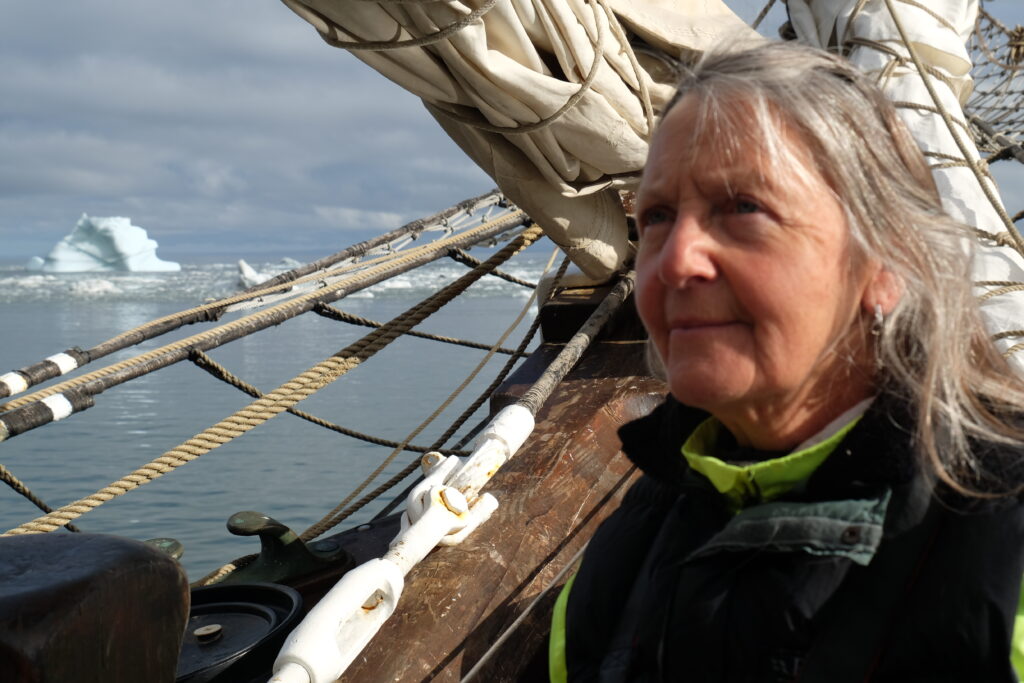
Her latest photographs are of icebergs. So far so remarkable, you would think, and there are indeed some extraordinary images among them. But these are so much more than documentary evidence. Lydiat, with an extraordinary forty-year cultural and artistic life behind her, understands and communicates the changing patterns of life – hers in particular, others’, and all life, in general.

ETERNAL QUESTIONS
The titles of her exhibitions raise a series of questions that are immanent, eternal. Loss, silence, existence within the elements, depth, awakening, mutability. Not only does she meditate on these things but she lives them; they are part of her, part of her life, and integral to her art and her photography. “Absence and loss and the idea of change have always been on my mind, part of my work” she tells me.
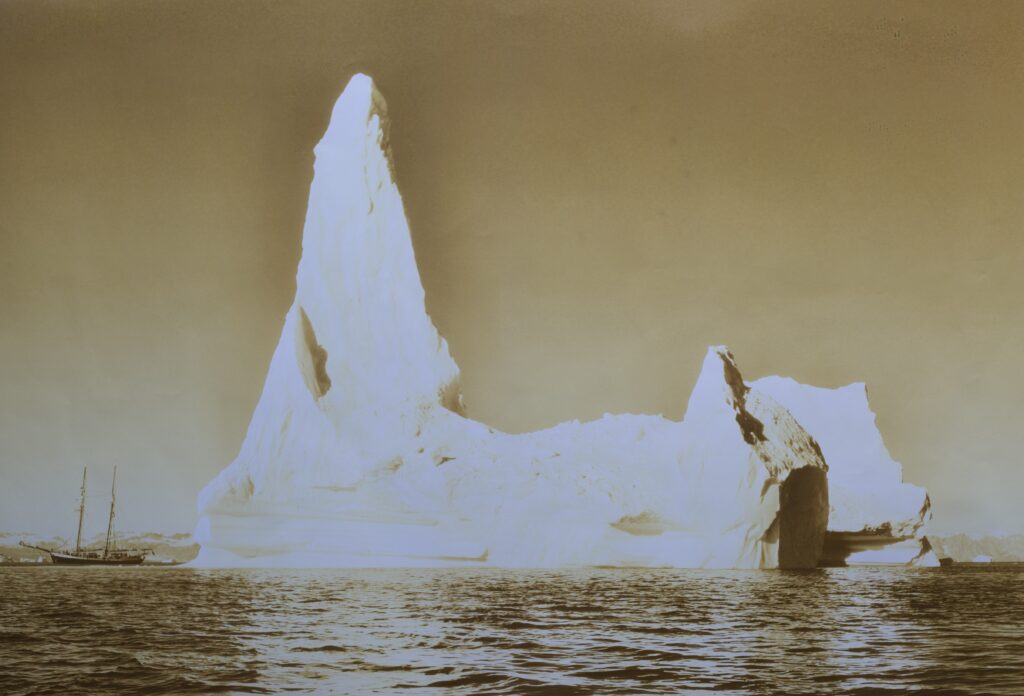
Some of her recent work was displayed last year in the PhotoHastings exhibition There Not Here, which was held in the very appropriate, decaying, upstairs space at St. Andrews Mews. “Just the ambience of the building leads you to being experimental” muses Lydiat. Her photographs have been reported as ‘faded icebergs’ and of course that’s what they are. But to go just a little beyond this bald description, is to become aware of the real complexity of what is involved.
First, the icebergs themselves as subjects: to photograph them in 2016 Lydiat and her husband Chris Wainwright undertook a trip to Greenland. Travelling was not unknown to them; Wainwright was head of several colleges in the University of the Arts in London, and together they had undertaken countless international trips for outreach, art exhibitions, college occasions, conferences. They lived on an old British Medway Coaster, MB Rock, for years, and one of her earlier exhibitions documents not only the technical challenges of life afloat but also its transience, its fluvial fluidity.
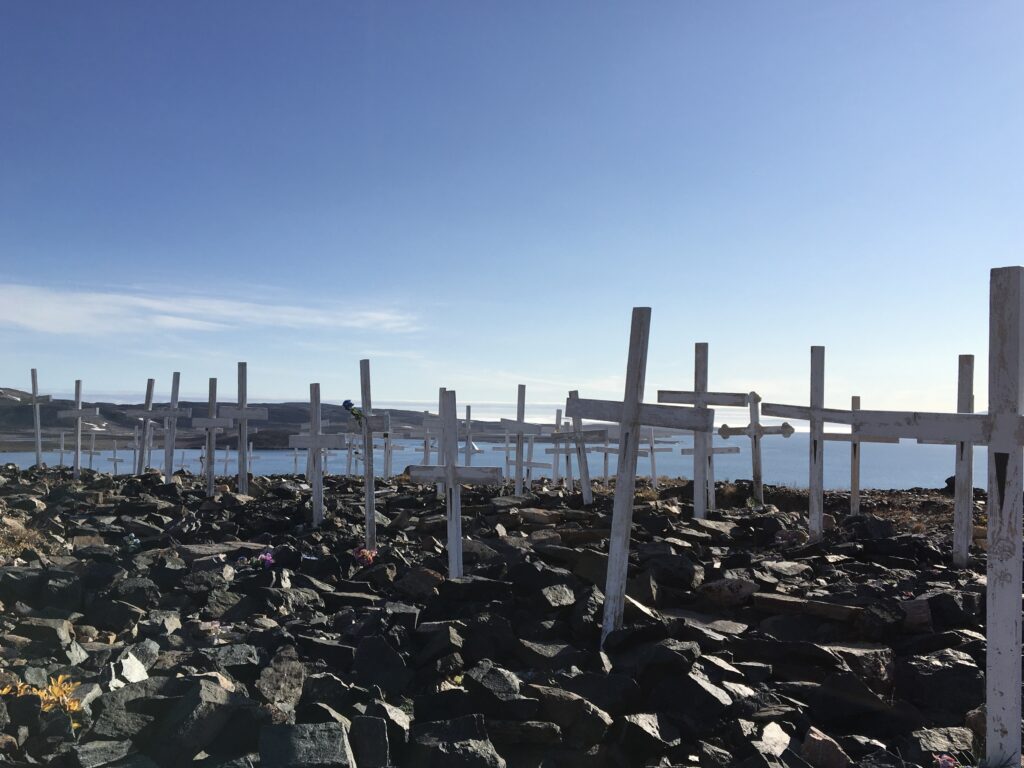
Second, to photograph icebergs up close (and personal) involves a trip round difficult terrain. Coming across these photographs again, Lydiat realised that the ice was melting so quickly that the likelihood of them still being there was remote. So these icebergs were fading, changeable objects, whereas a photograph implies something fixed in time, permanent. One of the photographs became faded by virtue of being left in the open air accidentally, and this triggered Lydiat’s idea. Thereafter the medium became the message: the photographs ceased to be static representations and became themselves mutable, disappearing.
Third, the technical challenge. “I had no idea of the work I was going to make, it was like, it’s a photography show, what shall I do? I changed my photos from colour to black and white, and sought advice from Lucy Bell, and eventually left them out in the sun.” She also hung a great many in Gallery 5 in the Art School (while the students were on holiday), hanging them edge on so that she could get more in, under the glaring glass roof. In a few weeks they were totally sun-faded. “Others were left out and it rained, then I swept the water off it, and that’s what produced different kinds of interference.” When she showed the photos in London, most people thought they were sepia copies – they hadn’t envisaged the extent of the creative process.
DYNAMICS AND LOSS
This set of photographs is therefore a dynamic representation of a living process. The actual trips to the Arctic were extraordinary in themselves: the first trip in 2016 had been planned by Anne and her husband but on the second, after the anniversary of his death, she herself commissioned a boat and led an expedition that retraced and extended the one that Louise Arner Boyd made in the 1930s. She recorded the voyage via film, photography, drawings, audio and visual recordings, and, uniquely, drone footage. For this valuable exploration, Lydiat was made a Fellow of the Royal Geographical Society. The two trips are therefore a record of loss – loss of the ice subjects themselves, but also of her own personal loss.
Besides the trips, there was the idea of mutability. “I make the work because I’m interested in the idea – so making them permanent is contradictory to what I want to do. I’d also like to do a book, and get it printed on cheap paper, then it would fade over time. So I want to save the idea of the image fading and disappearing.” She has two – admittedly beautiful – images framed and hanging on her wall at home. She won’t do this again.

The images are technically accomplished and complex. But digital imagery itself is transient, and the idea of a digital image, faded and fading, is infinitely transient and also continuous. And some of the works are photographs of photographs – two stages removed from the subject but still, through that distance, becoming the representation of the subject.
And though a digital image, especially a large one, looks solid, it is actually – what? Mutable to the point of non-existence. Electronic impulses representing colours and lines and spaces and sizes, not a physical image at all. Lydiat’s photographs have been projected (by the Arteom Gallery, New York) on to enormous, lit-up, digital billboards in Times Square: “So it’s quite interesting that on the internet you’re not aware of their mutability.” she continues. So what happens when the lights go off?
TO CONTINUE …
Ewan Shah, of the Japanese online gallery and arts facility AATONAU, recently wrote an article about Lydiat’s work called The Art of Seeing What Is Not There. He describes the nature of her work perfectly, and the link is at the end of this article. “Photography, for Lydiat, is not merely a method of documentation but a conceptual tool that enables her to interrogate the nature of perception.” he writes, and ends with this sentence: “Lydiat’s art does not seek to provide definitive answers; rather, it raises questions, inviting audiences to engage in a dialogue with what is visible and what is not. Her ability to capture the essence of time, space, and absence ensures that her work continues to provoke thought and inspire contemplation, pushing the boundaries of artistic exploration in ever-expanding ways.”
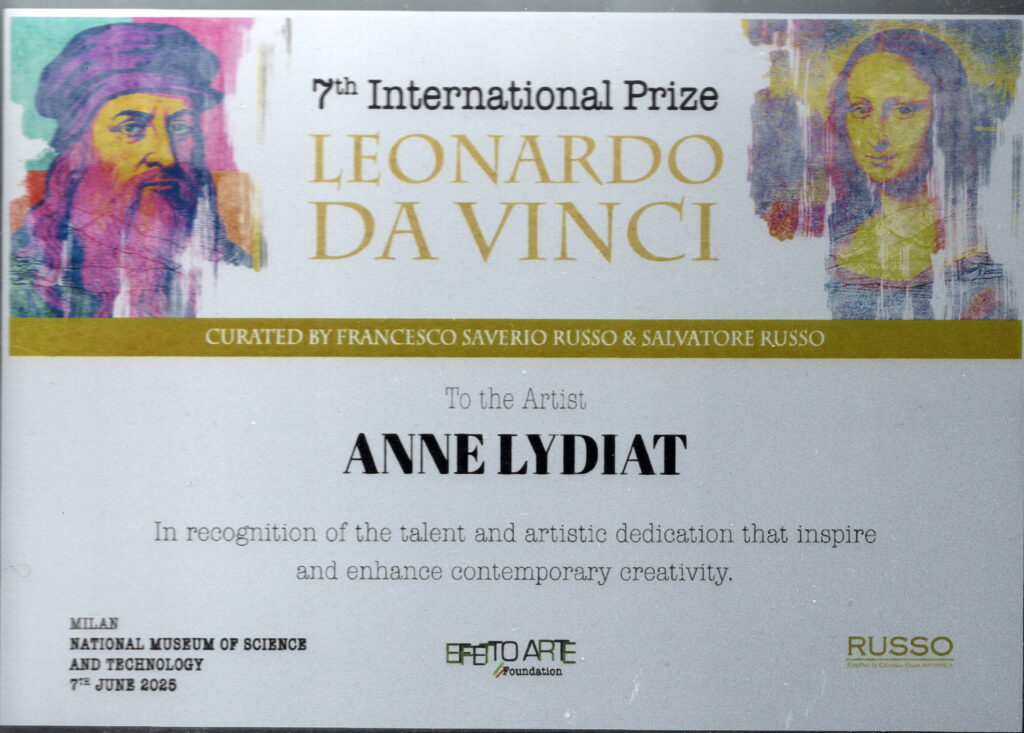
A further port of call after the icebergs was to Ittoqqortoormiit, an Inuit settlement. What is now well documented is the sinking of such villages due to the melting of the permafrost, and the considerable and rapid changes in the landscape which require a great deal of human adaptation, during which time there is a loss – of a complete lifestyle. All of this will feature in a new set of images. “The church is already sinking, the permafrost is melting and the church door won’t work properly any more. Their hunting life has almost ground to a halt,” she tells me. Global changes are therefore reflected at a local level: change, mutability, depth, loss – all of these ideas will be present in the works she will exhibit here in Hastings at the PhotoHastings show Here, There during October. Since this interview she has also been awarded a prestigious international art prize for one of her Immutability series, for inclusion in the 7th International Leonardo Da Vinci publication.
Lydiat trained as a sculptor, but she says she doesn’t keep the sculptures any more. There isn’t the space, so apart from some documentary photographs these, too, are lost. They existed, now they do not. Everything changes. According to the second law of thermodynamics, certain processes are irreversible; we call this entropy (roughly meaning transformation), a measure of the uncertainty of any given system. “As the entropy of the universe is steadily increasing, its total energy is becoming less useful. Eventually, this is theorised to lead to the heat death of the universe.” wrote Matthew Norton Wise in 1989. Lydiat’s art reflects this process, which is happening over a time that we may imagine is eternity, but is ultimately finite. “It seemingly takes something to threaten our way of being, in order to make us contemplate change.”
Artist details at Annelydiat.com, also Instagram and Facebook. Lydiat’s amazing work will appear in this year’s Photohastings show at St Andrews Mews in October. More details at photohastings.org
We hope you have enjoyed reading this article. The future of our volunteer led, non-profit publication would be far more secure with the aid of a small donation. You can also support local journalism by becoming a friend of HIP. It only takes a minute and we would be very grateful.

Leave a Reply