
Diffident yet defiant – the individualism of Mike Farris
VICTORIA KINGHAM in conversation with the blues/rock/gospel singer about his music, his life, and his spiritual search.
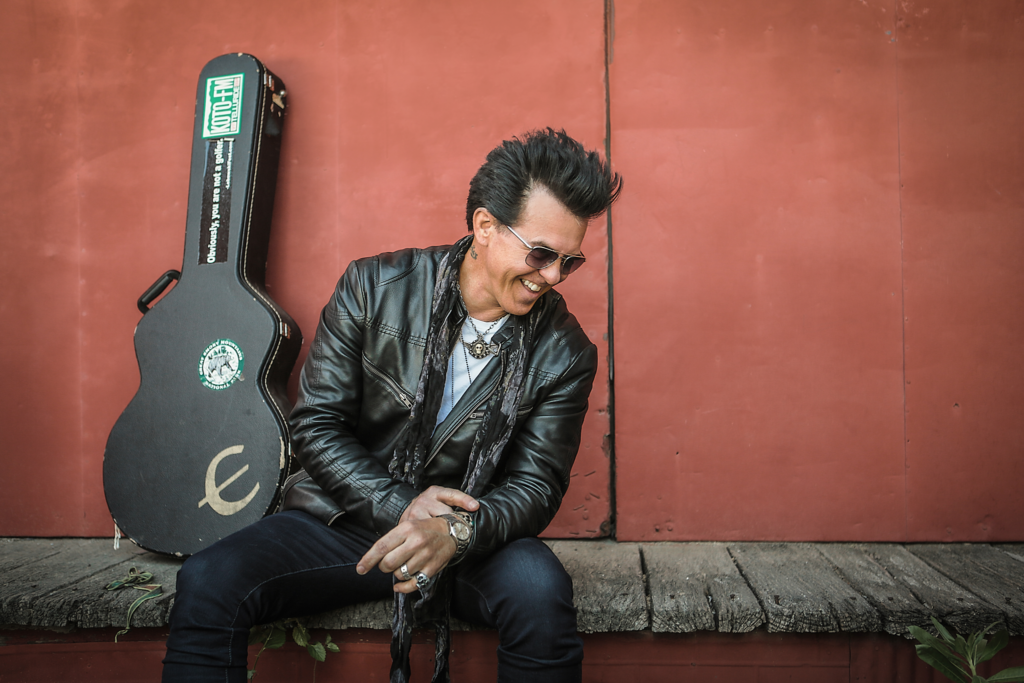
MIKE FARRIS made his first album as a vocalist with The Screamin’ Cheetah Wheelies, having picked up a guitar at the age of 21, when he had almost died from a drug overdose. In recovery, living with his dad, he discovered his talent. He was a competent guitarist after three months, and after six months had written most of the songs on the first Screamin’ Cheetah Wheelies album. Listening now to that quintessentially 90’s album: post-punk, semi-apocalyptic, heavy blues-rock, it’s hard to associate the sound with the voice of the comparatively reticent man on the phone from Nashville, Tennessee.
He is firm in his disassociation with the band, however. “When I left that band, those guys didn’t pursue music any more,” he says. “They got regular jobs. But we aren’t associated now except for a few shows. I wanted to explore my own musical direction, and they wanted just to continue as they were, so we went our separate ways.” Almost thirty years and a few grammy awards later, Farris turns out to have been true to his cause. His solo albums are all different, all carefully produced by him. Taken consecutively, they seem to tell part of his story.
Goodnight Sun [2002], he tells me, “was the first solo album I had made, and I was clean and sober for the first time in my life”. The songs are mostly originals: Know Good No Howis beautiful, with a haunting, Leonard Cohen-like lyric. “It was one of those songs,” he recalls, “that come to you like some kind of mirror or purging. In a matter of minutes, everything was written, and it was done. You just hold the pencil and let – other forces – say what they want. A higher force could be speaking to me, or it’s conversations that I’m having with people in general. It was about the kind of place my head was in at the time, coming out of addiction and trying to recuperate.” Further, he was trying to find his individual voice away from the band. Farris has the gift of great songwriters and poets, that of making the conversational seem poetic and vice-versa.
One other very notable number on that album is Johnny Cash’s Folsom Prison Blues. “We weren’t a musical family or anything like that,” muses Farris. “We didn’t have money. We had five records – two Jimmy Rogers, two Tennessee Ernie Ford, and one Johnny Cash. So, it’s my earliest imprint; these things you hear as a child are ingrained in you. Folsom Prison struck me as something that hadn’t really been expressed in its essence. A man who’s been locked away and is being tortured by an outside presence, trains going backwards and forwards, reminding him of his confinement for eternity. Dark, human condition subject matter, that’s what resonated with me.”
Salvation in Lights (2007) was his first foray into the kind of biblical expression he has become known for. He had relapsed into reliance on drugs and was embarking on another long period of recovery. “Music was a dangerous place for me, and I was afraid to get back into it: the drugs, the alcohol, they’re all part of the lifestyle”. So his then manager, Rose McGathy, suggested that he make a record of songs he wanted to do. He wasn’t even sure what that was any more. “She said, ‘Just do what you love – all that stuff you play around the house.’ I said, ‘That’s just old gospel music, nobody wants to hear that,’ but she said, ‘It doesn’t matter, we’ll make the music we want to make from now on’.”
It was recorded in Nashville in three sessions, “and it felt like something kind of special. The best thing,” he continues, “was that Rose then knew her belief in me was justified.” They both knew, and had discussed, that she had had a terminal diagnosis and had compared their relative existential positions – he at a new beginning, she at the end. The album was released by INO, a Christian record label. He knew nothing much about ‘that modern Christian stuff’ at the time, but INO believed that people should hear his music. It won a swathe of ‘album of the year’ awards locally and nationally and re-launched his career.
I ask him about Devil Don’t Sleep. It’s an intriguing, evocative song and a great arrangement, lots of expressive, bendy minor chords. Like another number on that album, Selah! Selah! it came to him in a dream. He wakes up and covers post-it notes with lyrics before the dream leaves him. About Selah! he confesses: “I didn’t know what the word meant! It came out on the post-it note, then I had to look it up. As it turned out, it fit perfectly. We lived in New York City for several years – that’s where I met my wife, Julie. So we were living there during 9/11. And Selah! Selah! [a Biblical word meaning, essentially, take a pause] is a tale of those few days. It’s a little bit cryptic, but the whole story is there. I was standing there, in the pit, two days after. Looking at what humankind is capable of doing. That’s how that song came about. Ponder on this insanity and try to get back to some sort of sanity.”
Was he returning to the religious atmosphere of his youth? “Not at all,” he tells me. “The South is always about Christian values though – we didn’t grow up in the church, but it was always in the air. In my dad’s family religion was a spooky, mystical thing, more about there’s an angry God, he’s ready to blast you into Hell. There was a sorcery and voodooish kind of vibe about it. When I came to God on my own as an adult, that was just me, discovering what I have discovered. I’m not religious. I’m more spiritual, in pursuit of this wonderful God that rules the world in a loving, kind and gentle way. The teachings of Jesus have been bastardised and misused. It’s more about getting to the essence of the early Christian followers and believers.”
Living near Nashville, had he absorbed the Nashville vibe, the country-and-western thing? “When I was growing up, there was no Nashville vibe! Everything that is here, is not from here. People don’t know, but it’s been the home of Black gospel music for eighty years. The epicentre. My influences were an AM station – no FM. But we got fed everything from country to The Staples Singers.’ He has recorded I’ll Take You There, Good News, and written When Mavis Sings, about Mavis Staples. One other really beautiful song, originally recorded by Bill Withers, is Hope She’ll Be Happier, on Silver and Stone [2018]. It’s heart stopping and perfect, so I thought Farris must be singing from personal experience. “No,” he says, “It’s just been on my list of to-dos for many years. You’ve got all these songs that you store up, and there’s just a few that are other people’s that you’ve always wanted to record. It just relates to the human condition – if there’s suffering involved, I have a deep understanding of that. For me it has always been one of those incredibly beautiful songs.” I remarked that I had never heard it and didn’t know (until I looked it up) that it was a Bill Withers number. “Nobody knows it! I wanted to shine a light on it.”
“Do you preach in a church at all?” I ask. “I am the Church! Jesus said we are the Church – you don’t need a building! The Church organisation here won’t have me to play. They disapprove of my music. But that’s fine with me. My music and my message are for all people. I came from the street, and the music is meant for the street.”
What will he be playing at Rye Jazz Festival? It isn’t quite firmed up. The two-hour set will probably be one half solo and another with a band of UK musicians. Is this gig part of a tour? “Touring isn’t living,” he says. “I don’t need that feedback from a crowd like a used to, and I don’t enjoy going out and being on the road in a bus. I only tour when I go to Europe because I want to get home quickly! This Europe visit is going to be quite different. We’re doing a festival in Norway, so Julie is going to fly over, and we’re going to Paris.” “How’s your French?” I ask him. “Non-existent,” he laughs, “even though I’m about ninety per cent French blood. Not Creole, I don’t think my people came from Louisiana, but I think they immigrated to Virginia. So I’m mainly French and the rest is English. We’re even talking about my DNA now!” he laughs. And I think, I really like this guy.

Mike Farris will play at Rye International Jazz and Blues Festival in St. Mary’s Church, Rye, on Sunday 27 August, 3-5pm.
We hope you have enjoyed reading this article. The future of our volunteer led, non-profit publication would be far more secure with the aid of a small donation. You can also support local journalism by becoming a friend of HIP. It only takes a minute and we would be very grateful.

Leave a Reply