
A Night in the Death of a Pugilist
NICK PELLING gets a glimpse of a boxer’s tale
Unless you are a boxing aficionado, the name Sonny Liston conjures up only a vague idea of a heavyweight slugger from yesteryear. But the recent play at the Stables Theatre, One Night in the Many Deaths of Sonny Liston, manged, rather brilliantly, to bring back to life a man whose tale touched the heights, but was at the same time a tragic struggle against the deadly racism and criminality of urban America in the 1950s and 60s.
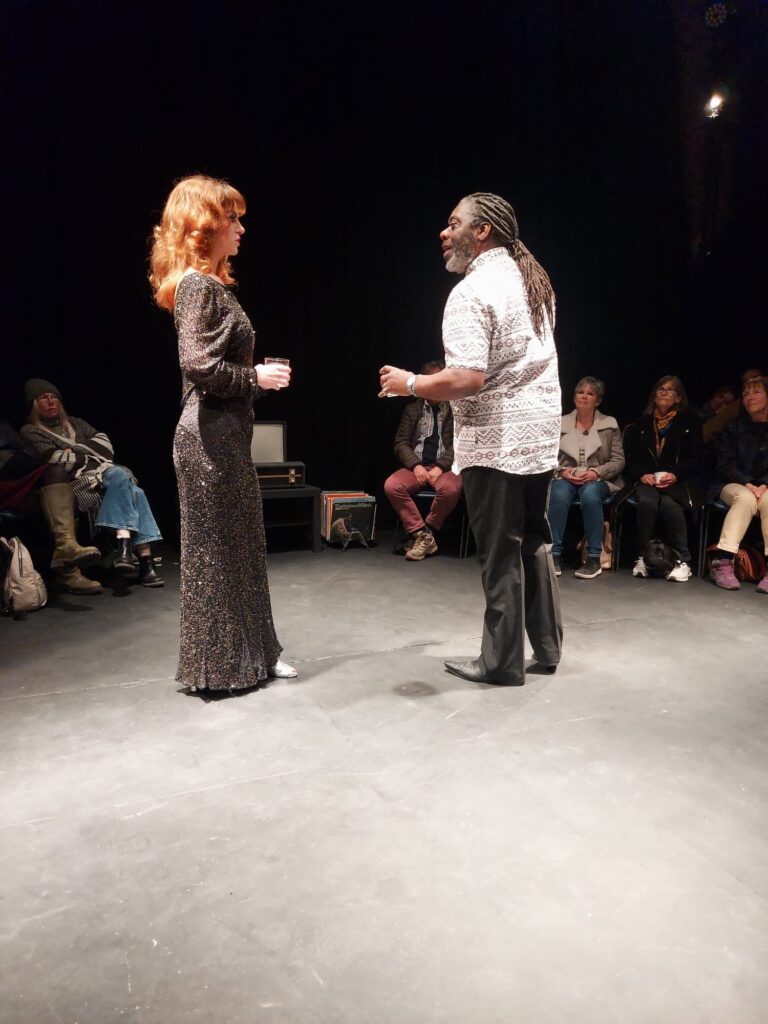
The award-winning play, by J B Heaps, adopts an intriguing approach: setting the story on the last night of Liston’s life in December 1970. This is a challenging device because we don’t really know what happened then, except that Liston was found dead in mysterious circumstances. As the title of the play cleverly implies, there are many conspiracy theories about how he may have met his demise, ranging from heart attack to heroin OD administered by the mob. The play offers a twisted sort of answer.
Pablo McFee delivers a brooding, physical performance of a tormented soul nursing a lifetime of resentments. The plot revolves around a glamorous female visitor – played with much simmering ambiguity by Britney Rae – who unexpectedly knocks on Sonny’s door one dark Vegas night. Their sparring dialogue cleverly unfolds much of Liston’s life story, whilst all the time suggesting that neither character is quite what they seem.
McFee gives us a Liston that is much pained by aspects of his own extraordinary story. We discover that this ex-champion of the World could barely write his name. But perhaps the heart of his tragedy was that America would never let him escape the racist stereotype of a bad and threatening Black man. Incredibly, we find that the veteran civil rights organisation, the NAACP, did not want Liston to be given a shot at the world title because he apparently embodied the ‘bad negro.’ Even President Kennedy was apparently against the proposed title fight with the reigning champion Floyd Patterson because a Liston victory might set back the Civil Rights cause.
Liston somehow brought together the fears of White America: he had a criminal record, he had mob connections, he was physically intimidating, and his bulldozing boxing style lent itself to loaded words such as ‘beast’ or ‘monster.’

McFee conveyed much of Liston’s supposed menace, and indeed his tenderness, but also captured the poignancy of Liston’s evolving awareness that America would only see him in one reductive and racist way. This was brought home with some anguish when Sonny reflected on what happened on the day after he had knocked out Patterson to become the champ. He returned to Philadelphia expecting huge crowds to welcome him – he even had a speech ready – only to find a handful of jaded reporters. Liston, it seems, could never be embraced by Americans: White or Black.
The final unwinding of the storyline was testing. I found myself wondering if the playwright hadn’t stretched the plot to snapping point. Having said that, this short play opened up many questions about Liston’s life. But perhaps its real achievement was to say so much more about what Malcolm X aptly called ‘an American nightmare’.
We hope you have enjoyed reading this article. The future of our volunteer led, non-profit publication would be far more secure with the aid of a small donation. You can also support local journalism by becoming a friend of HIP. It only takes a minute and we would be very grateful.

Leave a Reply