
Women’s Cohousing: an Interview with HOWCH
JANIS JEFFERIES talks to Hastings Older Women’s Cohousing (HOWCH) about why such initiatives are
still needed
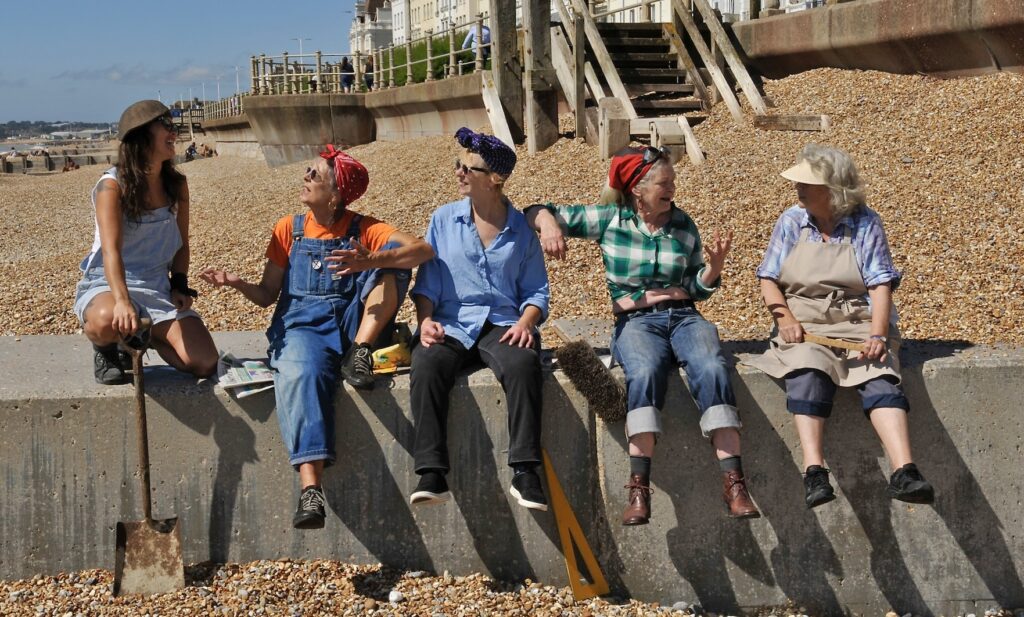
HOWCH organising committee posing in homage to Lunch atop a skyscraper.
One of the most celebrated social reformers in social housing, Octavia Hill (1838-1912) brought decent housing to 3,000 of London’s poorest communities. In 1866, with financial investment from her friend and benefactor John Ruskin, Octavia bought several homes for those in need to rent at affordable rates.
Octavia believed that your home was more than a shelter: it was also a space for community. Over a century later, women still experience severe housing shortages because, on average, women have lower incomes and less capital than men. This means access to housing is very limited and largely determined by an increasingly volatile market and regional variations.
Housing affordability, whether rented or purchased, is one of the biggest contemporary public policy issues in the UK. From 2022 to 2023, rent in Hastings alone increased by 11.7% – more than double the average UK rise. House prices have doubled in ten years, one of the biggest spikes in England.
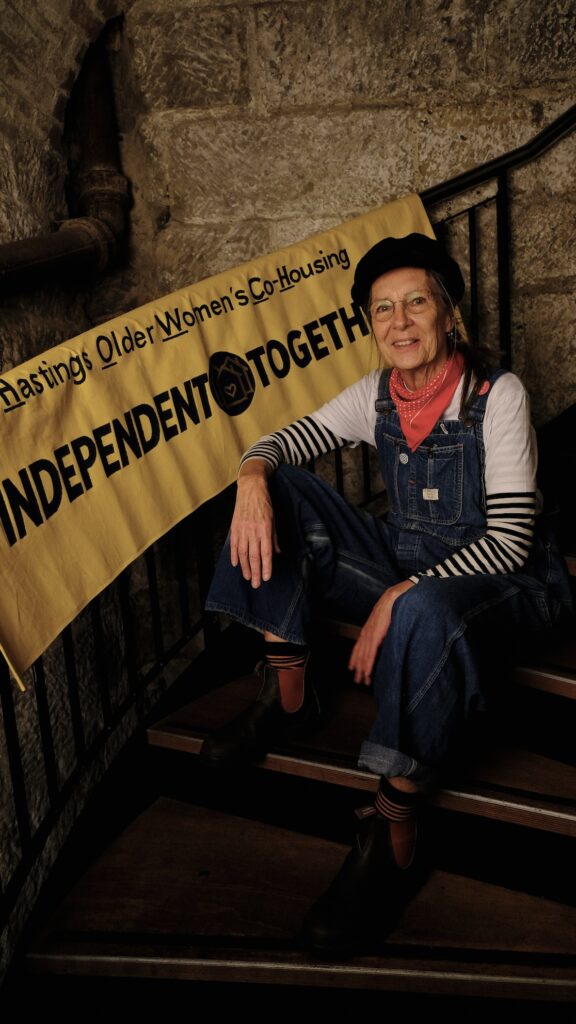
According to the charity Age Concern, loneliness and isolation is set to increase among the over 50s with half of those aged 75 and over living alone – 70% of these are women. The Labour Party, now in government, has pledged to put social and council housing at the heart of Labour’s ‘secure homes’ plan. At the same time, the new Chancellor of the Exchequer, Rachel Reeves, is on record as stating that the biggest impact that she can make to the lives of ordinary women, is to close the gender pay gap once and for all.
Whilst promising she would ensure more nursery places and free school breakfast clubs within the first year of government, the link between financial support and models of social or cohousing that emphasises the needs of older women, from diverse communities has yet to be made.

The local Hastings Older Women’s Cohousing initiative (HOWCH) was set up to meet this need by developing homes for affordable cohousing: communities created and run by their residents with local accountability.
When was HOWCH formed and where does it operate?
Inspired by the New Ground High Barnet scheme, an innovative project that took 19 years of planning, providing a purpose-built development of 25 flats for women over 50 with communal areas and mutual support, a group of women from Hastings and St Leonards came together in 2017 to establish a similar model for affordable and safe cohousing. The idea is to have 75% affordable rent and 25% affordable leases.
Will you collaborate with the newly formed Hastings and Rye council and other agencies?
To achieve HOWCH’s aims, the Community Land Trust (CLT) was formed in 2019. This means that land and buildings can be legally secured and retained meeting the needs of older women defined by the local authority. Grants and other kinds of investments can be secured.
What kinds of suitable properties can you find in the Hastings and St Leonards?

With one potential site already identified, our first pilot cohousing scheme is to develop a model for cohousing that will be useful for different groups of people.
What support services do you think you can provide in your model for cohousing?
The aim is to build self-resilience and sustainability. Expectations do have to be managed as cohousing has often been misunderstood as being a care home. This is not the case. In a cohousing setup, members live in self-contained units but share many other facilities such as gardens, kitchens, laundries, parking, and a shared car scheme.
For more information visit howch.org or email [email protected].
We hope you have enjoyed reading this article. The future of our volunteer led, non-profit publication would be far more secure with the aid of a small donation. You can also support local journalism by becoming a friend of HIP. It only takes a minute and we would be very grateful.

Leave a Reply