
A Housing Crisis Debate
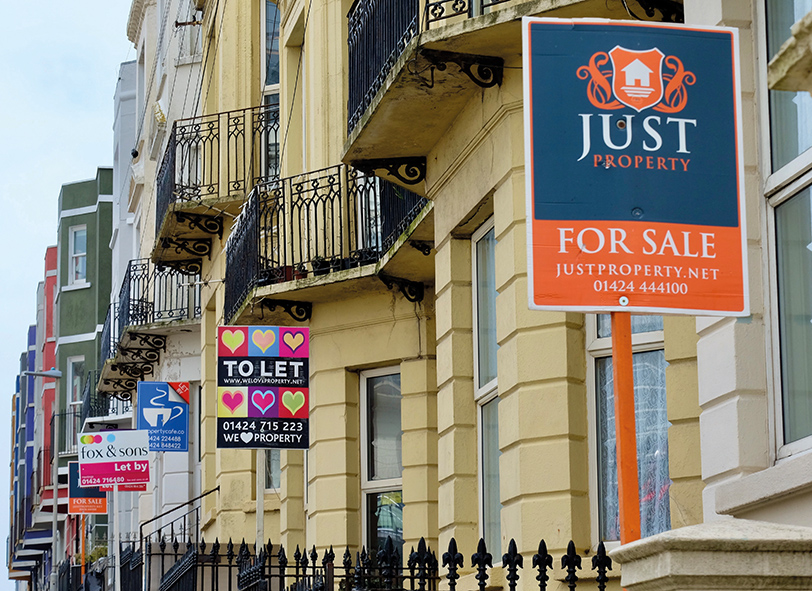
Reader’s Letter: A Landlord’s View
Local resident/landlord Jamie writes to HIP.
I’ve been reading through your recent commentary of the Hastings housing crisis with a mixture of sadness at some of the personal stories featured, but also of a frustration with the polarising and one-sided nature of the coverage.
Full disclosure: I am a landlord. I was also born and raised in St Leonards, very close to where now is considered the hub of gentrification in the town.
Gentrification is a complex issue. For me it has transformed the local area where I grew up. That has had negatives, local businesses and residents being forced out – but also positives, it’s now a much cleaner, safer neighbourhood, and one that I can be proud of.
I’m also proud to be part of that change and to be investing hard-earned money, employing local peers and helping regenerate housing that is currently not fit for use, to bring back the sparkle that my grandparents told me existed pre-1970s in the town!
I also have great relationships with my tenants – most of whom are local people who would not have been able to rent a home via the traditional route of estate agents due to personal circumstances.

To blame landlords alone for price rises in the area is lazy and polarising, and the portrayal of all landlords as soulless demons feasting on profits is unfair. (See Landlords – Is the term parasitic appropriate? and other recent articles in HIP presented by Hastings Rental Health (HRH)).
Every landlord is a person and has their own story. I agree many are indeed selfish and immoral and greedy, but to generalise in the way I have seen HRH do is quite upsetting!
It’s also worth noting that later in the HIP edition which featured the article above, there was a special section on the really exciting regeneration of parts of the town centre. Who does HRH think helps fund, build, invest and develop projects like this, and make them commercially viable?
Furthermore, I would argue that a lot of commentary coming from voices such as HRH are unfairly using local problems and issues to press their own broader ideological view that housing should not be used for profit. Let’s try and have a more open debate about the specific problems in this town, rather than these much larger ideological disagreements.
Yes, landlords investing in property is part of the supply/ demand picture that drives prices up. And I agree there should be a cap on Airbnbs in the town. But I would argue that by far the biggest driver is the influx of new people into the area. Not their fault, but it feels a bit short-sighted and jarring when these same people: (1) self-righteously proclaim they want to build a fair community; (2) claim that landlords and developers are at fault; while (3) are at the same time seemingly blind to the fact that they are the main reason that demand for housing is so high in the town, and therefore why prices go up. I would argue that is a much more significant driver than a handful of Airbnbs on the seafront, Old Town or Warrior Square (note that most Airbnbs are not in fact in more suburban areas of town with lots of family-friendly homes).
Worth noting that a lot of the cafes, galleries etc that have been supporting HRH’s cause of attacking local landlords and developers are the same people who, as above, have helped price out / push out many local businesses who were here generations ago in places such as London Road. Maybe your next piece could focus on that?
I applaud HIP and HRH for challenging unscrupulous landlords who provide shoddy housing and immoral renting practices, of course. A lot of what happens is not right. So credit where credit is due, someone needs to uncover what’s happening. I would just like to see a bit more of a balanced debate, and less finger-pointing at landlords. Some of us do care about the community too!

CREDIT: Dave Young
A Journalist’s View
Merlin Betts considers the ongoing housing crisis
Keep ‘em Coming
While I’m not strictly a professional journalist (we’re all volunteers at HIP, most of us without any journalistic qualifications or jobbing experience), I do spend most of my time trying to get a clear view of things. To observe what’s happening and tell people about it. That’s more or less what journalists are supposed to do.
Now, it’s a little known fact but writers, the news media, the whole information industry, has always been biased. There never was a neutral observer or reporter. That’s nonsense. We’ve only ever had people with opinions, who believe in their own opinions and sometimes (or all the time) present them as facts. So you can’t just call someone’s view ‘ideology’ and then dismiss it as ‘biased’ when it’s inconvenient to you. Everyone is biased.
Bearing that in mind, HIP wants to hear from all of you out there in the Borough and beyond, regardless of your biases. We have no official editorial policy and we don’t like censorship. It’s anarchy here folks. The worst that’ll happen is that the editor will reply to you.
Grown Out of Proportion
So… I’m going to put my cards on the table: I don’t think housing should ever be used for profit. Not because Marx or someone told me to think that, but because it’s a damaging social and economic policy to allow profiteering from housing stock. Look at the housing crisis unfolding across Britain, not just in wealthier and developing areas where the prices go up – apparently Hastings is now one of these – but in less marketable areas where whole communities are abandoned for not being profitable enough (see Stoke-on-Trent et al).

There are a lot of factors that contribute to the housing crisis, I’ll admit, but number one is surely the market driving up values by drawing in more eager purchasers, and fuelling what people seem to believe is unlimited economic growth. In other words, it’s the belief that there’s always more profit to be made that’s unbalancing supply and demand, and ruining so many lives.
The problem with the property market is less landlording itself – making money from a building you own – and more the details of how that money is made, and what it’s spent on. Jamie (above) mentions that in HIP issue 208 (which you can find on our website) we printed an article by Hastings Rental Health (HRH) Landlords – Is the term parasitic appropriate? By contrast, in the same issue, we had the Observer Building (OB) souvenir supplement, which detailed the regeneration of the OB exclusively through community organisations – landlords – and as a community asset.
Jamie asks, “Who does HRH think helps fund, build, invest and develop projects like this, and make them commercially viable?” The answer is that it’s not private landlords donating to a pot; it’s a selection of community-led companies specifically set up for the job, clearly stated in the supplement.
The article and the supplement show the difference between a selfish landlord, extracting money from people looking for a home (and a business), and a community landlord that reinvests its profits in shared endeavours, in people, in the community.
No Utopia For Now
I’d like to see a world where no-one is charged rent for their home, but that’ll take a long time to achieve. In the meantime, there are many decent in-between options: community organisations as landlords; local councils as landlords (and Hastings is starting down that road again); co-operatives buying properties and sharing costs among their members. It does not need to be a for-profit company or individual extracting wealth from people who just want a roof over their heads. A wealth extractor is just a kind of parasite, and we don’t want any of them.
So where do we go with all this? Is it true “that by far the biggest driver [of price rises] is the influx of new people into the area”? Do we need to stop that, and if we do, how? Do we need to make the town less attractive – more insular? Should we redesign it like it was in the 1960s, before the tourism trade really started to gutter out in favour of holidays abroad? In any era of town history, tourism provides jobs but it also takes houses away from local people, or at least pushes up their prices. How about, rather than becoming insular, we make Hastings independent, inclusive and self-sufficient? But that’s another article, for another time.
Keep the discussion going with Hastings Independent Press email
community@hastings independentpress.co.uk
We hope you have enjoyed reading this article. The future of our volunteer led, non-profit publication would be far more secure with the aid of a small donation. You can also support local journalism by becoming a friend of HIP. It only takes a minute and we would be very grateful.

Jamie’s perspective is of great interest to me – ideally (not ideologically), everyone would be in a position to afford a home and feel safe and secure in it. I doubt there is an argument against that point.
I’d like to hear what Jamie is doing to address his tenants’ needs (I am assuming they are vulnerable as he has stated that they are unable to pursue a traditional method of renting, ie. using estate agents). Is Jamie addressing the fractured rental system by offering long-term tenancies to his tenants, rather than short-term? Are his rental costs sitting within the local area’s LHA rates to ensure properties are accessible to local people on low incomes? Does he address repair needs? Is he renting to local people? Does he ask for crippling deposits? Is he making a massive profit? Has he increased rents during the cost-of-living crisis?
I would love a response from Jamie on these matters alone, instead of responding with what amounts to a pseudo-sociological narrative on behalf of the ‘good’ landlords of this town.