
Choosing a Care Home
FIONA MCGARRY
What should elderly people do when they can no longer manage to live independently?
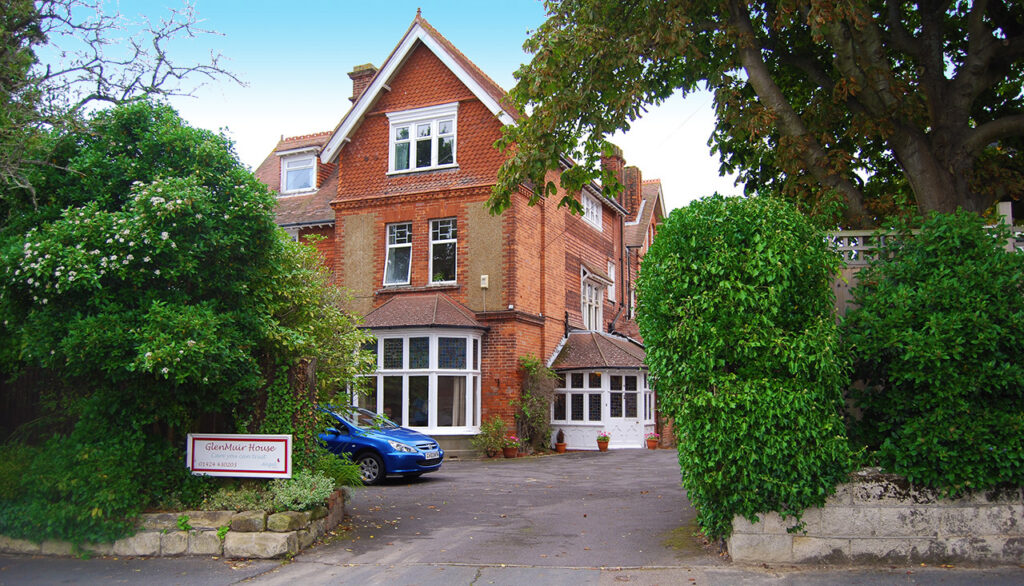
Glenmuir House
Care homes had a bad press during Covid, and now that more people work remotely, they may find the idea of looking after elderly relatives at home more attractive. Also, they may be worried that care costs will swallow up their inheritance (although the last government pledged that from October 2025 no one in England will have to pay more than £86,000 in care costs).
What does this mean in practice? Older relatives being looked after by family – perhaps being taken to day centres, but also more people spending their days alone at home and being visited two or three times a day by carers, often for just 15 minutes. Sitting waiting for carers to arrive can result in anxiety, loss of mobility and other competences.
Jenny Miles runs Angel Healthcare. This is a woman-led company with mostly female staff that feels distinctly like ‘a big family’ as one resident puts it. She even employs her son-in-law Ollie, and her 83-year-old mum is the bookkeeper. They have three care homes: Abbey House, in Bexhill, with plenty of activities for the lively and active (think Italian nights and cheese-tasting nights); Glenmuir House in St Leonards for the more dependent: a quiet but imposing Victorian house with amazing views over to Eastbourne. There is also Arden House, a ‘wet’ house providing care for those with addiction problems.

Jenny is keen to address the care home stigma. She points out that local authorities are underfunded, which may make them more reluctant to move elderly people from hospitals (following a fall or illness) into care homes because this requires a transition from NHS to council-funded social care. Instead, vulnerable people are frequently moved back home where they may struggle to recover and consequently end up back in hospital.
Whilst there is more joined up work starting, families often have to fight for the care their loved ones need. She points out that care home residents have company, choice and dignity. “Hot meals are provided; activities take place to stimulate the mind; medication is on time; personal hygiene is undertaken; help can be summoned 24/7; in short, residents are cared for. My staff know every visitor who comes through the door and what every resident likes or dislikes.”
Of course, staying at home can have benefits for those able to cope. My own mother manages to maintain her independence and quality of life in a granny flat attached to our house – with the aid of the family and a team of people who help with things like cleaning, dog walking, shopping and hairdressing.
Perhaps a key thing to consider though, is that intervention is often “too far down the line” – especially as older people living at home may not be ‘heard’ and sometimes struggle to get help or even see a GP.
If you decide that a care home is the right way to go, what should you look for when choosing one? Jenny points out that a care home is an ecosystem and it’s important to consider whether the home fits your family member, not the other way round. Every home is different. Does your elderly relative want somewhere with activities, or are they a very private person?
Look for the personal touch. Most of Jenny’s staff have worked with her for many years and she rarely uses agency staff. She is also a fan of the programme that allows care homes to sponsor staff from other countries who wish to establish themselves in the UK.
Person-centred may mean being wary of homes that have too many bells and whistles. Jenny feels that sometimes, homes with gyms and cinemas may be catering more to the family of the person being cared for. Higher fees do not always equate to better care. Similarly, we can put too much emphasis on the Care Quality Commission (CQC) star rating. The difference between an ‘Outstanding’ and a ‘Good’ rating can often be down to the individual inspector’s personal interpretation.

And finally, Jenny emphasises that elderly people should not see moving to a care home as “the end” but as the reverse. “See it as other people doing the chores so that you can enjoy doing what you want .”
We hope you have enjoyed reading this article. The future of our volunteer led, non-profit publication would be far more secure with the aid of a small donation. You can also support local journalism by becoming a friend of HIP. It only takes a minute and we would be very grateful.

Really useful article by Fiona.