
Putting HIP Together
Each issue of HIP begins long before it reaches the café counters and shop windows and supermarkets, where readers pick it up for free
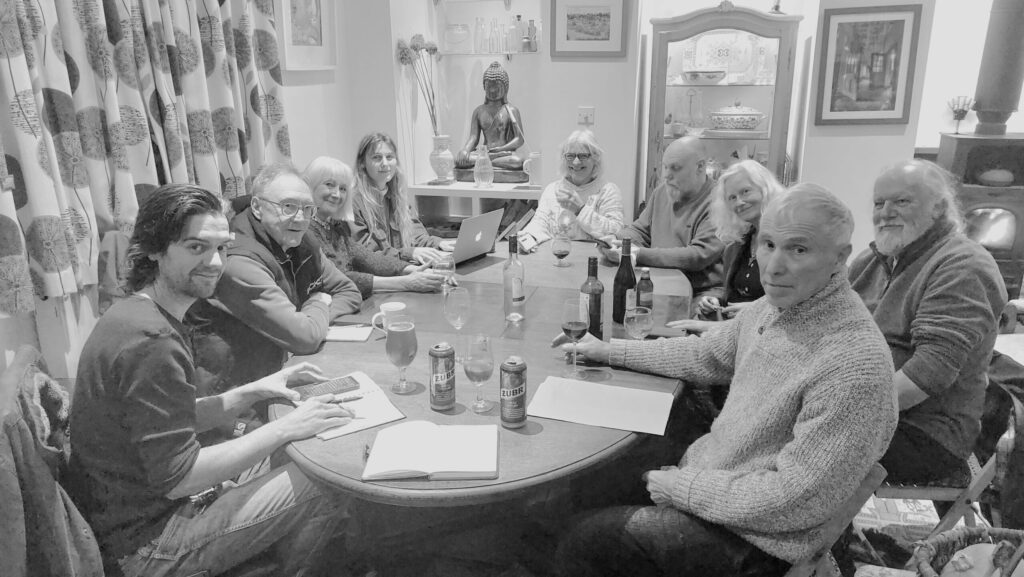
Central to the process is a committed network of editors, one for each section. These are listed on page two in every issue of the paper. All the editors are volunteers, bringing forward ideas shaped by their own experiences of Hastings. They are a mix of seasoned journalists, or others who have previously worked in writing and publishing, plus some new to this creative process. What unites us is not background but perspective. HIP has always drawn strength from this mix, allowing stories to emerge from within the community rather than being imposed upon it.
To encourage the community-driven process, we encourage contributors to contact us with their stories, whether they write it themselves or have one of the editors interview them to tell the story on their behalf.
1. Section editors begin to collect stories: they may come up with their own ideas, but also individuals, charities, etc, email them with ideas of what to include.
2. The editorial meeting is where the next issue really begins to take shape. This meeting acts as a planning session and open forum. Section editors pitch ideas, debate angles. With no rigid hierarchy, decisions are collaborative.
3. The editing process begins as agreed content is produced. Sub editors then fact check, correct and shape articles, uploading them with suggested photos, ready for design.
4. Layout and design are managed by HIP’s Art Director. Text and imagery are laid out in the distinctive style that regular readers will recognise over the production weekend.
5. The final stage in production involves the laid-out proofs being read and checked by section editors, proof-readers and the content coordinator on Monday before the paper goes to print.
6. Printing marks the point where the paper shifts from idea to object. 7,500 copies are produced every other week.
Distribution is a collective effort. Bundles of papers arrive on Thursday and delivered to cafés, bars, galleries, community centres and public spaces, where they are made freely available.
The decision to keep our paper free is to ensures that access is not limited by income so the widest possible audience can be engaged with.
Readers encounter the paper in every-day settings, often picking it up casually, sometimes returning regularly. The stories they find there, about housing, culture, politics or local life, often feed into the next cycle of ideas
Fact File
2014: The first edition of HIP was published in February – the same month as The Bristol Cable, another independent print newspaper that’s still operational – but is quarterly rather than fortnightly.
Volunteers: Our writers, editors and photographers are all volunteers. These have included a politician/activist, the multi-talented Des Wilson; musicians, numerous successful writers and journalists; and several young writers, including an eight-year-old who loves knitting.
Independent: HIP is independent because it’s not owned by a media corporation and has a flat structure with no overall editor. Decisions are made by editorial committee members at our regular meetings. Note: HIP should not be confused with the other HIP (Hastings International Piano) or HIG (referred to as Hastings independents).
Distribution: Around 7,500 copies are distributed per edition across 100+ locations in Hastings & St Leonards including cafes, shops, supermarkets, libraries, NHS waiting rooms and even the local police station. Can’t find it? Look on our website for a list of locations under the dropdown About us.
Our Readers: Most of our stories are only relevant to the local community, although we do have readers from as far afield as New Zealand.
Sections: Several section editors have come and gone over the last twelve years, including the much missed satirist, bass player Colin Gibson (Bird Guano) who once survived life in the supergroup Ginger Baker’s Airforce. The longest serving section editor is the poet, Pete Donohue, a founding member of HIP and editor of the Literature Section.
300 Editions: HIP has been published every fortnight since it began (although it was online-only during the pandemic), a major achievement for a volunteer-run publication – marking over a decade of continuous local journalism.

Mentioned: Helena Dolimore MP mentioned the paper twice in parliament: once to thank “the journalists who helped expose the scandal [of Owens]” and once to ask the Leader of the House to join her in wishing HIP a happy 10th birthday and “thanking them [and Rye News] for all their hard work”.
National/International: Several items in HIP have been picked up by the national press, including The Observer and Private Eye. One article was even republished in the International Flute Journal.
We hope you have enjoyed reading this article. The future of our volunteer led, non-profit publication would be far more secure with the aid of a small donation. You can also support local journalism by becoming a friend of HIP. It only takes a minute and we would be very grateful.

Leave a Reply