
That Penalty Shoot-Out
Roy Keane, never too concerned in his playing career if he took his opponent out along with the ball, opened hostilities amongst ITV’s post-match pundits. Discussing the decision to give England’s 19-year-old rookie Bukayo Saka the crucial fifth penalty shot in their Euro final against Italy, he let fly: “If you’re Sterling or Grealish, you cannot sit there and let a young kid walk up ahead of you… You pull this young kid and say ‘listen, I’ll step up for you’.”
Jack Grealish hit back the following day on social media, saying that he had made it clear to manager Gareth Southgate that he wanted to take a penalty. Southgate himself told reporters, “Penalty takers are my call. We’ve worked on them in training. That’s my decision, it’s not down to the players. It hasn’t gone for us, but we know they were the best takers that we had left on the pitch.”
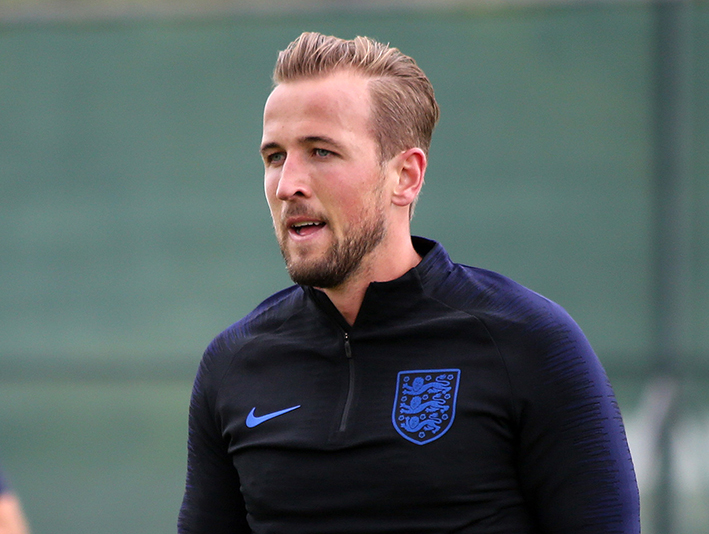
Harry Kane
CREDIT: Кирилл Венедиктов/soccer.ru
It emerged from other sources that Southgate’s stated “knowledge” is likely to have been based on statistical charts of comparative penalty successes and failures noted by his coaching staff during the squad’s training sessions; and it is fair to assume that Saka, Marcus Rashford and Jaden Sancho, the latter two sent on as late substitutes in the last couple of minutes of extra time for that specific purpose, were all amongst the training ground chart toppers. But you don’t need to be a professional sports psychologist to spot the gulf between regular proficiency in training and a single kick under the extraordinary pressure of a major tournament final contested in a seething stadium.
Sitting inactive
In the event, Rashford and Sancho were required to perform after spending the best part of two hours immediately beforehand sitting inactive on a bench. Imagine a cricket bowler knowing he had only one ball to bowl in a match being fetched cold from the pavilion to do it. What tennis or golf pro would contemplate making the first serve or drive of the day without an extensive warm-up, even when it’s just the first shot in a long campaign?
The fact that these players had taken no effective part in the game must also have added to their mental tension. It’s one thing to have participated fully in the preceding game, maybe scored a goal, provided an assist, or executed a saving tackle: positives that may weigh against whatever happens at the shoot-out. It’s another to be offered the penalty shot as virtually sole opportunity for personal contribution. And while these circumstances did not apply to Saka, he had not made a major impression in the final after being brought on as a substitute in the second half. Nor (it was revealed afterwards) had he ever taken a penalty before in any senior game during his relatively brief career.
Football managers have a tendency to explain their team selections and tactical decisions by reference to assessments derived from the training ground rather than the evidence of competitive play – all the more so if they are challenged by the team’s supporters, who only get to see the latter. But this is like the claim of a teacher who “knows” from a pupil’s course work and alertness in class who is best. For the sake of professional pride, and in the interests of class discipline, the value of lessons and homework must be insisted on. Then come the exams. Nobody cares any more how hard you worked beforehand: delivery on the day is all. And a football tournament is a series of exams relentlessly championing results over methods.
Another day
None of which means that results of penalty shoot-outs are ever predictable, or that on another day the same English penalty-takers would not each have converted with aplomb. The bile aimed at Saka, Rashford and Sancho from social media in the aftermath wasn’t just disgraceful to the extent of the racism displayed, it was nonsensical in footballing terms too.
The winning penalty in the Euro semi-final between Italy and Spain was rolled into the right-hand corner by Italian midfielder Jorginho after a superbly nonchalant skip-and-a-jump in the run-up. Did he dare try that again five days later, when charged with taking Italy’s potential winner against England? He didn’t. He struck the ball towards the other corner and Jordan Pickford saved. Hero to villain – then back to unconquerable hero a minute later when Saka scuffed his shot, and it was the home nation’s world that caved in.
Who’d be an England manager? Perhaps fittingly, it’s the man who suffered pretty much the same experience 25 years before. He has survived, and so will the penalty-challenged class of 2021.
We hope you have enjoyed reading this article. The future of our volunteer led, non-profit publication would be far more secure with the aid of a small donation. You can also support local journalism by becoming a friend of HIP. It only takes a minute and we would be very grateful.

Leave a Reply