
HIP LOCAL BOOK REVIEW: The Invisible Women’s Club
By Helen Paris
Doubleday, August 2023Hardback, pp336, £16.99
REVIEW BY VIOLA VON HARRACH
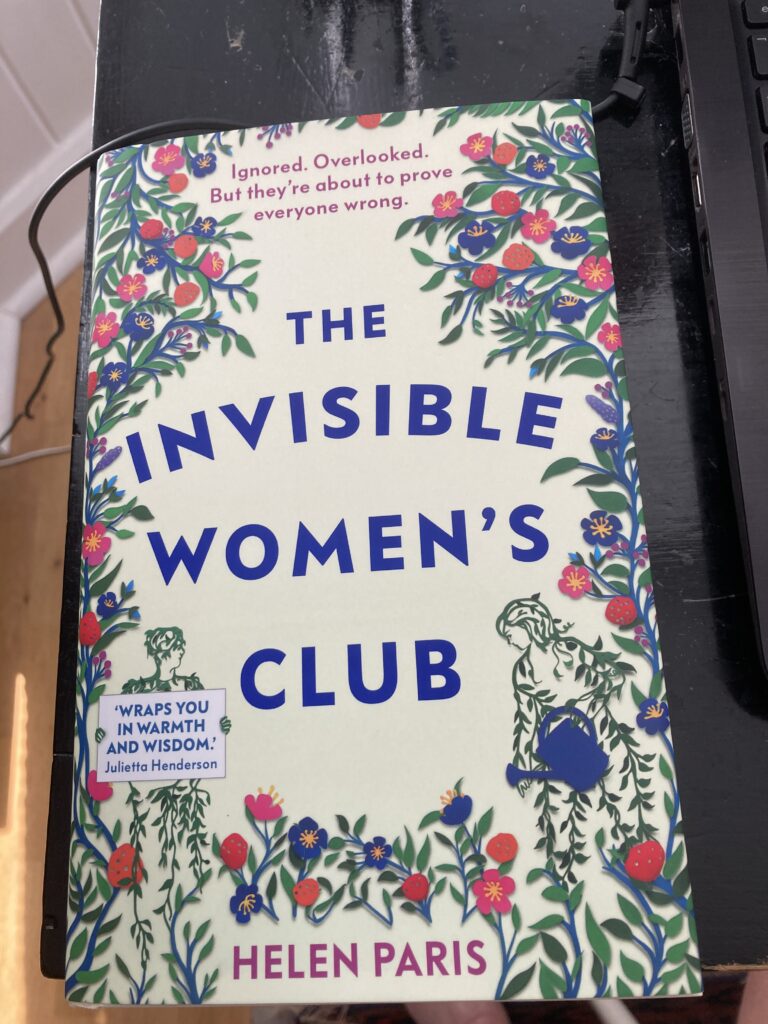
If you are looking for a book to read this autumn then try local author, Helen Paris’s second novel, The Invisible Women’s Club. It is a feel-good tale centred in Hastings on the fictitious Sea View allotment site, involving a cast of allotment holders, a corrupt councillor, a dastardly developer, burglary, corruption, and community spirit galore. But, above all, it is an exploration of love and friendship.
Janet Platt, long retired from a job at GCHK, is someone who keeps her emotions in check, and doesn’t dwell on the sadness of her past. It transpires that she was pushed out of her job by a jealous boss. Her lack of friends and loneliness is achingly sad. Her life, one of rigid time-keeping, bare cupboards, her chattels still in boxes after seven years. But her passion is plants and her allotment and in this she is an astute and knowledgeable plantswoman, of nurture, tending, companion planting, and of the properties of medicinal and culinary herbs. To some she might seem pedantic, obsessed even, with her two Bath Oliver biscuits and a thermos of tea, and working her allotment every day, rain or shine from one to six. She observes, but assiduously avoids close contact with other allotment holders, and at home ignores the friendly notes put through her door by her neighbour, Bev.
THE LOSS OF THE ALLOTMENT SITE WOULD BE INCALCULABLE
The plot moves apace when Japanese knotweed mysteriously appears and the allotment site is threatened with imminent repossession and closure. Chair of the allotment committee, Patrice, entreats the allotment holders to, ‘keep the faith in your plants, pots, and each other.’ The loss of the allotment site would be incalculable – to Ken whose family have had the allotment since the war, the Steer Manures who come for the sense of community, Rosa growing cocoyam and Jamaican tomatoes, Lakshmi relishing time away from family commitments, and to many others, including Janet, for whom the allotment is everything.
Thanks in part to Janet’s menopausal midwife neighbour, Bev, who blusters into her life with home truths and plain speaking, Janet decides to take matters into her own hands. She does some sleuthing of the soil and then calls up an old GCHK colleague. A trip to the Peak District, gatecrashed by Bev, nearly ends in disaster, but sleeping in the open gets them both talking about life. They spend an uncomfortable night together, surviving a thunderstorm and torrential rain and Janet opens up about her past.
Janet finds herself heading the campaign for saving the allotment site, together with Patrice, sporting a red necktie and using techniques learnt when she demonstrated at Greenham Common in the 1980s. Bev, now friend and supporter, aids and abets Janet when she burgles the house of the sham councillor, and in so doing also finds herself coming to terms with her life. There is much to this story besides, much to enjoy. Janet has found a purpose for her life, and as she says, ‘There’s something about planting seeds, seeing them take root and grow that gives me a sense of anticipation, a feeling of hope.’
Paris writes engagingly and with a lightness of touch particularly as the campaign to save the allotment site gathers momentum. If I have a criticism, it is that the allotment characters tend to be stereotypes. Recognisable to anyone who has ever tended an allotment. There are stories to be told here that would have made these characters come much more to life. There is also a question about the setting, Hastings. Again, Paris might have chosen to write in more depth about the particular problems and political environment of Hastings, thus giving the tale more of a context. In the case of the allotment site this would have made the campaign to save it all the more pertinent.
But this is a good story, well told, and certainly worth reading.
The Invisible Women’s Club is available from The Hastings Bookshop and other local outlets.
We hope you have enjoyed reading this article. The future of our volunteer led, non-profit publication would be far more secure with the aid of a small donation. You can also support local journalism by becoming a friend of HIP. It only takes a minute and we would be very grateful.

Leave a Reply