
Surprise Surprise
ROBIN HOLTOM
My art teacher wrote on the art room wall, in his excellent italic script, the following quotation from Leonardo da Vinci; “It is a poor pupil who does not surpass his master.” A school friend of mine misread it and said, “It is a poor pupil who does not surprise his master.”

DaVinci Surprised
Frank Auerbach paints with very thick oil paint, working and reworking the paintings over a long period. I have often wondered how he decides when a painting is finished, and he recently said that he decides a painting is finished when he is surprised by it. There is mastery in creating surprise.
Artists say that you need two people to finish a painting – the artist and someone to shoot them before they finish it off. Finishing a painting is always difficult unless one is a kind of machine. Sometimes working very quickly and spontaneously resolves this, but not for everyone.
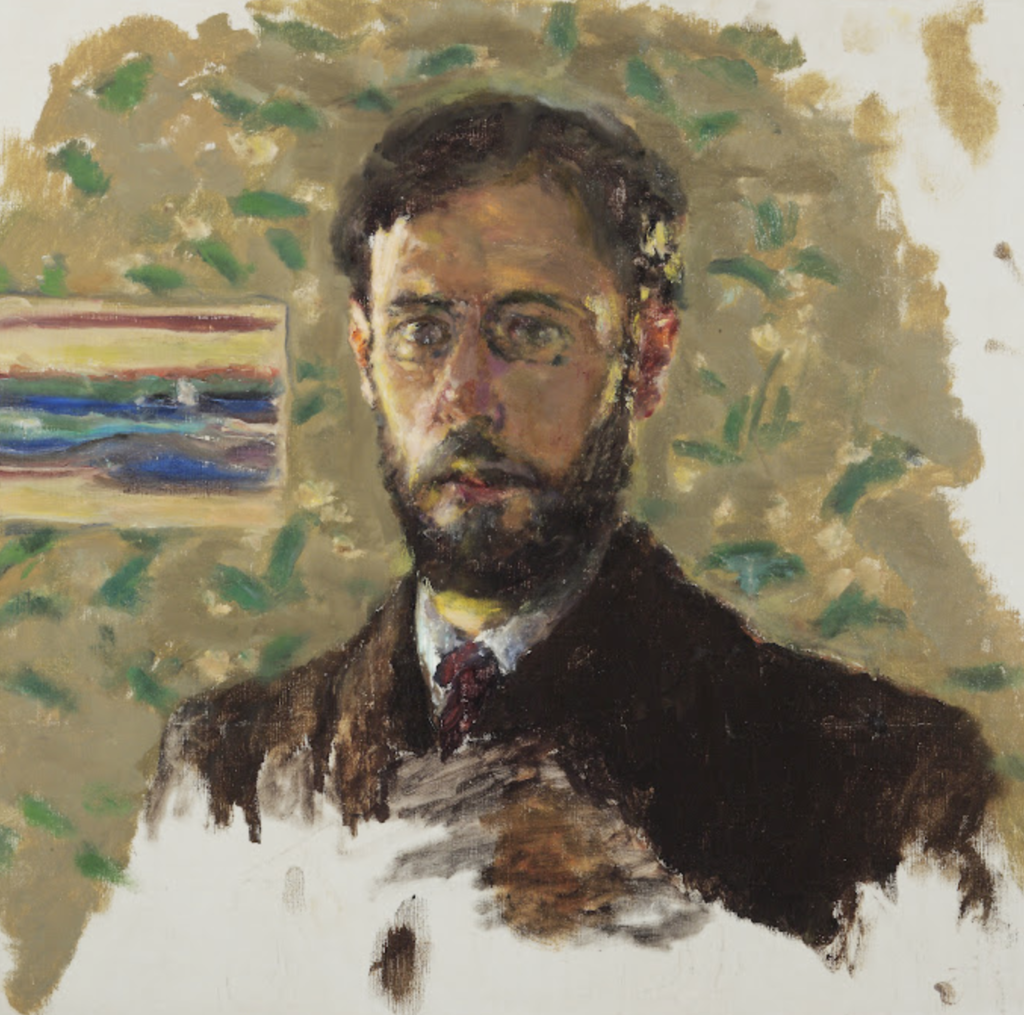
Pierre Bonnard sometimes spent years on a painting and on one occasion asked a woman friend to distract the attendant in the Luxembourg Museum where one of his paintings was hanging. While they were talking he got some paints out of his coat and made small improvements to the painting. Although the work was hanging in a museum, it was not quite finished.

I heard a story about a Welsh Choir who sang a particular song when there was a dramatic storm blowing in the background. They were all so moved by the experience that they decided that they would never sing that song again. That is another kind of surprise. It is irrational but also, perhaps, an essential acknowledgement of the surprise that in other settings could be called a sense of the sacred. Auerbach’s sense of surprise points to the same elusive something that is essential to any real kind of creativity.
Surprises normally are classified as either pleasant or unpleasant. The surprise Auerbach and the Welsh choir experienced fits neither of these categories – just sheer surprise. There are few organisations devoted to creating sheer surprise as compared with the many organisations devoted to preventing unpleasant surprises. I’m thinking of insurance companies and health and safety officials. Even some of those organisations devoted to creating surprise – theatres, galleries, arts organisations – find it very difficult to maintain surprise. They create a brand: a predictable, unsurprising product. There are only a few mavericks who resist this. Mr Maverick was a Texan cattle breeder who refused to brand his cattle. Hence an unbranded beast was a ‘maverick’.
Philippe Petit is a modern maverick. He made the famous high wire walk between the Twin Towers in New York. This involved elaborate, secret preparations moving a ton of equipment to the top of the towers. The story is brilliantly told in the film Man on Wire. Petit, however, disliked performing in a circus and this may be why the only serious fall he had occurred while practising for a routine circus performance. There is no formula for surprise.
We hope you have enjoyed reading this article. The future of our volunteer led, non-profit publication would be far more secure with the aid of a small donation. You can also support local journalism by becoming a friend of HIP. It only takes a minute and we would be very grateful.

Leave a Reply