
Bridging the Divide
PETER BOLWELL
What makes for constructive dialogue between those of different life views? Collisions between people who view the world from opposing perspectives throw up unique challenges. It is not simply a matter of conflict resolution. Just because people or nations engage in warfare doesn’t mean that they necessarily hold different life views. Most of the wars in which the countries of Europe were embroiled from the Middle Ages through to the 20th century involved conflicts between those who held very similar values and world views. They were simply fighting over competing interests or ambitions: what the historian A.J.P.Taylor called ‘The Struggle for Mastery’.
Those wars which did involve different world views were more likely to be civil wars, such as the English civil war between the King and Parliament or, more recently, the Spanish civil war between Franco’s fascists and the Republicans.
Where people do hold totally dissimilar ideas of how the world works, when the parties on either side don’t acknowledge the same set of values and are playing to entirely different sets of rules, finding common ground is a more difficult and delicate task.
Good for Nothing
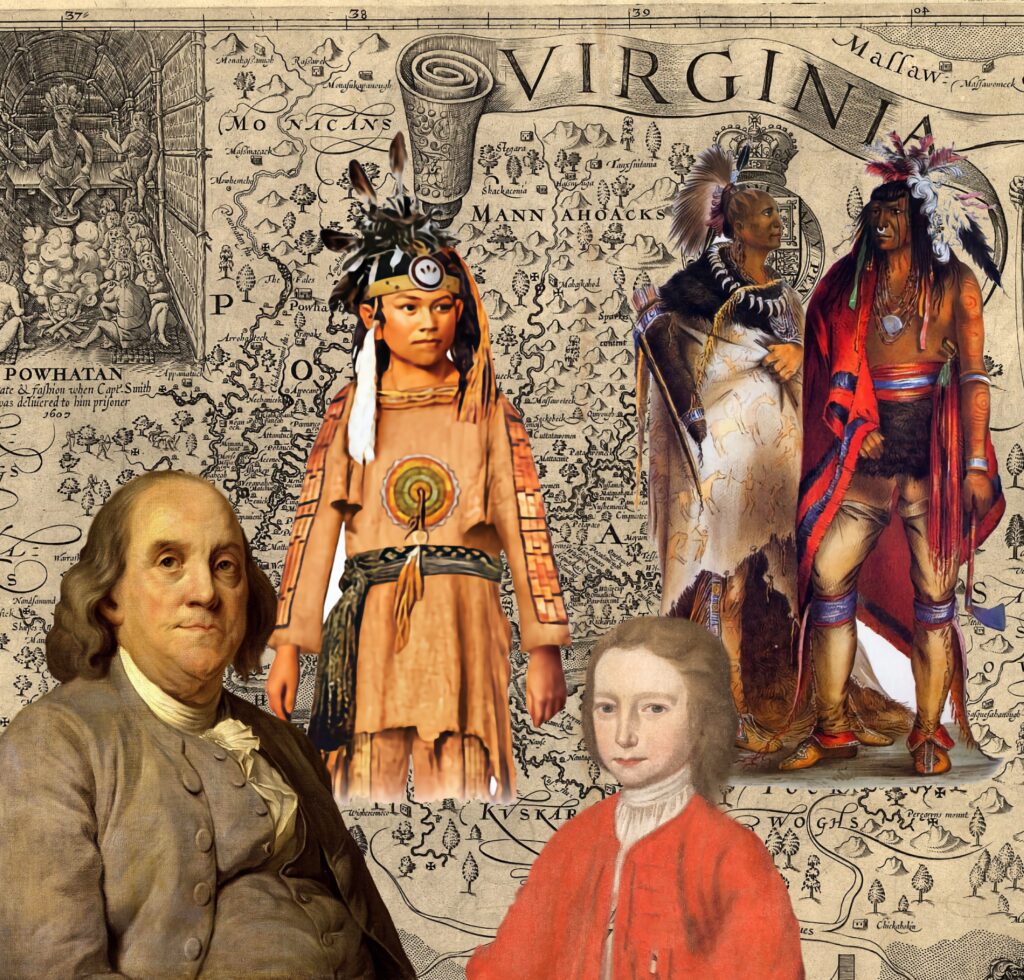
A perfect example occurred in 18th century America in an exchange quoted by Benjamin Franklin between the Native Americans of the Iroquois Confederacy and the white settlers of Virginia. The Virginian side made what was evidently intended as a friendly and generous offer to have some Iroquois boys educated at a local white college. This was the reply:

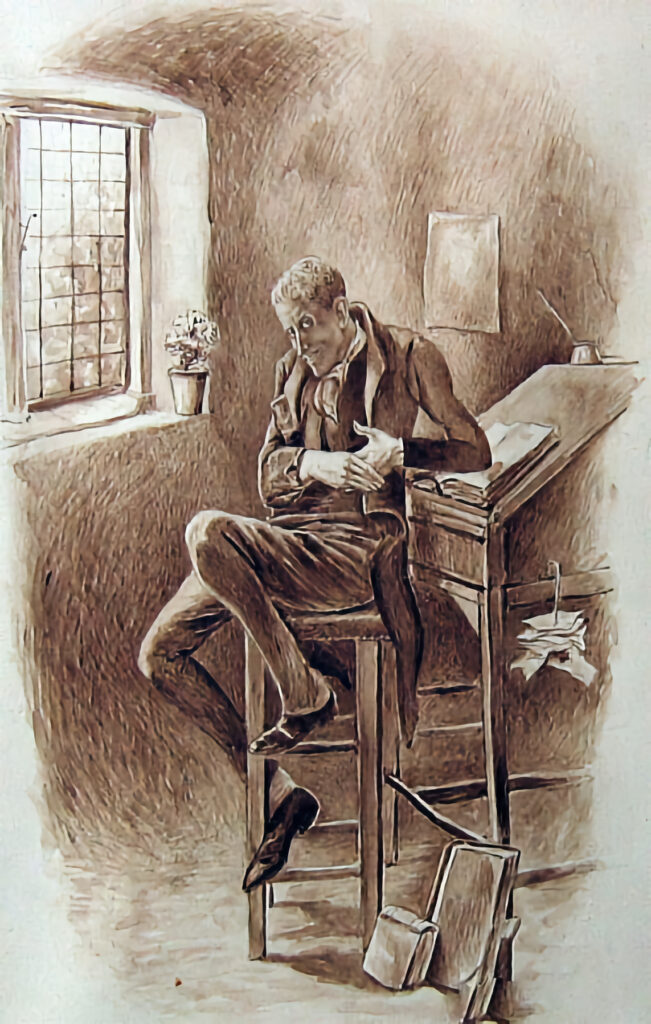
Uriah Heep – abject servility
“You who are wise must know that different nations have different conceptions of things, and you will not therefore take it amiss if our ideas of this kind of education happen not to be the same as yours. We have had some experience of it. Several of our young people were, formerly, brought up at the colleges of the northern provinces. They were instructed in all your sciences, but when they came back to us they were bad runners, ignorant of every means of living in the woods, neither fit for warriors, hunters nor counsellors – they were totally good for nothing. We are however not the less obliged by your kind offer though we decline accepting it, and to show our grateful sense of it, if the gentlemen of Virginia will send us a dozen of their sons, we will take care of their education, instruct them in all we know, and make Men of them.”
You see how these two cultures had completely different ideas and expectations of what a good education should mean. History reveals too many examples of times when different cultures come into conflict and the protagonists take for granted their own cultural superiority. Often the attitude has been “we are civilised, you are barbarians, we will teach you how you should behave, what you should believe, and generally how to imitate our ways and to be as much like us as possible – although of course we would never for a moment accept you as our equals”. This was very much the attitude taken by Europeans towards the peoples of their respective Empires: whether the British in India and Australia or the Spanish in Peru and Mexico.
Source of Free Plunder
A more contemporary example of colliding world views might be between environmentalists and the forces of ‘Big Business’ which causes pollution or degradation of the natural world. The environmentalists see our Earth as a home – not just for ourselves but for all the creatures we share it with. Multinational corporations seem to regard the Earth simply as a source of free plunder. Dialogue between the two sides is difficult since businesses exist to make money, and they see anything that gets in the way of profit as not merely wrong but irrational: they can’t understand why there is a problem.
In the field of conflict resolution it is common to talk about the need for tolerance and flexibility, and these are of course fine and admirable qualities. But for promoting dialogue between those of different world views, I want to offer you another word which you won’t hear so often: humility. And when I say humility, I don’t mean abject servility like that of Charles Dickens’ repulsive creation Uriah Heep. I mean being willing to learn from the other, being aware that your way isn’t the only way or maybe not even necessarily the best way, and that there can be other approaches which might be alien to your traditions and your upbringing, but which could be equally valid. Quakers have a saying: “Consider the possibility that you might be mistaken”.
There was a Quaker called John Woolman who lived in North America in the 18th century. He was a remarkable man in many ways, but one of the striking events in his life was a difficult and dangerous journey across country to visit a native settlement – not to sell them guns or blankets, not to evangelise them to become Christians, not to ‘civilise’ them – but to learn from them. In his journal he wrote his motives were: “that I might feel and understand their life, and the spirit they live in, if haply I might receive some instruction from them.”
Same Spirit and Life
This would have seemed a fantastic notion to most of Woolman’s white neighbours and compatriots. So far as they were concerned, the natives were simply savages. Some might be friendly and some hostile, but all of them savages just the same, and inferior to Europeans in every way.

The idea that white people might have anything to learn from them would have struck the Europeans as ridiculous. But John Woolman had the humility to recognise that they had a different kind of wisdom that the white races had missed or forgotten, and he went to find out what that was. Only after the Native Americans had been almost exterminated and their culture destroyed did we learn to appreciate their spirituality and their respect for creation. Or as Isaac Pennington, an early Quaker, put it: “this is the true ground of love and unity: not that a man walks and does just as I do, but because I feel the same spirit and life in him.”
The problem with trying to initiate dialogue is that, as the word implies, it is only possible if both sides are willing to participate, and to listen. If one side is only interested in forcing its own vision of the truth on everybody else, then it is not going to happen. We saw this when Islamic State was advancing across Iraq and Syria killing or enslaving those who didn’t subscribe to their way of thinking.
When one side in a conflict feels they are winning, they see nothing to be gained from negotiating. In that situation it is up to everybody else to make it clear that there will be a price to be paid even for victory, and that once the fighting is over, and the victors seek to resume their place among civilised society, the rest of the world will not forget what they did.
I offer a couple of lines by a Malian poet Amadou Hampate Ba: “If you think like I do, you are my friend/But if you do not think like I do, you are twice as much my friend/Because you open my eyes to new worlds.”
This is an edited version of a recent presentation to a joint Inter-Faith / Humanist meeting in Hastings.
We hope you have enjoyed reading this article. The future of our volunteer led, non-profit publication would be far more secure with the aid of a small donation. You can also support local journalism by becoming a friend of HIP. It only takes a minute and we would be very grateful.

Leave a Reply