
The HIP HOT Husting
INGRID ALLAN
The Hastings Hustings, that most alliterative of general election staples, got off to a lively start yesterday, as seven candidates (and one empty chair) made their case directly to their electorate. Questions had been submitted in advance, with each of the hopefuls given exactly one minute to respond. The moderators Lorna Hamilton-Brown and Father Thomas Crowley could have put the BBC to shame (at least, to anyone who had seen the interrupt-a-thon between the two main party leaders the night before) such was their professionalism and rigour.

The audience, on the other hand, didn’t fall under nearly as much scrutiny, and while the event began with a request for respect and civility, a few polite rounds of applause, and the occasional unsolicited comment, by the end there were cheers, boos, raucous laughter, and cries of ‘shame!’ every time someone mentioned the atrocities currently taking place in Gaza. The setting, therefore, in the grand White Rock theatre, on a balmy summer evening, could not have felt more appropriate.
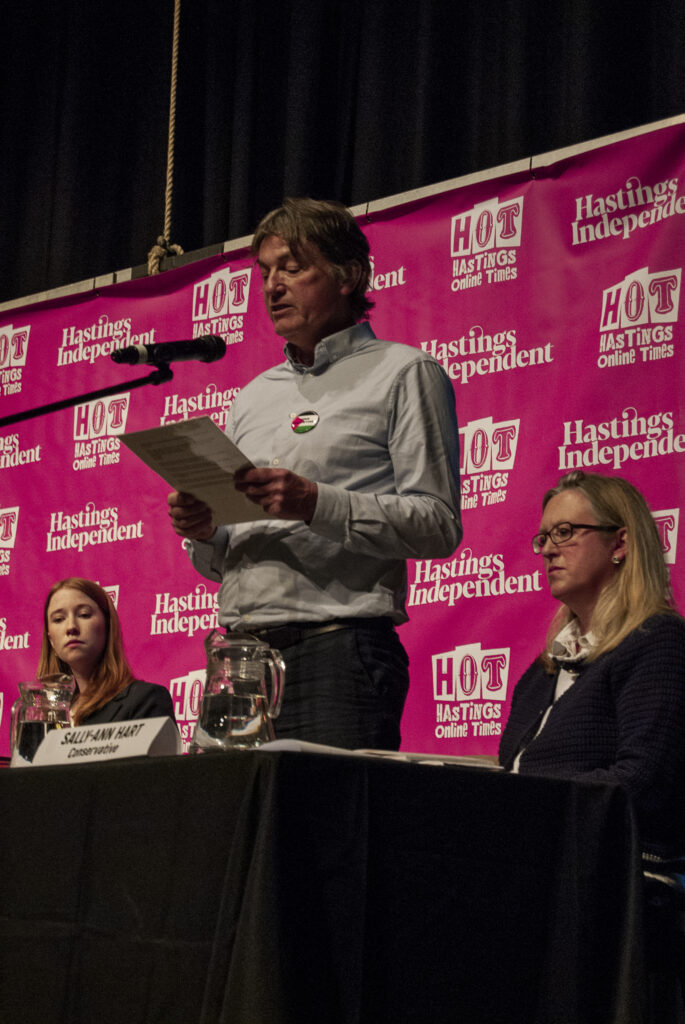
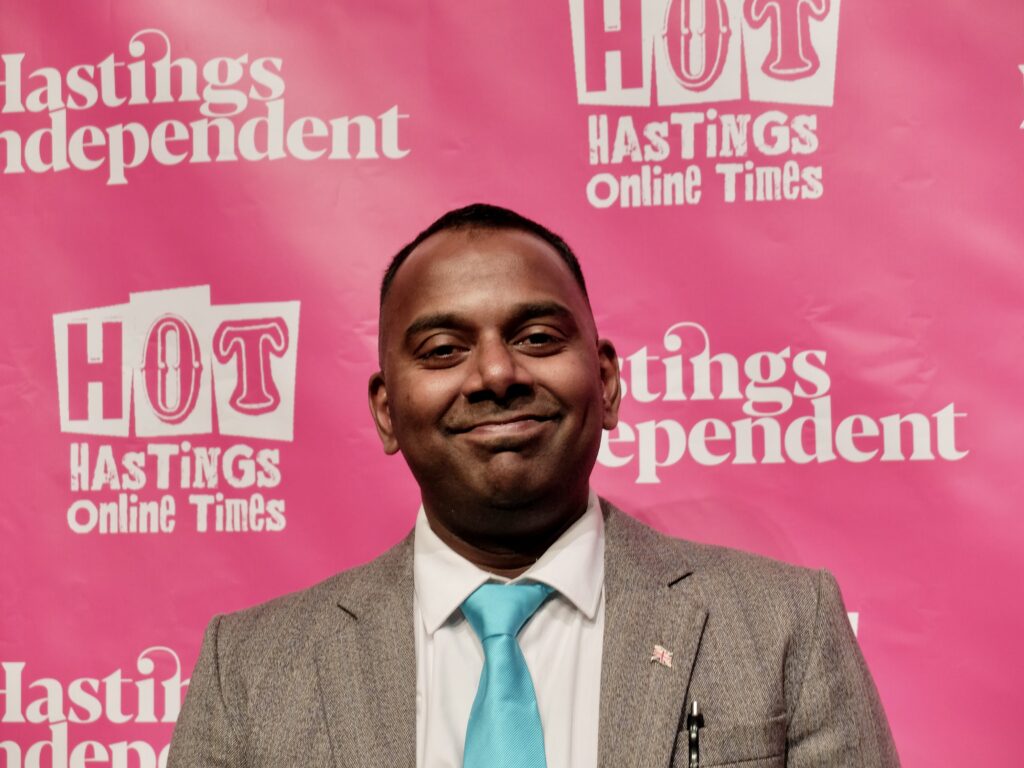
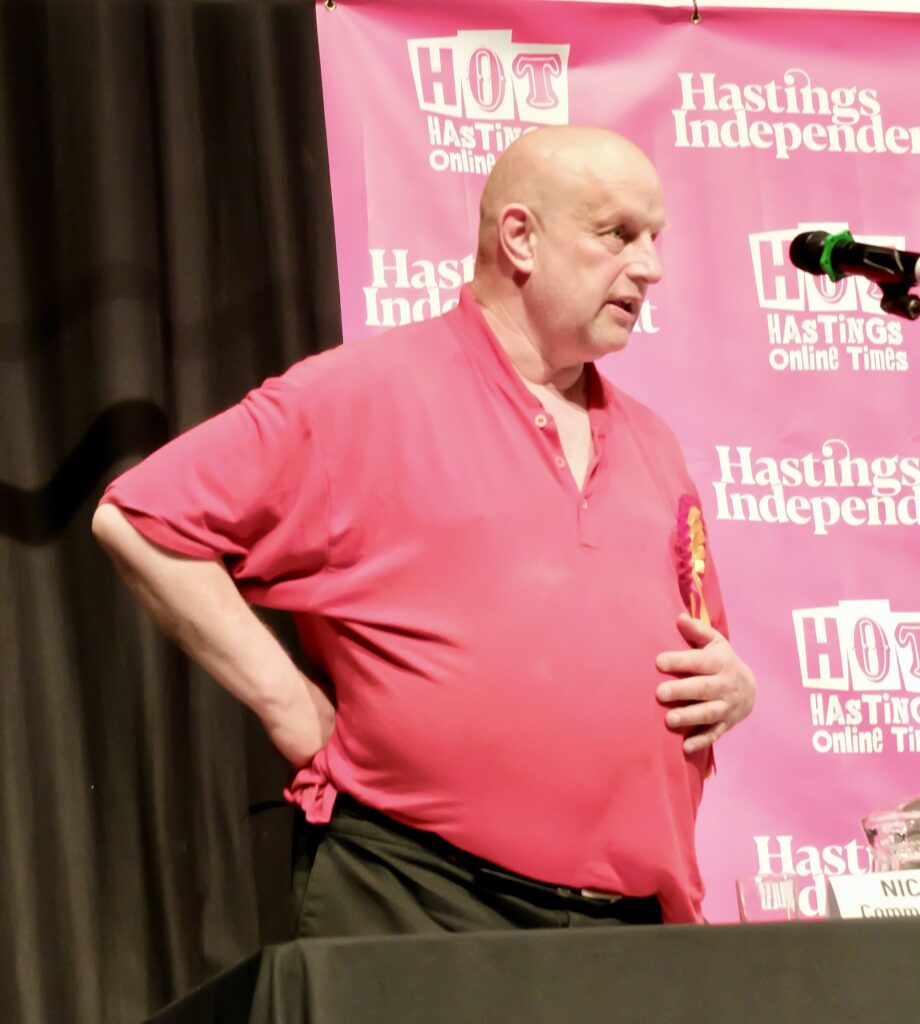


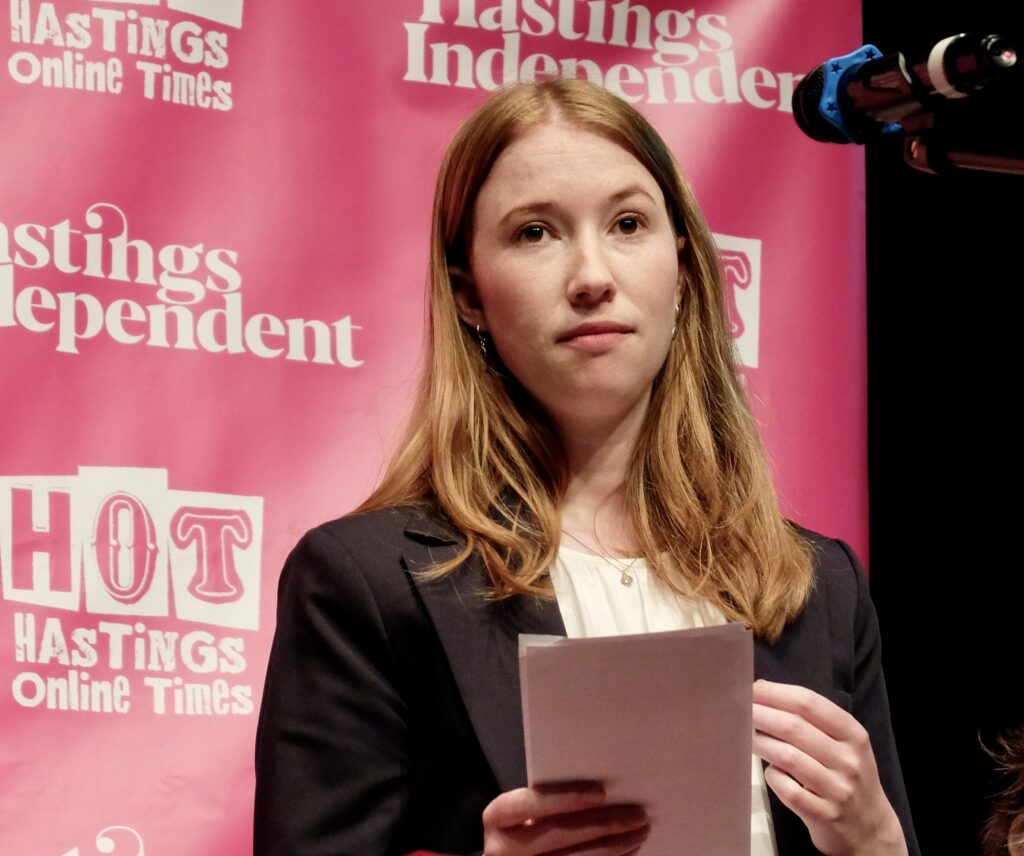

If the biodiversity of candidates on offer could be used to take a reading of the health of local democracy, Hastings holds its own against much larger and wealthier cities. Nicholas Davies, representing the Communist Party of Britain, sat next to Lucian Fernando of Reform UK. The middle ground (literally speaking, readers can make up their own mind whether the metaphor holds up) was occupied by Guy Harris of the Liberal Democrats, Becca Horn of the Greens, and Labour’s Helena Dollimore, who is currently leading in the polls. To the right of her were the incumbent MP Sally-Ann Hart, and to the left of our MP was Phil Colley, who is standing for the Workers Party of Britain.
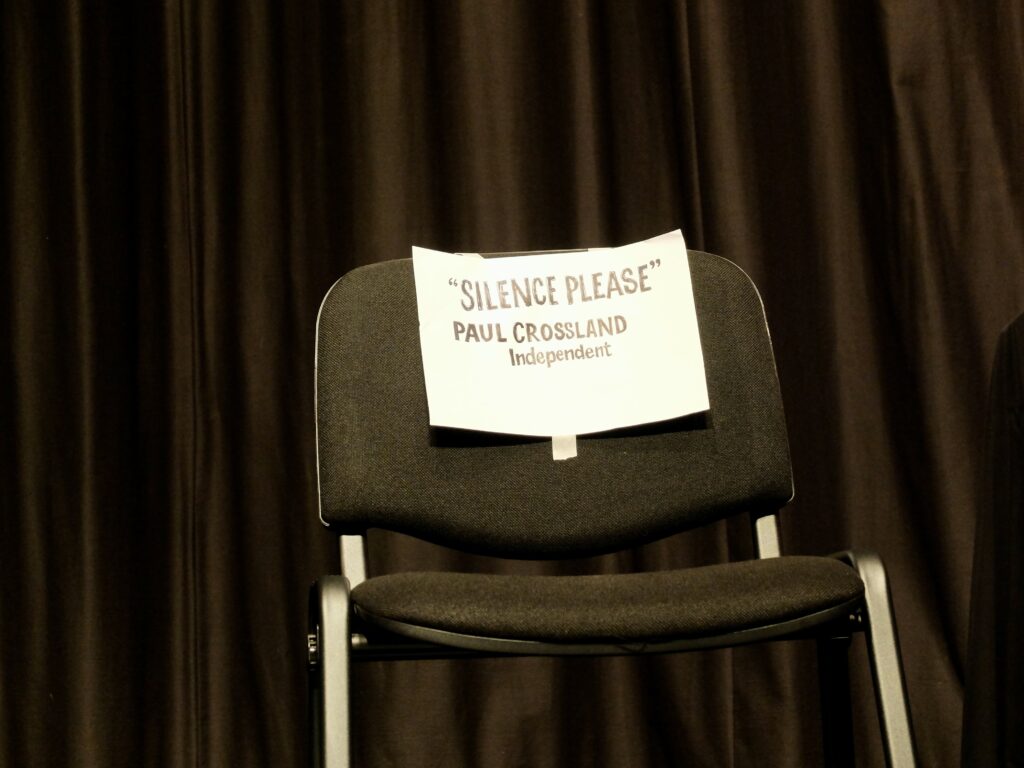
The empty chair belonged to Paul Crosland, an independent, unable to attend due to ill-health, but who requested the minute allocated for his answers be given over to a contemplative silence. Due to time-constraints, this wasn’t possible to accommodate, but it was an interesting idea regardless.
Questions were an equally healthy mix of national and local issues, with the audience cheerily booing both water company bosses, and the University of Brighton Academies Trust, the latter forthe alleged mishandling of school funding that has come to light. Perhaps it’s a testament to our unique position as a coastal constituency from which France can be seen on a clear day, but the debate had a distinctly more internationalist flavour than many of the televised leaders’ debates.
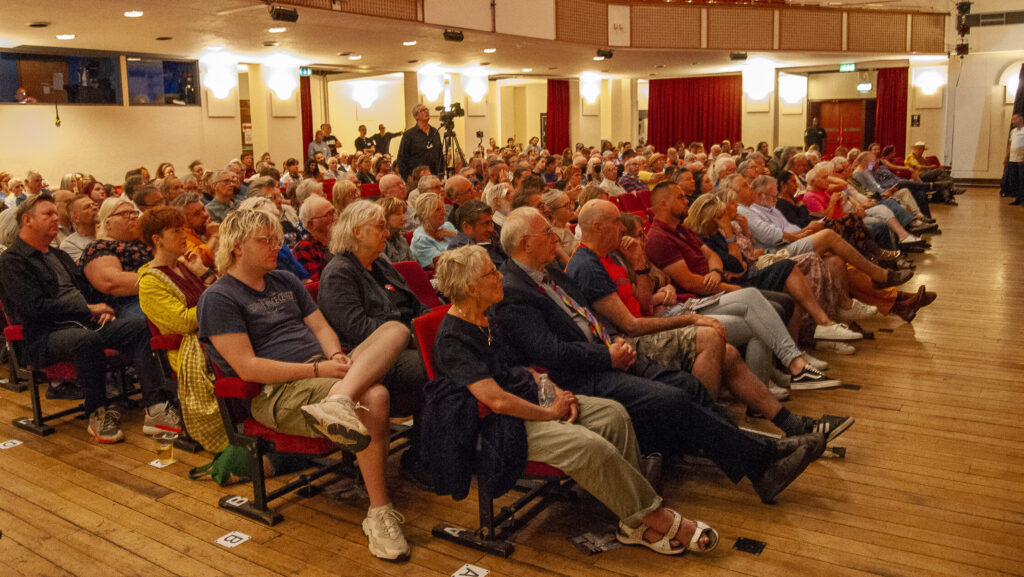
Anti-immigrant rhetoric was swiftly countered by rumblings of dissent from the crowd. The largest rounds of applause were reserved for those who made a firm commitment to greater cooperation with the international community, more decisive action on climate change, and more compassion for refugees, an area where those representing smaller parties seemed to shine.
So, who came across best? The range of views and policies which appeared to cut across traditional political divisions was fascinating to behold. Harris was an excellent orator, with a polished, yet engaging, manner. He even had cheering those of the generation never to forgive the Lib Dems for the coalition years but lost the crowd a little when he appeared to defend selective schooling.
Davies was humble and forthright, with a strong closing address. But an unexpected comment in relation to the debate on trans rights stirred up animosity in some sectors of the audience.
Fernando, sharp-suited and energetic, spoke with great passion and energy, but only a few pockets of the crowd found much to like in the things he spoke with great passion and energy about.
Horn worked the crowd well, avoiding any stances which could come across as too tribal, while displaying a sincerity of conviction. But, understandably, due to the time-constraints, she had a habit of continuing to make a point over the applause, rendering some of what she said completely inaudible.
Colley emerged as an unexpected favourite with many sections of the audience. His clear compassion and concern for the people of Gaza struck a chord, even if he occasionally lacked substance on domestic issues. His dig at rival Helena Dollimore’s career in the charity sector, however, though it made for a good soundbite, felt a little crass, on a par with those who mock lifelong vegetarians for not going vegan.

And what of the two main parties, in what is, after all, a Tory-Labour marginal and key battleground seat for both? The “two cheeks of the same arse” remark, made by Colley, and echoed by Davies is an old one. In fact, its origins can be traced back to the 1970 general election, when celebrated illustrator Ralph Steadman created a caricature showing the faces of Edward Heath and Harold Wilson superimposed on a pair of buttocks. It was adopted by the obscure, prog-rock Edgar Broughton Band on a poster encouraging people not to vote, which is probably where this author’s disgruntlement with the saying comes from.
Any similarities between Hart and Dollimore were fairly superficial. Both are local (is that not what we expect of our MPs, even in a country where parachuting is depressingly common?) both are women, and both have a reasonable chance of being in government next week. Beyond these accidents of biology and geography, wider differences emerged. Hart was keen to stress her longevity in the role (though it was perhaps not what the audience wanted to hear) and her rival’s inexperience of elected office. Despite the clear dissatisfaction with her party, a stance especially acute in towns like Hastings which have felt the sharp end of the cost of living crisis, her determination to present herself as the continuity candidate was clear to see.
Dollimore came across more like a graduate at her first major job interview, smartly dressed, enthusiastic, and well prepared for the inevitable wall of misdirected aggression over the actions of her party’s leadership. With the average age of a parliamentarian still hovering in the early 50s, her relative youth could work against her, or it could be perceived as a breath of fresh air by the electorate, only time will tell.
We hope you have enjoyed reading this article. The future of our volunteer led, non-profit publication would be far more secure with the aid of a small donation. You can also support local journalism by becoming a friend of HIP. It only takes a minute and we would be very grateful.

You are wrong that Sally-Ann Hat is our MP.