
Sweden In The Time of Corona
Sweden has so far declined to impose a social lockdown. Schools, bars, cafes and shops remain open. Social distancing is recommended, but not enforced. Alex Peck, a Brit living in Sweden, reports.
I live with my family in a small rural community in Sweden, trying to start a self-contained business. After six years of frenetic graft in London, I concluded that some large-scale disaster was going to make modern urban life untenable. Others who also studied ecology or environmental science reached the same conclusion a long time ago. I meet them all the time here in Sweden but also in the UK, especially the transition communities around Dartmoor.
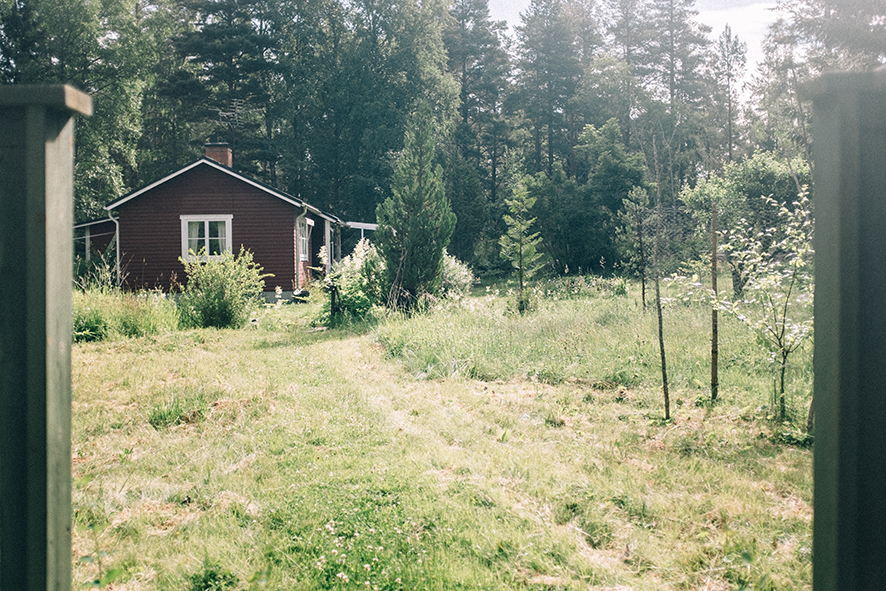
Cabin life in Sweden – socially distanced
PICTURE: Alex Peck
So how are we in Sweden dealing with the pandemic? Spending time at home. Washing hands in between school/work and home. Cancelling a lot of events and social engagements. Getting out, as the spring weather gradually improves. But all of the above we would have been doing a lot of anyway – they are what the state and society as a whole have been encouraging people to do for decades in order to fight off seasonal flu and to improve health outcomes at the end of the long winter.
Cabin retreats
Every spring, although normally much later, retired people retreat to a cabin which they have fitted out, to live there permanently for the whole summer season. This spring, after an unprecedentedly snow-free, mild winter, many older people have gone very early – as soon as they caught wind of the crisis spreading north from Italy. In many cases an elderly parent in the risk group is staying in a family member’s summer cabin.
Swedes are also taking stock of the global economic situation, which will hit them hard, and of what they need to do to survive the coming deep recession. They are consuming news media voraciously and voicing their opinions loudly on social media. That includes not just the people who want to blame everyone else, but also the people who want to argue for the rational science-based response and to support their elected representatives to guide the country through the epidemic.
The pandemic has put many anti-social or exploitative practices into sharp focus, including the withdrawal of key services from remote communities, coupled with privatisations and increased investments in the wealthy urban areas, especially Stockholm.
Rural/urban divide
Potentially remote communities often have very little movement and commerce passing through. However, with infection rates being high in Stockholm, people who can work remotely are getting jittery and heading out now when the risk of spreading the virus is quite high. And that has the capacity to increase the rural/urban divide in Sweden – especially in the ski season.
The government advised people not to travel to ski areas over the school half term and have worded their advice more strongly in advance of the Easter break, especially for people in Stockholm. However, closing ski resorts would be complicated as many people go to a skiing area to cruise serenely and alone along a cross-country route for free (no lift passes required). They put great pride in their well-thought-out packed lunch and thermos of blueberry soup. It is a cultural mainstay of the north of Sweden.
The local population are enraged that people came up from southern Sweden and indulged themselves with a holiday
But many people have ignored government advice, and the main skiing area in Sweden has seen a corresponding spike in COVID-19 cases. The local population are enraged that people came up from southern Sweden, probably with cold symptoms brought on by the cold mountain air, and indulged themselves with a holiday. It is assumed that the only people who don’t manage to sort out a packed lunch but instead grab an expensive burger from the canteen would be sloppy-minded middle-class Stockholmers.
Integration issues
Another area of division is the topic of integration. The nationalist right wing has been for closing everything down at the same time as Denmark. That follows the usual political co-ordination between the Sweden Democrats and the Danish People’s Party. Statistics confirm that a disproportionately high number of Covid-19 patients are of Somali background. Somalis in Sweden live overwhelmingly in the most cramped housing estates in urban areas. Not only may they miss the details of the social distancing advice. As a Somali politician here in our local town stated: “the culture is highly social”. The community is used to many large family gatherings, impromptu visits and keeping near those who are feeling unwell. The last two habits especially are the reverse of typical Swedish social behaviour.
I spoke to a good friend in Stockholm – a priest in a large urban congregation in one of the better-heeled suburbs. She talked of families with children feeling “relief … that they are no longer obliged to show up at work … that children are outside playing nearly all day … that the status anxiety of attending parties, activities and events has disappeared”. The elderly in Stockholm appear sometimes to have a death wish, actively seeking out busy places like the indoor market during this crisis. My friend sees this as effects of extreme loneliness, already a feature of old age in Sweden.
Respect for authorities
As many commentators looking in on Sweden in amazement have noted, there is general respect for the authorities. The speech of the massively unpopular prime minister Stefan Löfven was applauded by nearly everybody including the ostracised but popular party leader of the Sweden Democrats. The gloomy-faced compromise-advocating state epidemiologist Anders Tegnell has achieved cult status among people with an interest in the nature of the disease.
Despite all this, the national mood shows a growing sense of dread. Swedes have a habit of withdrawing into themselves when situations get difficult and avoiding conflicting viewpoints. That may in itself delay the spread of the virus and save thousands of lives.
We hope you have enjoyed reading this article. The future of our volunteer led, non-profit publication would be far more secure with the aid of a small donation. You can also support local journalism by becoming a friend of HIP. It only takes a minute and we would be very grateful.

Leave a Reply