
Shingle All the Way
PAUL McLAUGHLIN
People walking along the Hastings seafront in recent weeks will have noticed the massive buildup of shingle gathered up by the Harbour Arm in front of the RNLI lifeboat station. A team of engineers has been digging up hundreds of tonnes of beach shingle from along the shore as part of an ongoing plan to protect potentially vulnerable areas of the town from renewed flooding.
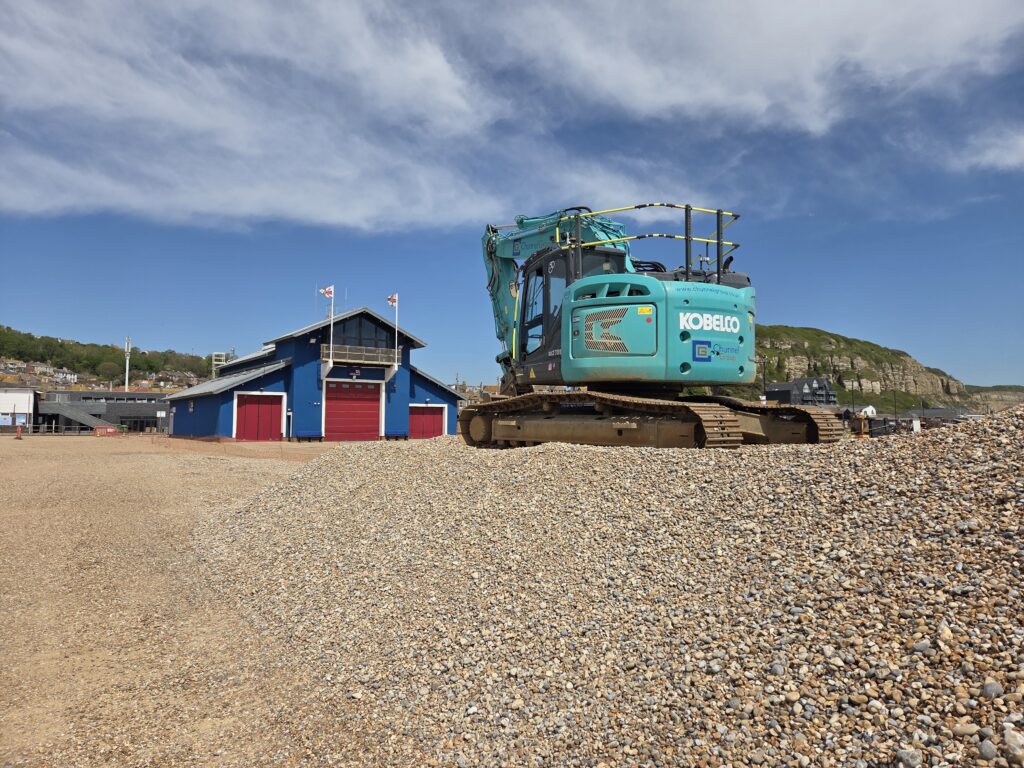
Each day, up to 800 tonnes of the surplus shingle, which has drifted down the coast from Eastbourne, is being collected up. This is then driven back down to Pevensey Bay to bolster beach levels and reduce the risk of flooding along that stretch of coastline.
The work to remove the surplus shingle in Hastings is part of a joint initiative by the Environment Agency, Southern Water, Hastings Borough Council and East Sussex County Council. The aim is to reduce the impact of wave action and shingle drift along the shoreline.
The buildup of shingle along the beach is proving to be a constant problem for Southern Water. The shingle was identified as one of the major causes of the blockage of an outfall pipe at Denmark Place, a short distance away, which was responsible for the town’s flooding in November 2023. This outfall pipe requires constant attention to keep it clear.
The excess shingle also creates problems for the RNLI. When the buildup becomes too great, the lifeboat station is often forced to clear a path along the beach just to launch. Any delay in getting a boat to sea can have dramatic consequences.

The Environment Agency anticipates collecting up to 15,000 tonnes of shingle from Hastings and transferring it to Pevensey in what it describes as a massive logistic operation. The works are expected to be completed in early May.
Environment Agency engineers will monitor the effectiveness of the operation, but they are under no illusion that the problem can be solved entirely. Coastal erosion can only be managed, not eradicated. With approximately 12km of coastline, Hastings will require long-term action and sustained funding to reduce the risk of flooding and major landslips, while also accounting for climate change and the predicted rise in sea levels.
We hope you have enjoyed reading this article. The future of our volunteer led, non-profit publication would be far more secure with the aid of a small donation. You can also support local journalism by becoming a friend of HIP. It only takes a minute and we would be very grateful.

Leave a Reply