
Minister Visits Little Gate Farm
HUGH SULLIVAN
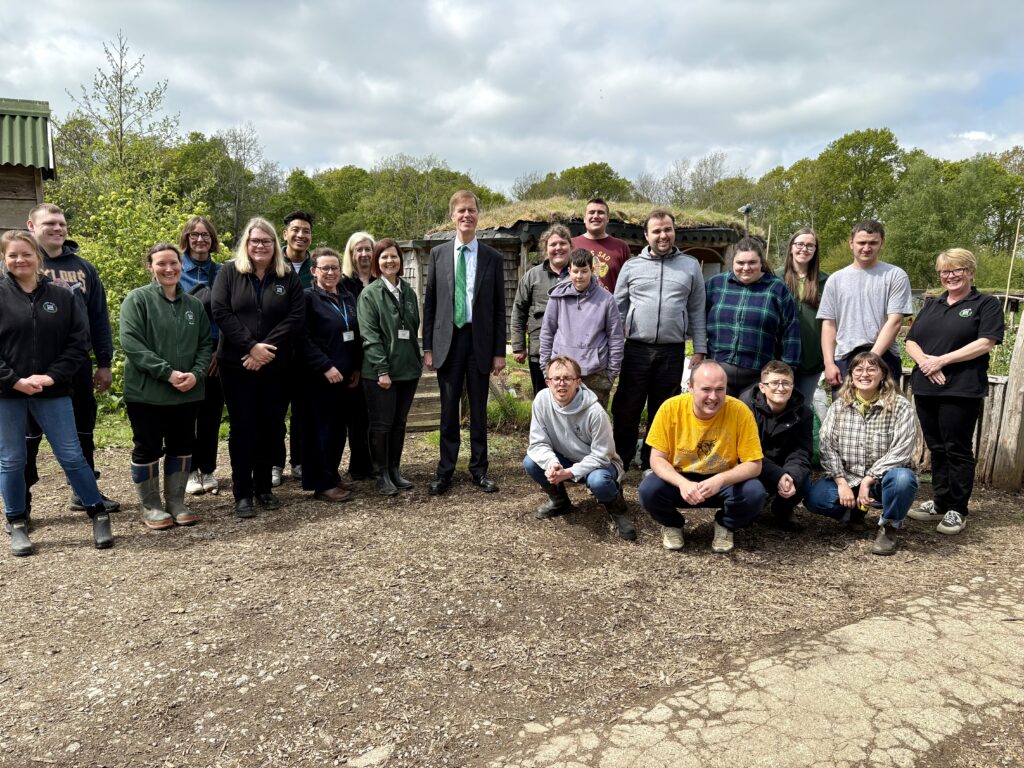
Little Gate Farm is a social enterprise which supports adults with learning disabilities and autism into sustained employment. A fortnight ago, Sir Stephen Timms MP, the Minister for Social Security and Disability, took a team from his Department of Work and Pensions (DWP) in London to spend a morning at the Farm’s rural headquarters, buried deep in the countryside between Beckley and Udimore.
From the Government’s point of view, Little Gate’s purpose and remit are in perfect pitch with its own stated aims of increasing employment levels and reducing benefits dependency. The DWP has highlighted figures that one in eight young people in Britain are not currently in employment, education or training (NEETs) and that 2.8 million people are economically inactive due to health and capacity issues. The level of PIPS (Personal Independence Payments) has risen rapidly since the Covid pandemic and is regarded by the Government as “unsustainable”. In response, senior DWP Minister Liz Kendall pledged in March to spend £1 billion per year in employment support measures nationally to help disabled and long-term sick “back into work.”
Little Gate, for their part, are hoping to benefit from a new government initiative, Connect to Work. They have expanded hugely in recent years as demand has soared, now offering work skills training activities for five days a week, setting up a college for 16-25 year-olds in Bexhill, and installing an administrative office in Battle.
At the Farm itself they run their own work training programmes, which include a farm and horticultural garden, and a timber yard which makes charcoal logs for barbecues and other commercial uses. Sir Stephen and his team were shown around, meeting a range of staff and trainees involved, including two young men who shared their paid employment experiences. The main goal is to prepare learning disabled and autistic trainees for apprenticeships and other forms of work with local employers, then to continue to support them in those positions on an individual basis through job coaches so that they can become self-sustaining.

MAINTAINING SUPPORT
It’s an ongoing process. Little Gate believes that anyone can be successful in a paid job with the right support. The work trainees can work in a regular and routine job very successfully but may find changes – of location or management or work direction, or else of personal circumstances, like a death in the family – difficult to adapt to and may need renewed support. “We don’t ever fully step away”, says a job coach.
Little Gate have a register of 168 trainees assisted into employment in the ten years since 2015 and are now aiming to push the rate of new employees up to 40 per year. But this multiplication of individualised attention depends on maintaining reliable streams of income from East Sussex County Council’s adult social care budget and from private trusts and charities as well as from the DWP. Those other resources are both under intense and increasing pressure, with the council experiencing year-on-year budget constraints, while grant funding is seen as the alternative source by social enterprises up and down the country. The result is a constant churn of competitive applications. Funding offers tend to favour shiny, new initiatives and limited-period support. Help to pay for core costs of a long-term enterprise, however necessary and successful it may be, is rarely available.
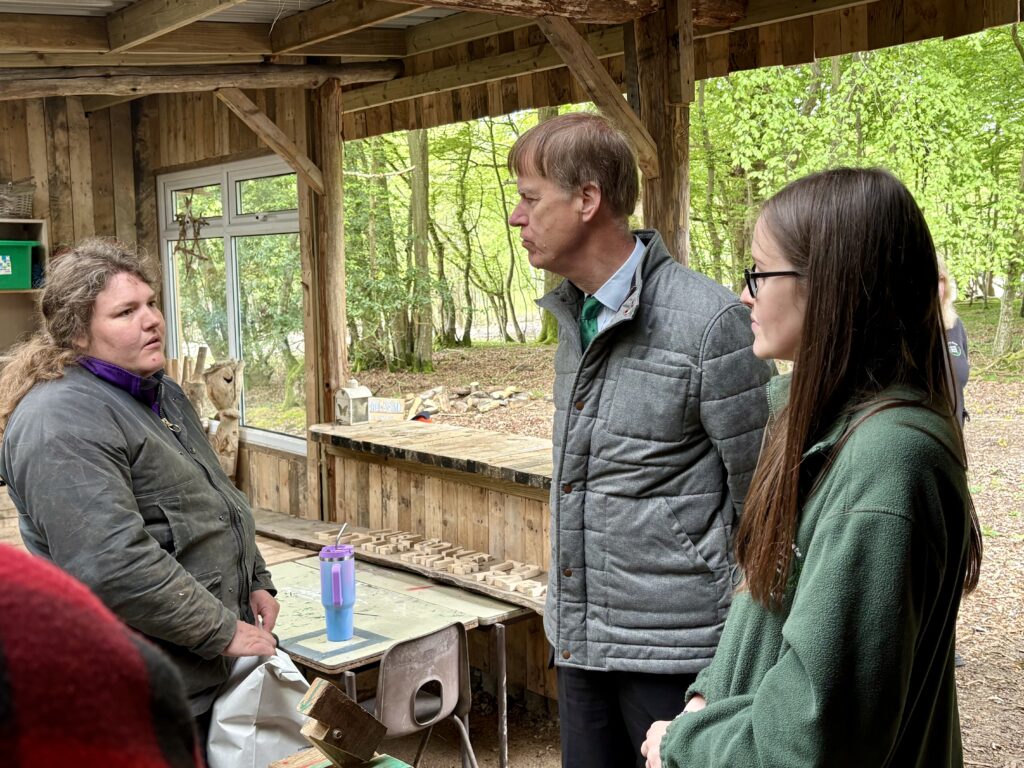
Sir Stephen Timms talks with trainee at timber yard
So, will Sir Stephen recognise Little Gate’s value sufficiently to urge his department to fill in the funding shortfall? He referred at the end of his visit to a survey in which it was found that 60% of people with learning disabilities would like a permanent job but only 6% had one. He said he found the Farm “very impressive” in its endeavour to close that gap and said that the £1bn per year made available under his department’s Connect to Work policy was going to “dramatically increase” employment rates generally. However, he sidestepped a question as to whether this policy may be undermined by the Chancellor Rachel Reeves increasing both the national minimum wage and employers’ national insurance contributions.
Little Gate’s CEO Andrea Randall-Smith commented afterwards: “We were delighted to welcome the Disability Minister here to see at first hand how our supported employment programmes are transforming the lives of people with learning disabilities and autism. We’re proud of what we achieve alongside our work trainees and local employers, and we hope the Minister will take away a deeper understanding of the value and potential of specialist employment support providers like us — and the importance of better-aligned, flexible, and reliable funding models that empower us to do even more.”
Little Gate Farm will be open to the general public for its summer fair on Saturday 7 June between 11am and 5pm. Further details are on its website www.littlegate.org.uk.
We hope you have enjoyed reading this article. The future of our volunteer led, non-profit publication would be far more secure with the aid of a small donation. You can also support local journalism by becoming a friend of HIP. It only takes a minute and we would be very grateful.

Leave a Reply