
David Dennis to Head Bexhill Wildlife and Landscape Project
The Bexhill Wild Domesday Project, a scientific evaluation of the natural environment of Bexhill-on-sea, will be launched on 1 June. The purpose is to plan for its future conservation and enhancement. It will be managed by David Dennis, former RAF officer with a career in ecological surveying and nature conservation, more recently founder of Friends of Combe Haven and frequent contributor to HIP.
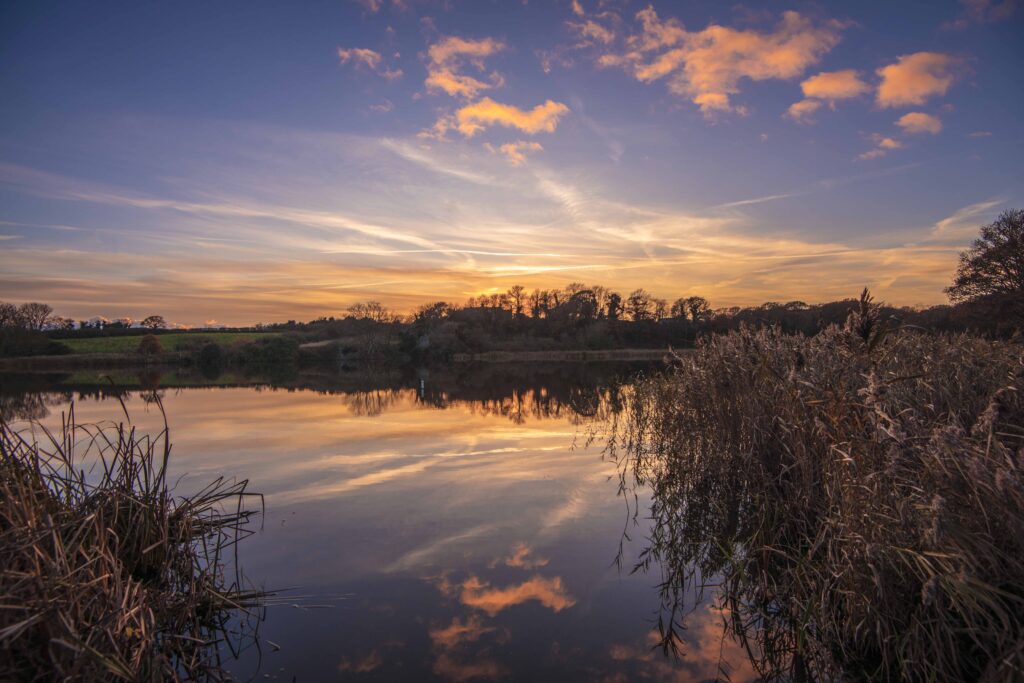
Pebsham Lake in the Countryside Park
The area of study will extend from Northeye in Pevensey Marshes to the west bank of the Combe Haven river under a three-year programme involving volunteers, young people, local residents and experts. Last week Bexhill Town Council voted funds for the project for an initial 12-month period; continuation into a second and third year will be dependent on further council votes.
In Year One (June 2023 to May 2024) there will be an initial assessment of Bexhill’s wildlife and plants, divided into four seasonal research tranches – summer, autumn, winter and spring. Councillors will receive detailed reports at the end of each season.
In Year Two (2024-2025), subject to renewed funding, public meetings will be held and a team of volunteers, especially young people, recruited to conduct street-by-street and landscape surveys looking for problems in trees, plant types, wildlife, coastal areas, streams, water courses and pollution of the environment in their own wards. Funding bids will be made, and a conservation management phase will be planned, using the Wild Domesday Survey data and volunteer local ward data as a base, to ensure relevant planting and landscaping, and additional water in the landscape for animals, insects, and tree survival in drought conditions.

Filsham Reed Beds
In Year Three (2025-26), subject again to renewed funding, the conservation enhancements highlighted as necessary by the evaluation data would be undertaken. This phase has aspects which could attract match funding and action from external sources such as the East Sussex County Council grants programme, the National Lottery, the Environment Agency, and some local charities supporting green issues.
Some aspects that will be at the top of the Project agenda:
- Sewage and sea/bathing water quality
- Cyanobacteria and seaborne microbacteria
- Seafront storm damage
- Flooding implications
- Summer drought – loss of plants, trees, and wildlife
- Extensive loss of protective beach shingle due to excessive longshore drift through the many damaged groins
- Fly tipping and leachate pollution.
David Dennis says that his key concerns within the area being surveyed are –
- to increase the summer availability of water so as to avoid cyanobacterial blooms and prevent wildlife from running out of water during drought; and
- to address the long-term cosmetic design of Bexhill seafront, where studies will be conducted to find how to prevent wave damage if sea levels rise as predicted.
However, other key aspects will be sewage and bathing water quality, light pollution, fly-tipping, and all other matters that harm wildlife or adversely affect landscape enjoyment and conservation.
The project relies upon full co-operation with county and local councils, national organisations, and local wildlife specialist groups and trusts.
We hope you have enjoyed reading this article. The future of our volunteer led, non-profit publication would be far more secure with the aid of a small donation. You can also support local journalism by becoming a friend of HIP. It only takes a minute and we would be very grateful.

Leave a Reply