
Seasonal Local Food: Fishbites
Alistair McDonnell gives us a round-up of the fish that is caught in Hastings in each season and suggests some different ways of cooking it.
The UK imports 60% to 80% of the fish we eat and exports about 50-60% of what we catch, a third of which is landed directly abroad by our own fishing vessels. Five or six species dominate imports: cod and haddock from the North Atlantic and Arctic oceans; skipjack and yellowfin tuna from the tropical Atlantic, Indian and Pacific Oceans; farmed salmon from countries such as Norway; farmed shrimps and prawns from SE Asia plus Alaskan pollock from the North Pacific (used in fish sticks and frozen meals).
CREDIT: Fiona McGarry
Much of our imported fish is first sent to and processed in SE Asia before re-export to Europe, meaning long supply chains and lots of food miles. For a snapshot of the scale of exports you only have to watch the BBC documentary Trawlermen, where Lerwick trawler Adenia catches a £1,000,000 worth of mackerel in four days and lands it into Norway for export to Japan for sushi. The majority of the harvesting rights (or quota) to catch mackerel on that scale are privately owned.
But to get to the food. Demand for frozen fish from supermarkets and imported fish in fish and chip shops outstrips supply from local fleets at Dungeness, Rye, and Hastings. But when weather, tides and seasons create favourable conditions, they catch excellent fresh fish.
Right now, when the boats can get out, there are fresh herrings full of roe to be had. They are delicious fried in oats and butter, and the roes are great with capers and parsley on toast. There may even be a few local sardines.


CREDIT: Samara Jayne Martin
Soon the local boats will put on dredges to catch scallops; there are large squid about too. Try squid tubes stuffed two thirds with ingredients of your choice and closed with a bamboo skewer before baking.
Currently our seas are about two degrees warmer than usual. With warmer water, sea bass stick around well into the winter. Have them gutted and the gills removed but scales left on, then smother them with an egg white and salt paste and bake or BBQ (it might work for whole mullet too). The paste sticks to the scales and you can peel them off together leaving just the meat on the bone.
Fillets of cheaper white fish such as whiting, gurnard or Scottish-caught coley make great fishcakes. Mid-winter is also the time of year for sprats: they can be treated like whitebait.

CREDIT: Samara Jayne Martin
Come the spring, sole arrive – watch out for the cuttlefish soon after. Cuttle are messy to prepare but worth it. Score them and stir fry hot and quick, or for a great stew, try Cacciucco alla Livornese from Jane Grigson’s Fish Book – which Grigson described as the best thing she had ever eaten.

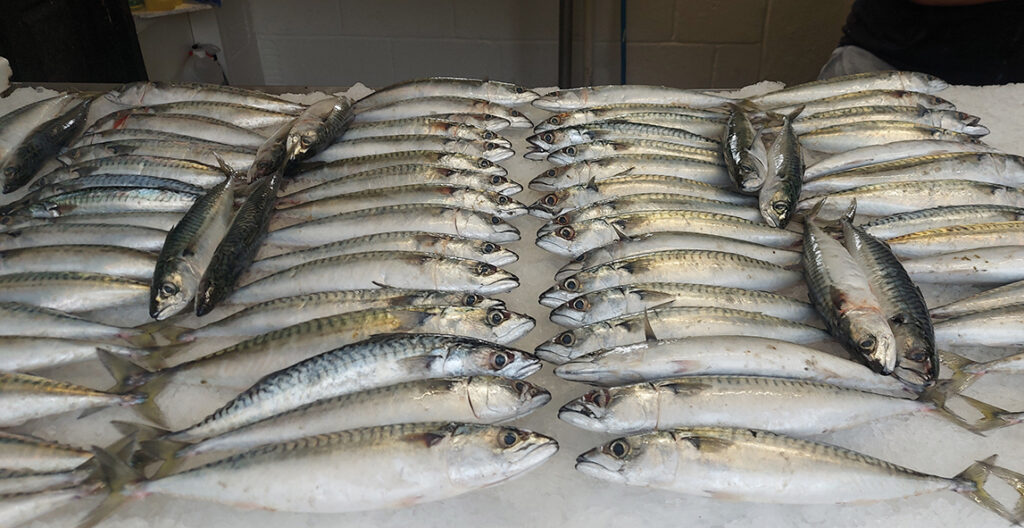
I look forward to the return of the mackerel and the host of recipes suited to South American ceviche (where the fish is cooked in citrus juice) or the rich pickled (soused) Caribbean variants of escabeche. I won’t recommend detailed recipes, there are so many you can look up, experiment with, and adapt to your own diet or taste.
When the weather is bad, the local wet fish shops will usually be able to get something from other parts of the UK that will fit the bill. Or just ask a fishmonger for recommendations: they’re the experts.
We hope you have enjoyed reading this article. The future of our volunteer led, non-profit publication would be far more secure with the aid of a small donation. You can also support local journalism by becoming a friend of HIP. It only takes a minute and we would be very grateful.

Leave a Reply