
Wish You Were Here
GILL GOLDENBERG explores the iconic Judges building on Bexhill Road with James White (Design Innovation), looking at the past, present and future of the postcard industry.
How many photos do you have stored on your phone which never see the light of day? Whether it is hundreds or thousands, it is probably nowhere near the scale of the 36,000 negative glass plates created by Fred Judge, the founder of the Judges postcard company.
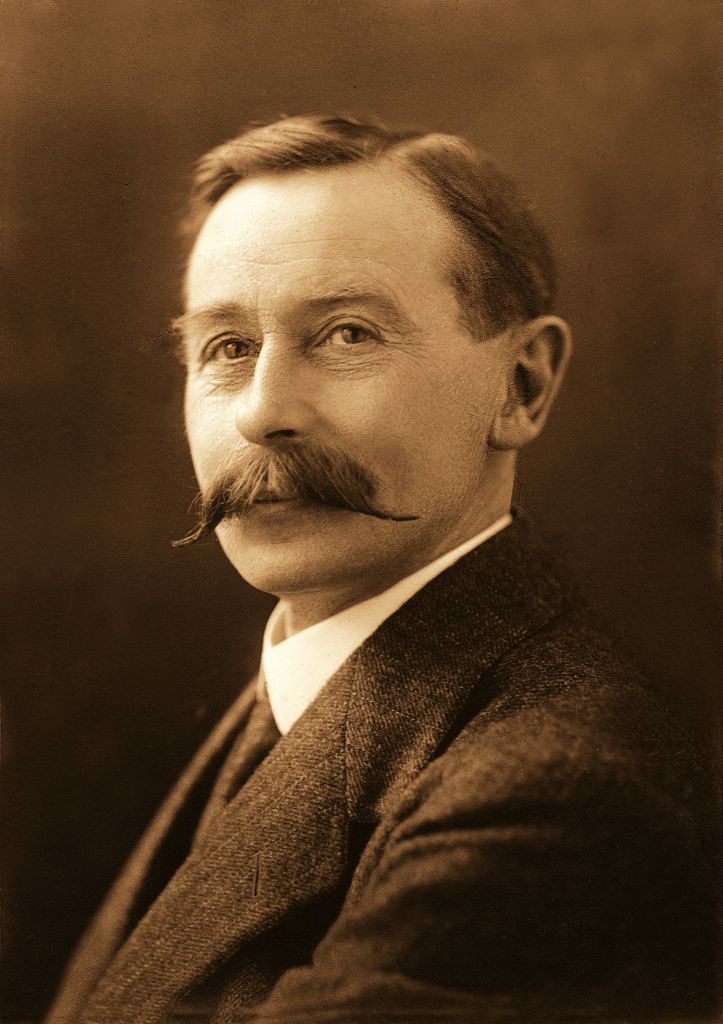
Fred was an ‘early adopter’ of technology and even gave up his career as an engineer in Wakefield to pursue his passion for photography. He started producing postcards in 1903. Many of the negatives were recently discovered still stored in their original brown envelopes in an unused cupboard at the bottom of the building. Having been there for over a hundred years, the envelopes themselves offer no clue as to the nature of the image inside, but a number code gives some idea as to the date they were taken.
James White started in his role of Design Innovation for Judges of Hastings in April 2023, having previously worked there from 2018 – 2021. He is the enthusiastic driving force behind the project to digitise the collection, to preserve it as an important facet of the company today, as well as to open it up to a wider audience in Hastings and beyond. His excitement about the importance of the collection is palpable and infectious. Such is his enthusiasm, that he is involved in editing the images in his spare time.
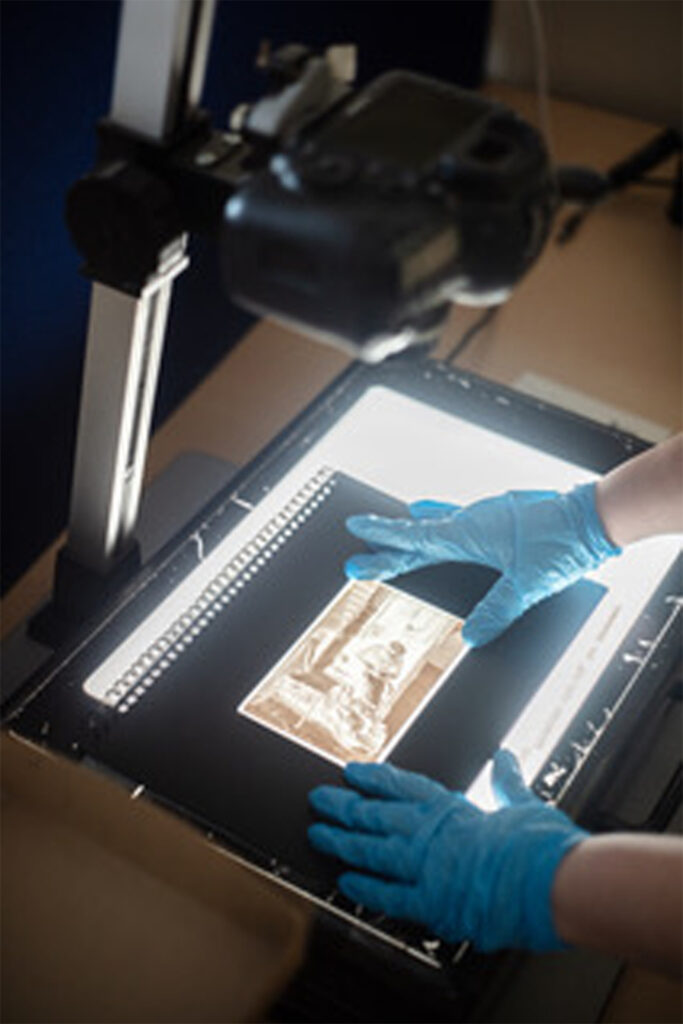
Amy Jenkins has recently joined the team working on the restoration of the photos. She has a love of photography and history; the perfect credentials to undertake the job of capturing the images with a digital camera. She says: “I get excited when I open each envelope, even though the image is sometimes of something rather uninspiring, like a tree!” While I was there, the images she uncovered were scenes from Cowes in The Isle of Wight. Although Amy is making excellent progress with the task in hand, completing the photographing of 600 negatives a day, there is still a lot of work to do.

James has been instrumental in keeping Fred Judge in the public eye. Recently a set of postcards were produced for Hastings RNLI featuring the launch of Hastings first lifeboat in the 1900s, compared to shots of launchings in 2024. Additionally, the company produced a set featuring Birling Gap for The Towner Gallery in Eastbourne.
Right Place Right Time
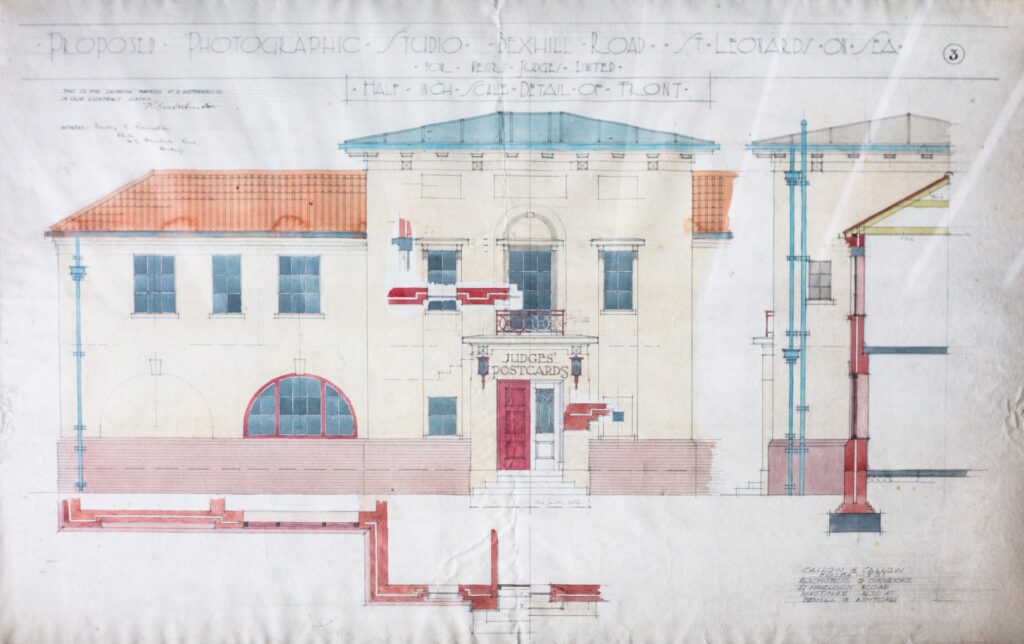
Fred initially opened ‘Judges Photo stores’ at 21a Wellington Place. Judges Photographic Studio on Bexhill Road was built in 1927 for Messrs Judges – presumably Fred and his brother. Initially, he charged 1d for his postcards, which soon became very popular. The photos were mainly of The British Isles and included beach scenes, dramatic storms, picturesque villages and old churches. The inclusion of figures in his compositions make you feel you “are in the moment”, as Amy puts it.
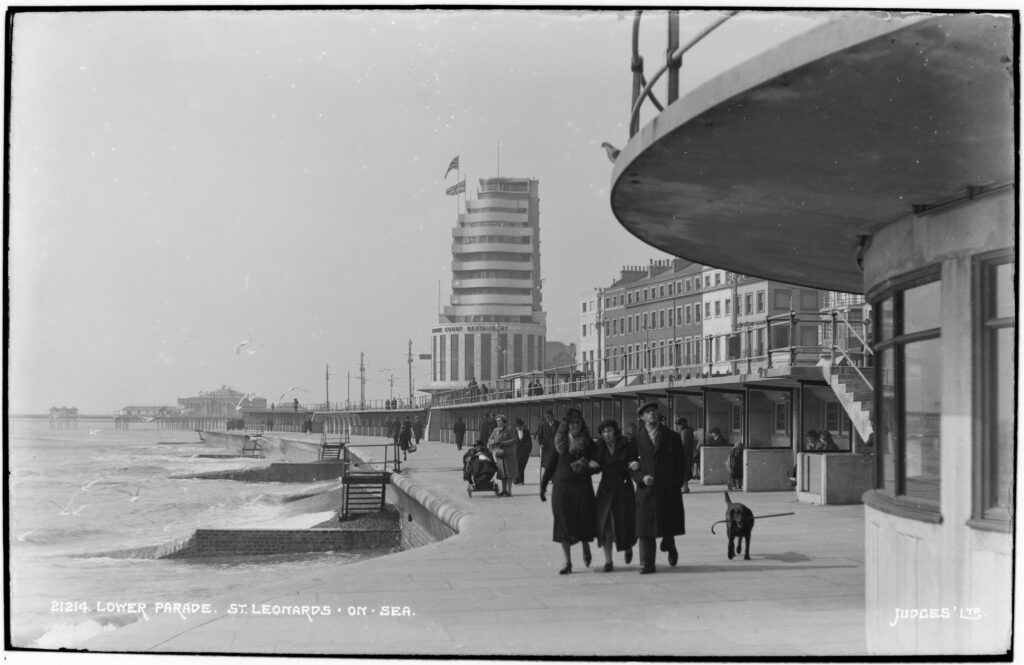
During Fred’s lifetime, particularly between the wars, there was an upward trend of people travelling to seaside resorts for holidays, which was no longer the preserve of the privileged few as it had been in Edwardian times. Many of his photos feature famous buildings in seaside locations across the UK.
Travelling by train became increasingly possible, and it was considered healthy to get the maximum exposure to the sun. By the end of the 30s, 15 million people were going to seaside resorts for holidays. The lido became one of the most popular buildings in the 1920s and 30s, as evidenced by Fred’s famous pictures of the lido in West St Leonards. These factors, combined with an efficient, reliable and speedy postal service, meant that the postcard age was thriving.
Then, as now, interest in how life was changing over the years helped to cement the popularity of Fred’s photography. New styles of architecture in the 1920s and 1930s must have seemed alien to some, but exciting for others. Fred also captured the changes to the fishing industry through the lens and made his images available to everyone. Being based in Hastings, Fred had direct access to observing fishing vessels at work, as they landed their catches on the beach.
The Future in the Past
So, what does the future hold for Fred’s photos? James is very clear that his mission is to make this remarkable collection available to a wide audience, firstly in Hastings itself, by mounting an exhibition of photographs relevant to this area. A prestigious gallery space in the town itself would be a good starting point. For maximum impact, the images would have to be enlarged to A1 or A2 size, which would mean the crispness of the images would be compromised to a certain extent, but this would be offset by the fact that the digitising process reveals details which are otherwise lost. Once Fred’s work has been shared, recognised and cherished by Hastings, James will widen the field by exploring other venues which have a connection to his work.
There are also many photos of famous locations in London, for example. “Some of his night-time shots in London mark him as a pioneering practitioner, who managed to create images with an almost ethereal quality.”

And what does the future hold for the postcard industry? I was amazed to discover that the production of postcards still provides the biggest portion of revenue for the company. The current owners since the 1980s, brothers Graeme and Trevor Wolford, have done what most successful businesses do: adapted and diversified. James describes Judges of Hastings as “a traditional business, but innovative in its practice.” Using equipment installed in the 1980s, the company makes a range of products, such as tote bags, mugs, calendars and greeting cards for an impressive list of clients such as heritage properties like Chatsworth, St Paul’s Cathedral and Westminster Abbey.
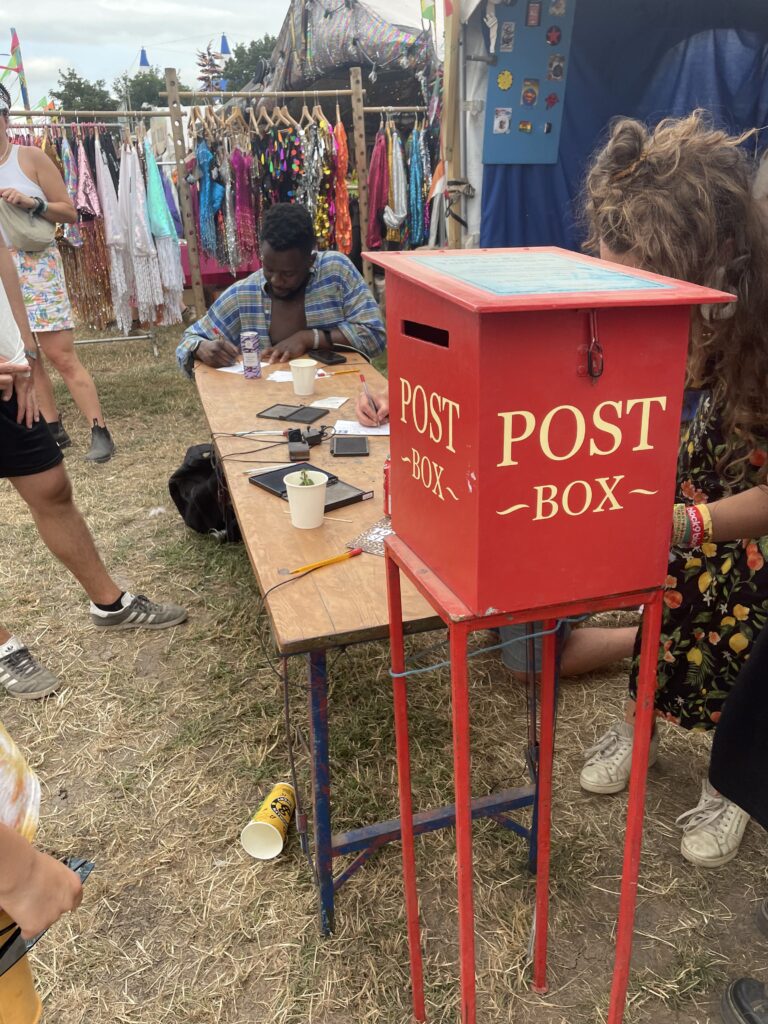
Currently, there is a revival of retro, with younger people enjoying the personal feel of handwritten messages rather than the ubiquitous Facebook or Instagram route to connect. For example, a postcard stall at Glastonbury this year did brisk business in selling them to festivalgoers who wanted to share their experience in a more personal way.
Fred is one of a long list of successful individuals associated with Hastings. Let’s hope that his images continue to have a place in Hastings’ future.
Follow the progress of the digitising on Instagram @fredjudgearchives
We hope you have enjoyed reading this article. The future of our volunteer led, non-profit publication would be far more secure with the aid of a small donation. You can also support local journalism by becoming a friend of HIP. It only takes a minute and we would be very grateful.

Leave a Reply