
Sustainability in the South East
Charu Sharma PhD looks at the problems and finds a way forward for Hastings
What is sustainability?
The term sustainability is used in multiple contexts these days in connection with the environment, cities and towns, design, lifestyle, the workplace. The term implies doing things in such a way that the resources involved are used with minimum wastage, and the outcome or the activity (including living) can thrive indefinitely.
This may seem like a tall order but our planet Earth has been doing this since its inception 4.6 billion years ago, keeping life going and thriving come hell or high water. There have been a few close calls despite this long-term sustainability of life, five of them termed ‘mass extinctions’ by scientists. As it turns out, we have the misfortune to be in the sixth one, and what’s more, there is clear evidence to show that this catastrophe has been triggered by us, homo sapiens.
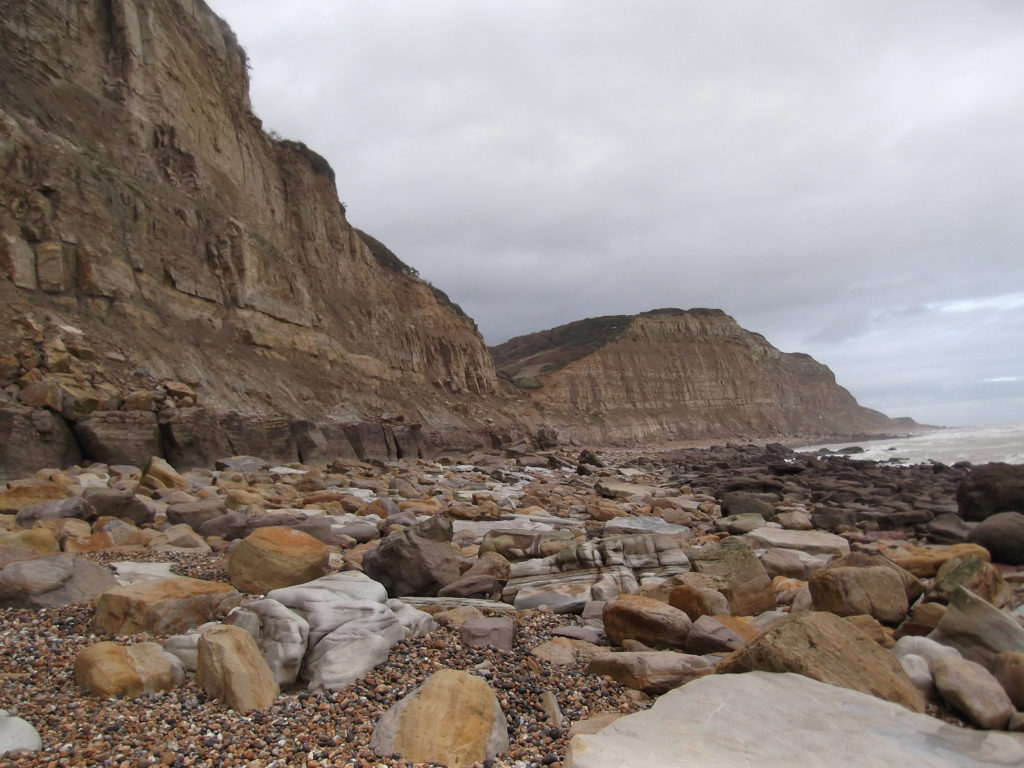
Hastings Cliffs
Why do we need to think about it?
The stark reality is that around 10,000 species (identified and unidentified) disappear each year due to habitat loss and environmental degradation. An important cause of these extinctions is the rise in carbon dioxide emissions, which has increased the temperature of the lower atmosphere by at least 1.5 degrees Celsius compared to pre-Industrial times. The Inter-governmental Panel on Climate Change (IPCC), a United Nations body that compiles a report on the state of the climate every five years, is meeting in South Korea in the first week of October prior to releasing its latest report. Early statements from the meeting indicate that we are heading towards a 2.5⁰C to 3⁰C rise in temperature. The only way the rise could be limited to its current level of 1.5⁰C would be if emissions were reduced by 40% by 2030 – a real challenge, even for those good at meeting deadlines! And we are talking here about governments and industries implementing policies, as well as efforts at the community level.

The consequences of increasing temperatures would be the intensification of climate-induced hazards globally, such as anomalous seasonal temperatures (both hot and cold), violent storms, and destructive floods. These would have a direct effect on local and regional infrastructure, impacting society as a whole and the government response.

Testing Water Quality
How do we find strategies for achieving sustainability?
The big question is therefore: how can sustainability be implemented during times of such rapid environmental change? We clearly need effective strategies, but unfortunately, we haven’t had much practice with a problem of this nature yet. Or have we? If we look back in history at previous flourishing societies and assess how they coped with sudden environmental change, we might have something to start with. An alternative view is that, owing to the unprecedented scale of the problem, we need to face it with a current-day mindset. Whichever way we do it, we can start by looking locally, here in the South East, examining how we can be sustainable now and into the future.
Take plant and animal species, including microorganisms. These often become displaced from their original geographical locations to cope with changing environmental conditions, as well as by inadvertent, or intentional, transportation by us humans. The South East coast provides an additional sea route for incoming non-native species. While some might be benign, others have been known to establish themselves at the expense of native species, or at the level of bacteria and viruses, cause epidemics.
Although, we are now far better equipped to cope with infectious outbreaks and invasive pests, forewarned is forearmed. To be more involved on a local level, a citizen science project could be initiated, where people contribute online to an environmental-monitoring dataset such as the presence or absence of certain species in designated study-plots. Similar projects have already been implemented in other parts of the UK*.Another project could test water and sediment for temperature, salinity and clarity. A science sampling booth would be a great start for such a data monitoring project.
The Transition Town Concept
At the urban level, ways to attain sustainability are already being implemented in various ways. One is the transition town model, already adopted by a group in Hastings. The model is based on the concept of self-sufficiency and an attempt to reduce the effects of peak oil, when a decline in the extraction of crude oil can no longer power economic growth. The concept applies to any urban centre that allows multiple modes of transport, varied lifestyles and occupations, has an efficient recycling programme, low pollution levels, and can grow its own food.
Growing and supplying food locally reduces the need for dependence on large corporations, chemically grown and genetically modified products, and long-distance transport of food. It also promotes effective land use on a smaller scale and promotes organic farming, as well as providing and keeping jobs in the food-growing industry at a local level.

In keeping with the same concept of sustainability, using locally renewable resources for energy needs is also something that the Heart of Hastings community project is already doing. In fact, the whole of the Sussex coast is known as the Sunshine Coast with good reason; solar-powered projects to provide for local energy needs are already under way with Richard Watson of Energise Sussex Coast taking a lead.
Here’s to celebrating the natural beauty, the geodiversity and the biodiversity of the
South East. Let’s work together as community to conserve it for the future.
* Find examples at: www.bbc.co.uk/news/science-environment-32759353 and
blog.rsb.org.uk/everyones-a-scientist-and-here-are-some-places-to-start
• Links to local organisations are: www.transitiontownhastings.org.uk www.heartofhastings.org.uk www.energisesussexcoast.co.uk
• Charu Sharma is an earth scientist and teaches in higher education in London.
• If you are interested in being involved in a citizen data collection project please email her at: [email protected]
PICTURES: Charu Shama
We hope you have enjoyed reading this article. The future of our volunteer led, non-profit publication would be far more secure with the aid of a small donation. It only takes a minute and we would be very grateful.


Leave a Reply