
Paul Joy: A Boxer Who Went to Sea
JOHN COLE
The name Paul Joy is well known in Hastings, especially in the Old Town. Paul has been a fisherman here for most of his adult life and he has been chair of the Hastings Fishermen’s Association since 1977. However, what most people don’t know is that a young Paul Joy was a very keen amateur boxer who had dozens of fights, most of which he won.

“In 1970, inspired by watching the fights of Muhammad Ali on TV, I first went to the Hastings West Hill Boxing Club with absolutely no experience,” said Paul.
“The training was pretty serious. We’d run and sprint from the gym to Battle, before returning to the gym in Hastings to spar for three rounds. Other times, we’d jog along the beach, holding up heavy weights to get our muscles used to keeping our hands up. I loved it!”
“As an amateur, we fought three, three-minute rounds. I found out early that I could hit and knock out opponents with a good right hand. You could say my style was like a bouncer. I fought as a light welterweight (140 pounds or 10 stone/7) and occasionally, I’d fight as a lightweight (up to 135 pounds), and sometimes I’d fight opponents considerably heavier and more experienced than me because I had a reputation of knocking out opponents early.
“My very first fight was against a Royal Marine in a Chichester hotel, where a ring was set up in the middle of the dining room. Before the fight, the Marine came into the dressing room to taunt me, looking me up and down and sneeringly saying, ‘No problem’. I KO’d him in the first thirty seconds of the first round! And in my next few fights, I KO’d opponents with my right hand cross.”

“In 1974 I fought Clinton McKenzie, who was an up and coming star in the amateur circuit. I knocked him down in the third round, but lost on points. In fact, McKenzie went on to become the professional British light welterweight champion.”
“As an amateur, we weren’t allowed to be paid cash prizes, so my promoter would arrange prizes, such as bath towels and bathroom scales.”
“One time, the Club set up a boxing ring on the shingle beach, where the Ferris wheel now is. It felt more like a fairground than a proper boxing arena. Anyone was invited to step into the ring with me, but most of my opponents were totally useless, sometimes even pissed, so I had to hold back so I didn’t hurt them.”
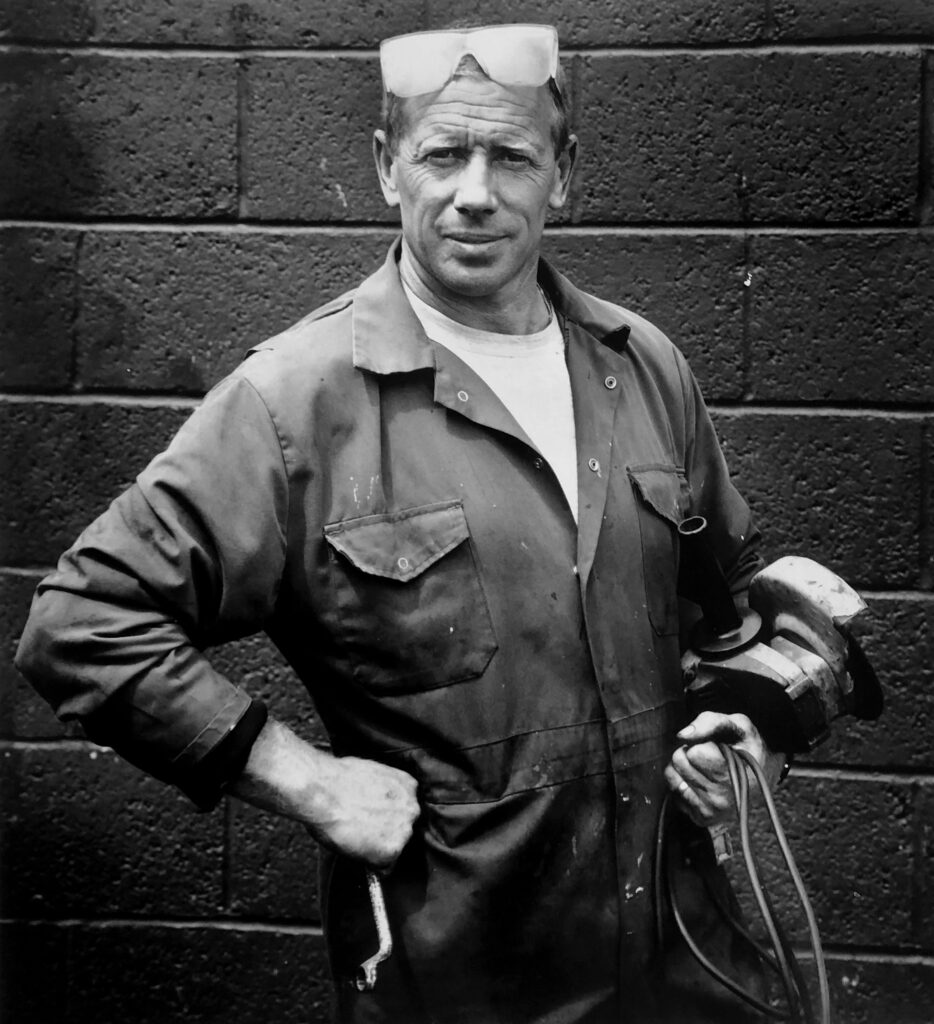
Paul Joy, Hastings fisherman
“I’ve never been knocked out, but I have been knocked down several times. One time there was boxing on Hastings Pier, and my opponent, Johnny Farnbry, didn’t show up on time, so while I was waiting for him, I had a few beers too many. When Farnbry eventually did show up he knocked me down. I got up, but lost on points. Lesson learned!”
“I boxed for almost six years, until 1977. All my family were in the fishing industry, and eventually I followed. Also, it wasn’t fair to my wife and two children to be disappearing days on end to fight abroad.”
“Just before I ‘retired’ from the ring, I had a few unofficial, under the radar fights. For about a year, I worked on a building site as a hod carrier… and a boxer! After our mid day dinner break, I’d put down my hod and put on the gloves and box. There was no ring or ropes, we just fought on a square patch of concrete floor. I mostly sparred with the sub-contractor, Terry Haddon. And I got £10 a day for doing both, which was good money then!”

“In another unofficial fight, I fought a Frenchman in the Hotel de France on Jersey Island. He was two weight classes heavier than me and I injured my hand when I hit him. As I was then fighting one-handed, they stopped the fight. The best bit about boxing in Jersey was that for a few days after the fights we were given freedom of the city and got free drinks in all the pubs.”
Two of my most memorable ‘under the radar’ fights were against a fighter called Ripley, King of the Gypsies, in Canterbury. I beat Ripley in our first fight, but what was most memorable was that in the first round, ten and twenty pound notes started appearing all over the canvas. Ripley didn’t trust his promoter, so instead of keeping his pay in his locker, he stuffed the money into his socks and as the fight progressed, the pound notes started falling out onto the ring.”
“In our second fight, I knocked Ripley down, but instead of getting up to finish the fight, he jumped out of the ring to attack an obnoxious spectator who was heckling him. It really was like the Wild West!”
I ask Paul what he thinks of boxing today. “With all the different sanctioning bodies, who are only interested in profits rather than their fighters’ welfare, professional boxing has become a bit of a circus. But I still think amateur boxing is still very important for young men, as well as women, giving them a community to belong to, and to help them focus their energies positively.
Does Paul have any regrets about his boxing career?
“No regrets, it was a fantastic time!”
“In fact,” Paul continues, “I genuinely think that the skills I learned as a boxer – resilience, determination and the ability to pick myself up off the canvas and keep fighting – have been invaluable in my role as chair of Hastings Fishermen’s Protection Society, fighting for the rights of our fishing community.”
John Cole has been photographing the Hastings Fishing Community since 1991. Visit his site at johncole.co.uk
We hope you have enjoyed reading this article. The future of our volunteer led, non-profit publication would be far more secure with the aid of a small donation. You can also support local journalism by becoming a friend of HIP. It only takes a minute and we would be very grateful.

Leave a Reply