
New Year, New Hobby: Chess!
ZAKIR MOHIYUDDIN, HIP volunteer, Hastings-based creative and parent, makes a New Year suggestion

The new year arrives with that familiar sense of possibility. As parents, we find ourselves thinking about what new experiences we can offer our children, what might help them grow.
If you’re looking for something meaningful, something that challenges young minds without adding to screen time, chess might be exactly what you’re searching for.
I watched my seven-year-old play his first serious game last Friday at the Hastings & St Leonards Junior Chess Club. The concentration on his face as he considered each move, the quiet intensity as he locked eyes with his opponent, the pure joy when he saw a winning strategy, were moments to enjoy. These are moments no app or video game has ever given him. In that instant, I understood that chess isn’t just a game. It’s a teacher of patience, strategic thinking and resilience.
A FRESH START FOR JANUARY?
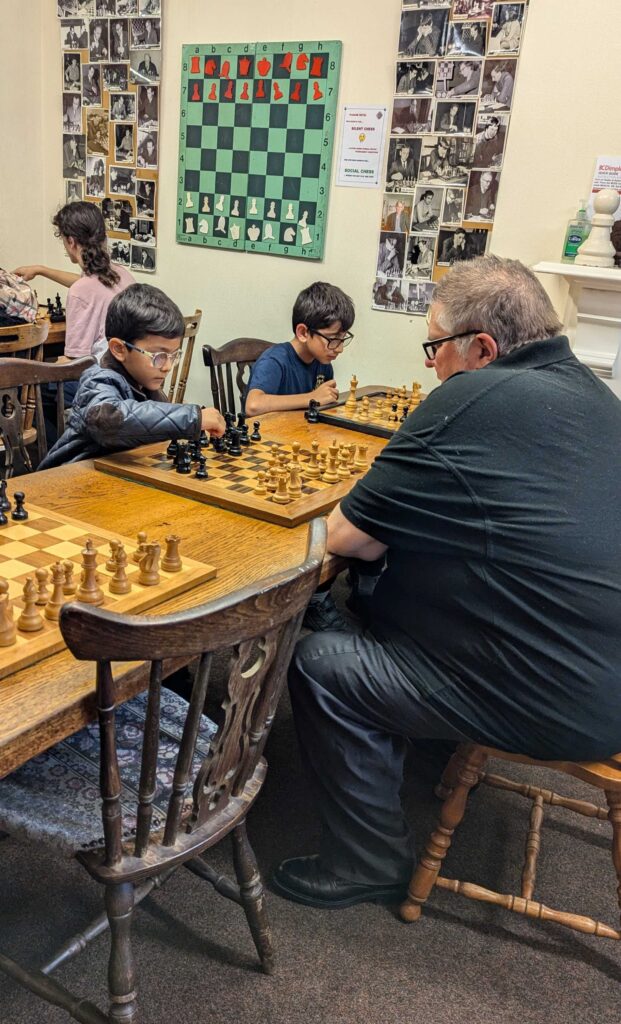
January brings its own rhythm. The post-holiday period offers a natural reset, and children often welcome new activities after the excitement of Christmas. Unlike many hobbies that require expensive equipment or depend on fair weather, chess asks for nothing more than a board, the pieces, a willing mind and an opponent.
In our increasingly screen-saturated world, chess offers something wonderfully different. It’s a space where children slow down, think deeply, and focus. And most importantly, they learn that good things come from careful consideration rather than quick reactions.
The beauty of chess as a new year hobby is its accessibility. Whether your child is five or fifteen, chess meets them where they are. The fundamentals are simple enough for young children to grasp, yet the game holds enough depth to challenge players for a lifetime.
HASTINGS’ CHESS HERITAGE
As HIP covered in the last edition, Hastings has serious chess credentials. The town hosts the Hastings International Chess Congress, Europe’s longest-running chess tournament, where grandmasters and enthusiasts have competed for over a century. This isn’t just local trivia. It creates an atmosphere where chess matters, where children can feel connected to something larger than themselves.
The Hastings & St Leonards Junior Chess Club sits right at the heart of this tradition. Run by Keith Hossack and Mark Brougham, with support from club champions Daniel Lowe and Marc Bryant, the club welcomes young players from ages 5 to 18.
“We see kids grow, not just as chess players, but as thinkers,” Hossack explains. “Chess teaches them patience, how to plan ahead, and how to handle setbacks. Those are skills that help them beyond the board.”
Walk into the club on any Friday, and you’ll find children as young as five hunched over chessboards, completely absorbed. “I thought he’d lose interest quickly,” one father admitted. “But he’s obsessed now. He’s even challenging me to play matches at home.”
“The history of chess in Hastings is something special,” says Hossack. “The town has hosted world-class players, and we try to pass that legacy on to our Juniors. We want them to feel like they’re part of something bigger.”
For young players, this connection to history adds meaning. They’re not just pushing pieces around. They’re joining a tradition of strategic thinkers that stretches back generations.
CHESS TEACHES…
Studies show chess enhances memory and boosts maths skills. But watch children play, and you’ll see something deeper unfolding.
Chess teaches planning. Every move requires thinking several steps ahead, considering consequences, imagining possibilities. These aren’t just chess skills. They’re life skills.
Every player loses games; every player makes mistakes. The question isn’t whether you’ll mess up, but how you’ll respond. In chess, as in life, setbacks become lessons.
“The key is to keep it enjoyable,” says Brougham. “We don’t just dump the rules on them. We teach through play. The best way for kids to learn is by making mistakes, and chess is all about learning from those mistakes.”
Chess also builds community. Many children who might not gravitate toward traditional team sports discover their tribe around the chessboard. “Some of these kids don’t always fit into the football or basketball crowd,” Brougham notes. “But here, they have a community and friends who share their interests.”
DIFFERENT AGES, DIFFERENT STAGES
At ages 5 to 7, children tend to focus on learning how pieces move. Games are short, and success lies in remembering the rules and having fun.
Children aged 8 to 11 begin grasping strategy. They start thinking ahead, recognising patterns, and many become genuinely competitive.

Older children often develop a serious interest in tournament play. Several club members have represented Hastings in competitions. Last year, multiple teams reached the semi-finals.
“We’ve had kids go from total beginners to tournament players within a couple of years,” Lowe said. “It’s incredible to see how quickly they develop when they’re passionate about it.”
PARENTS CAN HELP
You don’t need to be a chess expert to encourage your child’s interest. Playing together at home matters. Even if you’re learning alongside your child, those games show that chess is worth your time.
Digital tools can complement club play. Platforms like Chess.com and LiChess allow children to practice between sessions and play opponents worldwide.
Focus on improvement rather than just winning. Ask your child what they learned from a match rather than whether they won. Celebrate clever moves and good sportsmanship as much as victories.
During the Christmas and New Year period, young players support the Hastings International Chess Congress, watching professional-level games unfold. This helps them feel part of a broader tradition.
AN ANCIENT GAME
Chess has experienced a renaissance recently. TV series like The Queen’s Gambit and YouTubers like Gotham Chess have sparked fresh curiosity. “There’s definitely been a renewed interest,” Hossack confirms. “Parents have told us their kids started playing after watching it, and that’s great to see.”
This makes January 2026 an especially good time to introduce chess. The game feels relevant to today’s children while offering timeless benefits.
LEARNING
If you’re wondering whether chess suits your child, the evidence speaks for itself. The children who attend every Friday look forward to it all week. “It’s not just about winning,” one mother explained. “It’s about improving, thinking ahead, and having fun.”
Chess welcomes everyone. Complete beginners sit alongside aspiring tournament players. Quiet children find their voice. Energetic children discover the satisfaction of focused concentration. There’s room for every personality, every learning style, every level of interest.
For some children, chess becomes the hobby that sticks, the one that challenges them, connects them to others, and teaches lessons they’ll carry forward long after they’ve left the chessboard.
GET STARTED!
The Hastings & St Leonards Junior Chess Club meets every Friday during school term from 4:30 to 6:30 pm. With three free trial sessions, families can explore whether chess captures their child’s imagination without any financial commitment.
Information is available on the club’s website or by contacting Keith Hossack directly. Alternatively, families can drop by on a Friday evening to watch the children play and see the atmosphere for themselves. They’ve made joining easy with three free sessions for newcomers, then just £2 per session or £10 for the entire year.
We hope you have enjoyed reading this article. The future of our volunteer led, non-profit publication would be far more secure with the aid of a small donation. You can also support local journalism by becoming a friend of HIP. It only takes a minute and we would be very grateful.

Leave a Reply